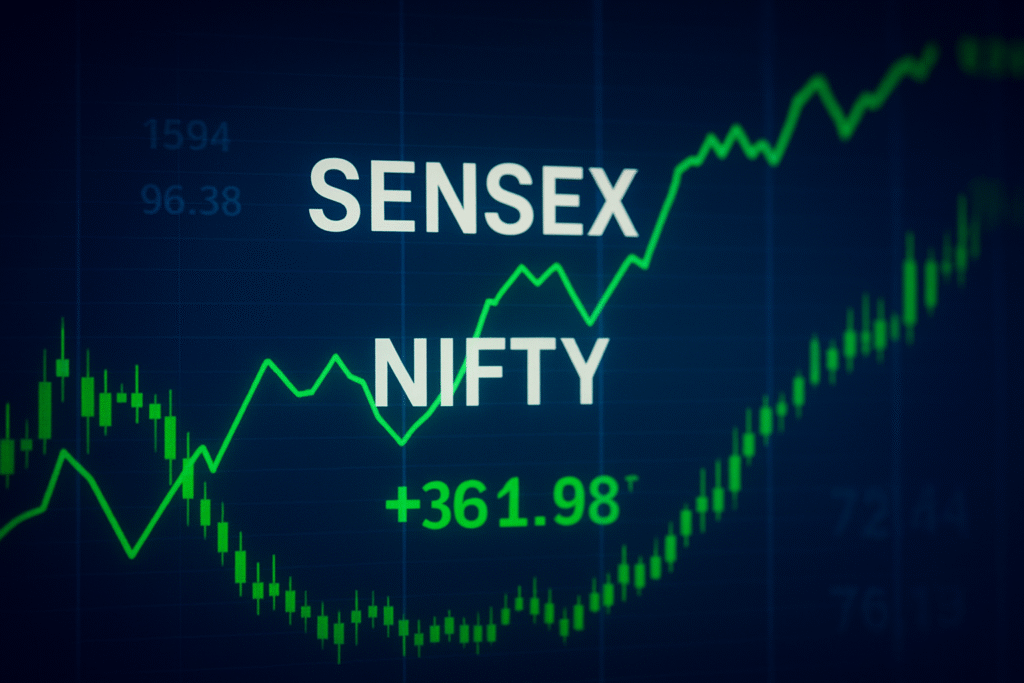
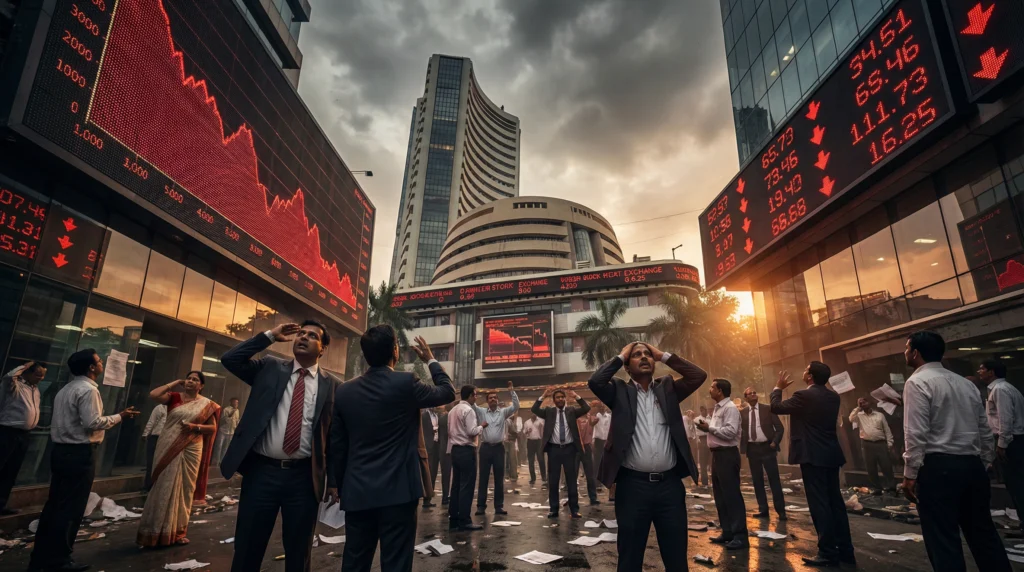
The Indian financial market witnessed a dramatic stock market crash that shocked investors across the country. In a single trading session, nearly ₹10 lakh crore in market value was wiped out, leaving both retail and institutional investors scrambling for answers.
This sudden fall wasn’t just another routine correction, it carried deeper signals about economic shifts, policy concerns, and global financial pressure. What made this stock market crash even more alarming was the speed and scale at which it unfolded.
For many investors, this event raised one critical question: Is this just a temporary dip, or the beginning of something bigger?
At Informosio, we focus on simplifying complex financial developments into clear, actionable insights, helping readers understand the key factors behind the stock market crash, the signals that matter most, and what could come next.
What Triggered This Stock Market Crash?
The recent stock market crash didn’t happen in isolation. It was driven by a combination of domestic and global factors that aligned at the worst possible moment.
1. Rising Bond Yields Creating Pressure
One of the biggest triggers behind the stock market crash was the sharp rise in bond yields. When bond yields increase, borrowing becomes more expensive, and equity markets often react negatively.
Investors began shifting funds from stocks to safer debt instruments, causing a sharp sell-off in equities.
2. Banking Stocks Led the Fall
Banking stocks played a major role in accelerating this stock market crash, as rising interest rates and bond yields put pressure on margins and reduce loan demand. Heavyweight banking stocks witnessed sharp declines, which dragged the broader market down along with them.
Since banking stocks often act as the backbone of the market, their fall weakens overall confidence and spreads negativity across multiple sectors.
3. RBI Policy Concerns and Liquidity Fears
The market sentiment turned cautious due to expectations around central bank actions. Investors feared tighter liquidity conditions, which can reduce money flow into the stock market.
This uncertainty contributed significantly to the stock market crash, as traders rushed to reduce exposure before any policy tightening.
4. Global Market Weakness
Global cues also played a major role in triggering this stock market crash. Weakness in international markets, especially due to inflation concerns and interest rate pressures, spilled over into India.
Foreign investors, who hold significant stakes in Indian equities, began pulling out funds, intensifying the fall.
5. Profit Booking After Market Highs
Markets had been trading near record highs before this stock market crash. Naturally, many investors chose to book profits at the first sign of weakness.
This created a domino effect—selling led to more selling, eventually resulting in a massive decline.
How Big Was the Damage?
The scale of this stock market crash was massive:
- ₹10 lakh crore wealth erased
- Sharp fall across major indices
- Banking and financial stocks hit hardest
- Midcap and smallcap stocks also declined
For retail investors, this wasn’t just a number—it represented real losses in portfolios built over months or even years.
Why This Crash Feels Different
Not every market correction turns into panic, but this stock market crash stood out for several important reasons. The speed of the decline was one of the most striking factors, as the market dropped sharply within just a few hours, leaving investors with little time to react or adjust their positions. At the same time, the selling pressure was broad based, affecting almost every sector rather than being limited to a specific industry, which made the situation feel more serious and widespread.
Beyond the numbers, the psychological impact played a crucial role, because when such a large amount of wealth is erased so quickly, it deeply shakes investor confidence and creates fear across the market.
What Investors Are Thinking Right Now
After such a sharp stock market crash, investors are generally divided in their reactions. Many become fear driven and panic, choosing to exit the market quickly and lock in their losses to avoid further uncertainty. At the same time, another group of investors sees the situation differently. These are experienced participants who view such market conditions as an opportunity to buy quality stocks at lower prices.
The contrast between these two approaches often determines long term success, as those who stay calm and think strategically are more likely to benefit when the market stabilizes again.
Is This the Start of a Bigger Downtrend?
This is the biggest concern after any stock market crash. While no one can predict the market with certainty, a few indicators can help:
- If bond yields continue rising, pressure may remain
- If global markets stay weak, recovery may slow
- If liquidity tightens, upside could be limited
However, it’s important to note that not every stock market crash leads to a prolonged bear market.
What Smart Investors Are Doing Now
During a stock market crash, smart investors focus on discipline rather than emotion. Instead of reacting impulsively, they stay calm and avoid panic selling, knowing that rushed decisions often lead to regret. They take this time to carefully review their portfolios, identifying weak stocks and removing investments that lack strong fundamentals. At the same time, they actively look for value, as quality stocks often become available at lower prices during such market conditions.
This balanced approach helps them position themselves better for long term gains once the market begins to recover.
Lessons from This Stock Market Crash
Every stock market crash carries important lessons, and this one is no exception. One of the key takeaways is the importance of diversification, as investors who were heavily concentrated in a single sector faced the biggest losses. It also highlights why risk management is essential, because ignoring potential risks during bullish phases can result in significant damage when the market turns downward. At the same time, this situation reinforces a fundamental truth about investing, which is that markets are cyclical.
No market rises indefinitely, and corrections are a natural part of the financial journey that every investor must learn to navigate.
What Could Happen Next?
The future after this stock market crash depends on several factors:
- Stability in bond yields
- Clarity from central bank policies
- Global economic conditions
- Investor sentiment recovery
If these factors improve, markets could stabilize. Otherwise, volatility may continue.
Should You Be Worried?
A stock market crash always feels scary, especially for new investors, but history shows that markets tend to recover over time. The real question is not whether the market will recover, but whether investors can stay patient enough to benefit from that recovery.
Stay informed with Informosio in-depth coverage of Finance, Business News, Stock Market updates, IPO announcements and Company News.
Final Thoughts
The recent stock market crash that wiped out ₹10 lakh crore is a reminder of how quickly market sentiment can change. While the losses are significant, such moments also highlight the importance of patience, discipline, and a well balanced investment strategy.
For investors who stay calm and focus on long term goals, this crash is not just a setback but an opportunity to make smarter decisions going forward.
End Note
If you’re serious about growing wealth, moments like this stock market crash are where real investors are made. The key is not avoiding volatility—but learning how to navigate it.
🌐Connect with us
Informosio Official – General updates, current affairs, and informative content