Photosynthesis is the biological process by which green plants, algae, and some bacteria convert light energy into chemical energy in the form of glucose. During photosynthesis, carbon dioxide and water are transformed into glucose and oxygen using sunlight. This process is essential for life because it provides food for nearly all living organisms and releases oxygen into the atmosphere.
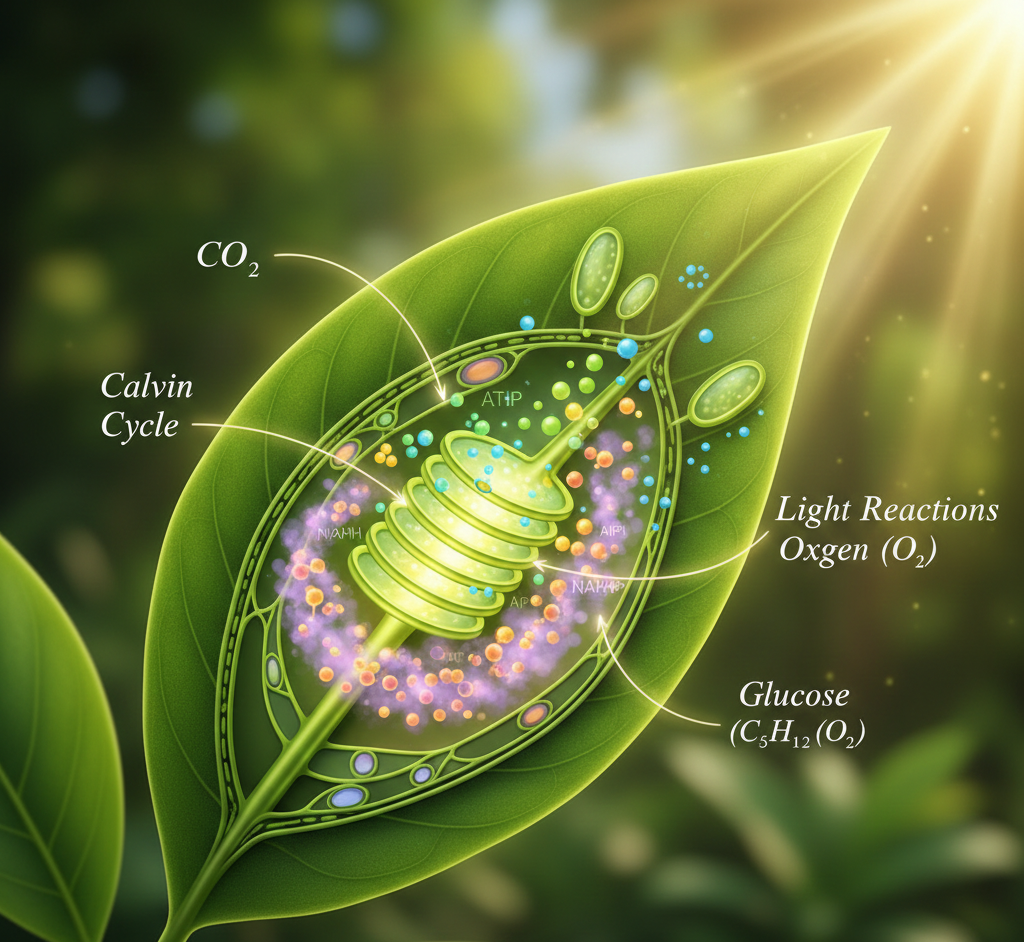
In living ecosystems, photosynthesis serves as the primary method through which solar energy enters the biological world. Organisms capable of performing this process, known as autotrophs, use specialized pigments such as chlorophyll to capture sunlight. The captured light energy drives a series of complex biochemical reactions inside chloroplasts, where water molecules are split, releasing oxygen as a by-product, and energy carriers such as ATP and NADPH are formed. These energy molecules are then used to convert carbon dioxide into glucose through a set of enzyme-controlled reactions called the Calvin cycle.
The glucose produced during photosynthesis acts as the fundamental source of energy and raw material for plant growth, development, and reproduction. Plants use this glucose to synthesize starch, cellulose, fats, proteins, and many other organic compounds required for cellular functioning. Animals and humans, directly or indirectly, depend on this stored chemical energy by consuming plants or plant-eating organisms. Therefore, photosynthesis forms the base of almost every food chain on Earth.
In addition to its role in food production, photosynthesis plays a crucial part in maintaining the balance of atmospheric gases. By absorbing carbon dioxide and releasing oxygen, photosynthetic organisms regulate global oxygen levels and help reduce excess carbon dioxide, which contributes to climate regulation. Without continuous photosynthetic activity, atmospheric oxygen would decrease and carbon dioxide levels would rise, making Earth unsuitable for most forms of life.
Thus, photosynthesis is not only a cellular biochemical process but also a global ecological mechanism that sustains life, drives ecosystem productivity, supports agriculture, and maintains environmental stability.
Definition
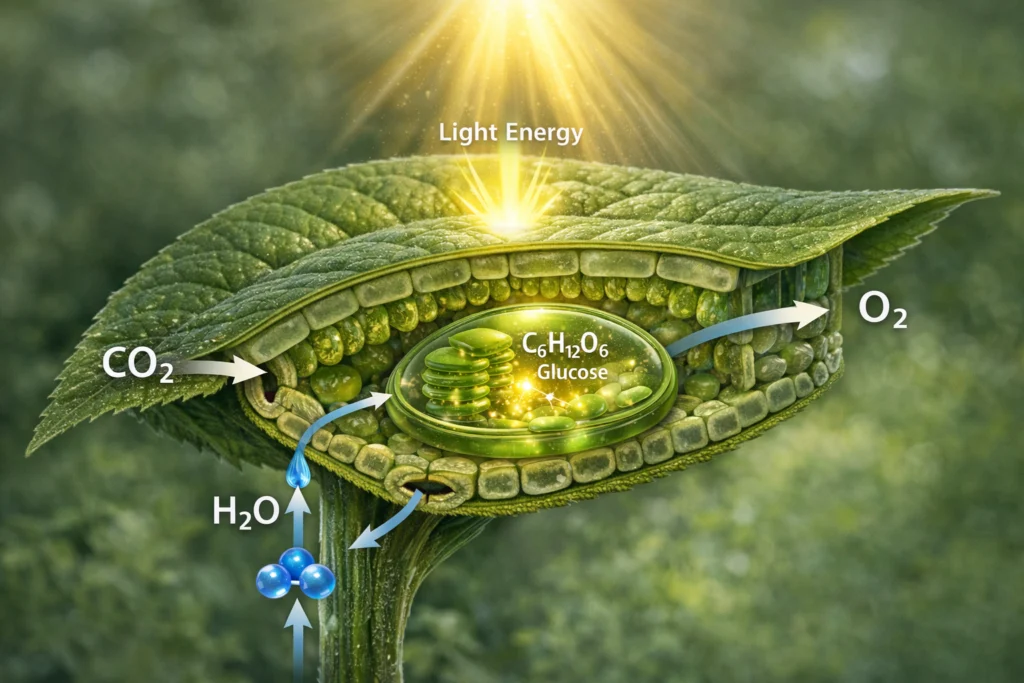
Photosynthesis is the process through which autotrophic organisms use sunlight, carbon dioxide (CO₂), and water (H₂O) to produce glucose (C₆H₁₂O₆) and oxygen (O₂).
In biological terms, photosynthesis is a complex biochemical process carried out mainly by green plants, algae, and certain photosynthetic bacteria that possess specialized pigments such as chlorophyll. These pigments absorb light energy from the sun and convert it into chemical energy through a sequence of enzyme-controlled reactions occurring within cellular structures called chloroplasts. During this process, light energy is first captured and used to split water molecules, releasing oxygen and generating energy-rich compounds like ATP and NADPH. These compounds then drive the synthesis of glucose from carbon dioxide through a series of metabolic reactions known as the Calvin cycle.
The glucose produced during photosynthesis serves as the primary source of energy and structural material for plants, enabling them to grow, reproduce, and synthesize essential organic compounds such as starch, cellulose, proteins, and lipids. Because plants form the base of most food chains, the energy stored in glucose is transferred to animals and humans through feeding relationships, making photosynthesis the fundamental entry point of energy into nearly all ecosystems.
Photosynthesis also plays a crucial role in maintaining the balance of gases in the Earth’s atmosphere. By absorbing carbon dioxide and releasing oxygen, photosynthetic organisms help regulate atmospheric composition, support aerobic respiration in living organisms, and contribute to environmental stability. Thus, photosynthesis is not only a cellular metabolic pathway but also a global ecological process essential for sustaining life on Earth.
General Equation:
6CO₂ + 6H₂O + Light energy → C₆H₁₂O₆ + 6O₂
Overview of The Photosynthesis Process
Photosynthesis is one of the most important biochemical processes on Earth. It forms the basis of almost every food chain and regulates atmospheric oxygen and carbon dioxide levels. The process occurs mainly in the chloroplasts of plant cells and involves two main stages: the light reactions and the Calvin cycle (light-independent reactions).
Understanding photosynthesis helps students learn how energy flows through ecosystems and how plants produce food that supports animal and human life.
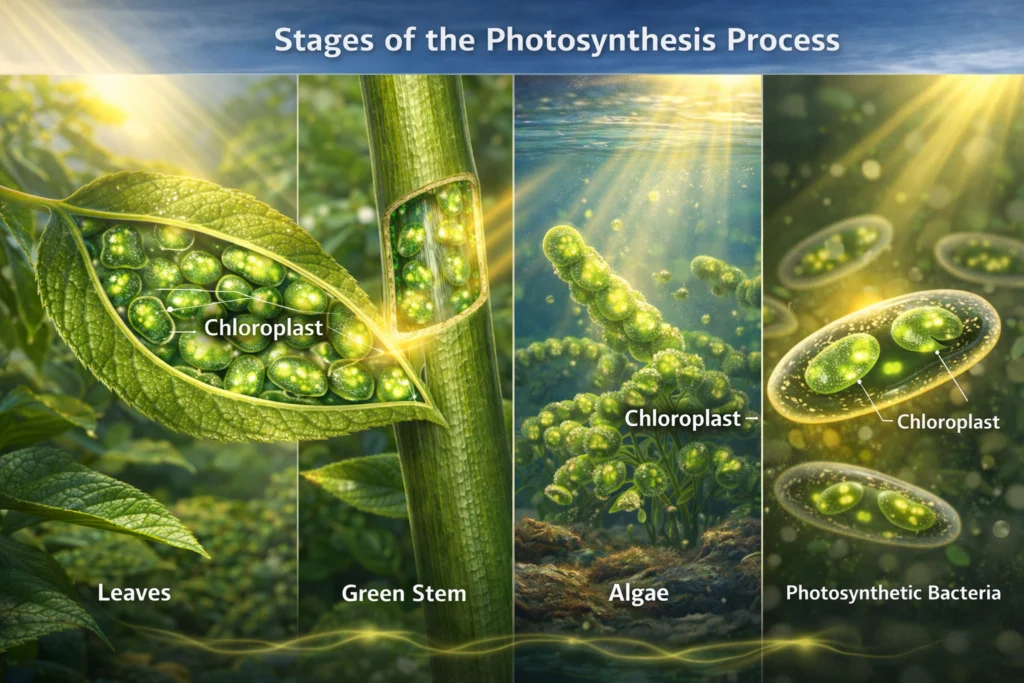
Stages of the Photosynthesis Process
Photosynthesis occurs primarily in:
- Leaves of green plants
- Green stems of some plants
- Algae in aquatic environments
- Photosynthetic bacteria
Within plant cells, the process takes place inside specialized organelles called chloroplasts.
Structure of Photosynthesis Process
The structural center where photosynthesis occurs is the chloroplast.
Key structural components include:
- Outer membrane
- Inner membrane
- Stroma
- Thylakoids
- Grana (stacked thylakoids)
These structures work together to capture light energy and convert it into chemical energy.
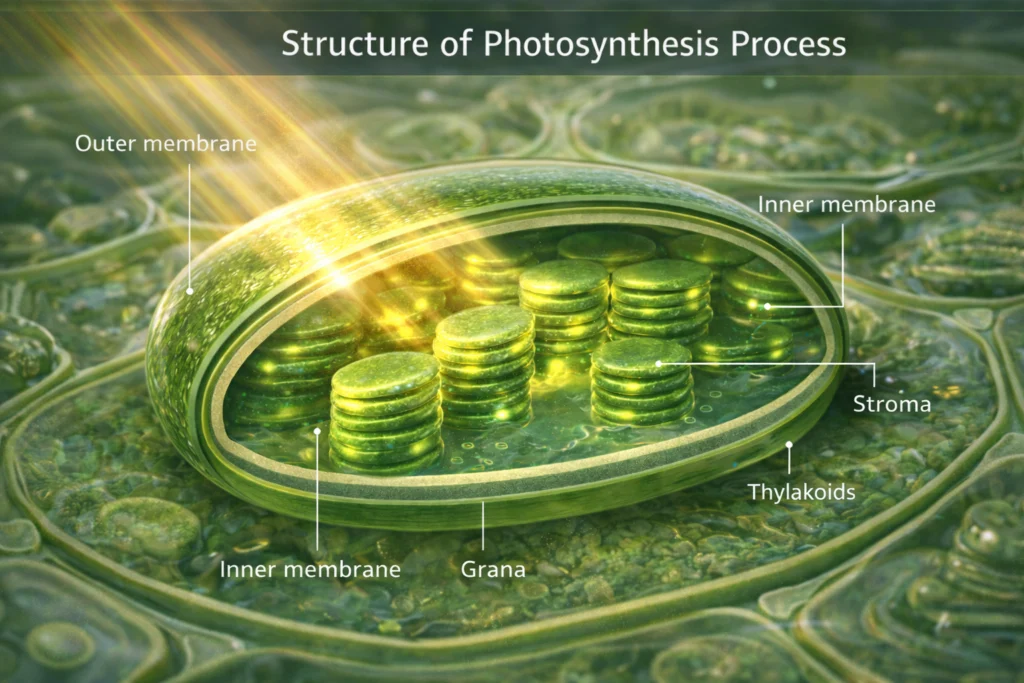
Diagram Explanation of the Photosynthesis Process
A typical chloroplast diagram includes the following labeled parts:
- Outer membrane – Protective outer covering
- Inner membrane – Regulates movement of substances
- Stroma – Fluid-filled region where the Calvin cycle occurs
- Thylakoid membrane – Contains chlorophyll and photosystems
- Grana – Stacks of thylakoids increasing surface area for light reactions
- Lumen – Internal space of thylakoids involved in proton accumulation
Each structure contributes to efficient energy conversion during photosynthesis.
Parts Involved in the Photosynthesis Process
Chloroplast
Definition:
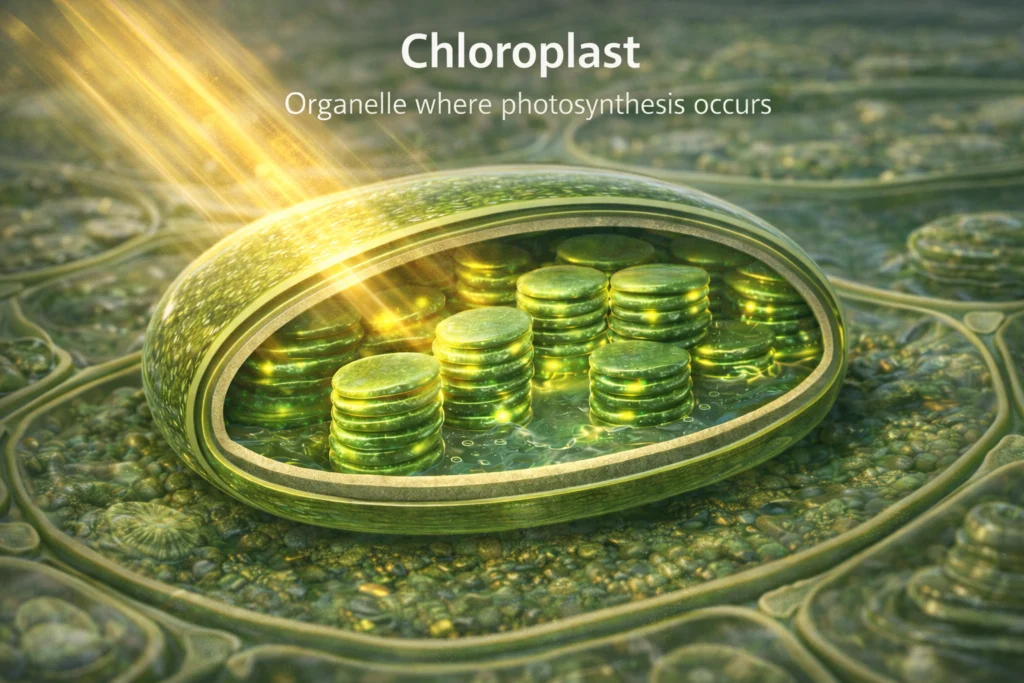
Chloroplast is the organelle where photosynthesis occurs.
A chloroplast is a specialized, membrane-bound organelle found in the cells of green plants, algae, and some photosynthetic protists. It is responsible for capturing light energy from the sun and converting it into chemical energy through the process of photosynthesis. Chloroplasts contain the green pigment chlorophyll, which absorbs light primarily in the blue and red regions of the spectrum and initiates the series of biochemical reactions that lead to the production of glucose and oxygen.
Structurally, a chloroplast is enclosed by a double membrane consisting of an outer membrane and an inner membrane that regulate the movement of substances into and out of the organelle. Inside the chloroplast lies the stroma, a fluid-filled matrix containing enzymes, ribosomes, DNA, and other molecules necessary for the synthesis of organic compounds. Suspended within the stroma are flattened membranous sacs called thylakoids, which are often stacked to form structures known as grana. The thylakoid membranes house chlorophyll and other photosynthetic pigments, as well as the protein complexes involved in the light-dependent reactions of photosynthesis.
During photosynthesis, chloroplasts perform two major sets of reactions. The light-dependent reactions take place in the thylakoid membranes, where sunlight is absorbed and used to generate energy-rich molecules such as ATP and NADPH while releasing oxygen from the splitting of water molecules. The light-independent reactions, also known as the Calvin cycle, occur in the stroma and utilize ATP and NADPH to convert carbon dioxide into glucose.
Chloroplasts also possess their own genetic material and ribosomes, allowing them to synthesize some of their own proteins, which supports the theory that they originated from ancient photosynthetic bacteria through an evolutionary process known as endosymbiosis. Because chloroplasts enable plants to produce their own food and release oxygen into the environment, they play a fundamental role in sustaining life on Earth, supporting ecosystems, agriculture, and global atmospheric balance.
- Location: Found in plant and algal cells
- Structure: Double membrane enclosing stroma and thylakoids
- Function: Captures light energy and performs light-dependent and light-independent reactions
- Importance: Essential for glucose production and oxygen release
Chlorophyll
Definition:
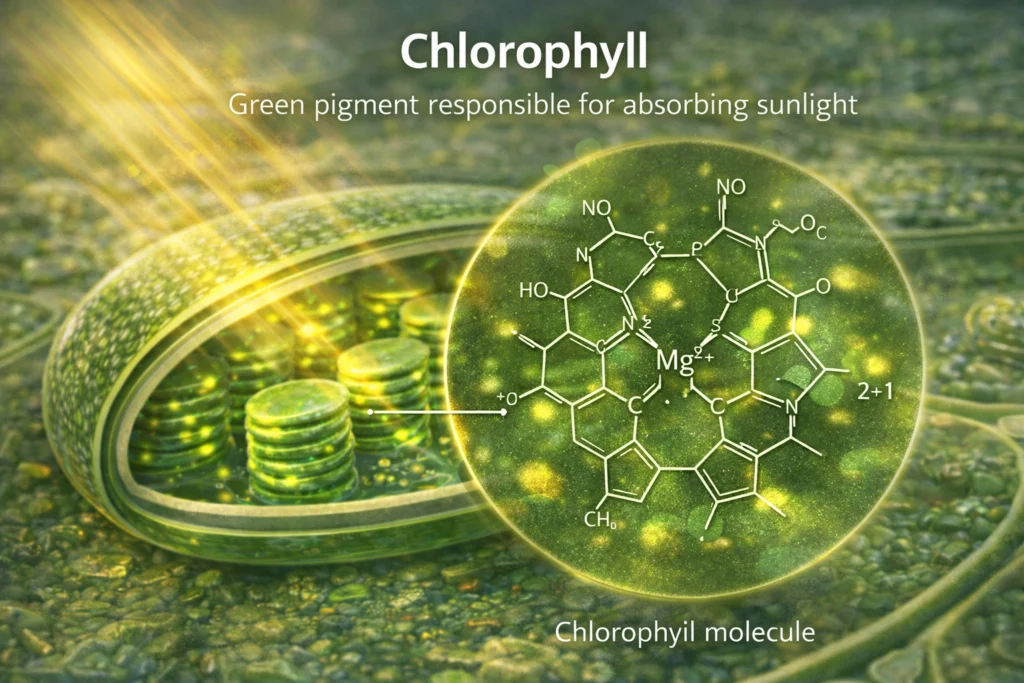
Chlorophyll is the green pigment responsible for absorbing sunlight.
Chlorophyll is a vital photosynthetic pigment found in the chloroplasts of green plants, algae, and certain photosynthetic bacteria. It plays a central role in the process of photosynthesis by capturing light energy from the sun and converting it into chemical energy that can be used to synthesize organic molecules such as glucose. The presence of chlorophyll gives plants their characteristic green color because the pigment reflects green wavelengths of light while absorbing mainly red and blue wavelengths, which are most effective for driving photosynthetic reactions.
Chemically, chlorophyll is a complex organic molecule composed of a porphyrin ring structure with a central magnesium ion, along with a long hydrophobic tail that anchors the pigment into the thylakoid membrane of chloroplasts. This structural arrangement allows chlorophyll molecules to be positioned efficiently within photosystems, where they work together with accessory pigments and proteins to capture and transfer light energy. When chlorophyll absorbs photons of light, its electrons become energized and are transferred through a series of electron transport reactions, initiating the light-dependent stage of photosynthesis.
There are different types of chlorophyll, primarily chlorophyll a and chlorophyll b, which function together to broaden the range of light wavelengths that plants can absorb. Chlorophyll a is the primary pigment directly involved in converting light energy into chemical energy, while chlorophyll b acts as an accessory pigment that transfers absorbed energy to chlorophyll a, improving photosynthetic efficiency.
Beyond its role in energy capture, chlorophyll is essential for sustaining life on Earth because it enables plants to produce food through photosynthesis, forming the base of most ecological food chains. By facilitating the conversion of solar energy into chemical energy and supporting oxygen production, chlorophyll plays a crucial role in maintaining ecosystem productivity, atmospheric balance, and global biological cycles.
- Location: Embedded in thylakoid membranes
- Structure: Porphyrin ring with magnesium ion at the center
- Function: Absorbs mainly blue and red wavelengths of light
- Importance: Enables plants to convert solar energy into chemical energy
Thylakoids
Definition:
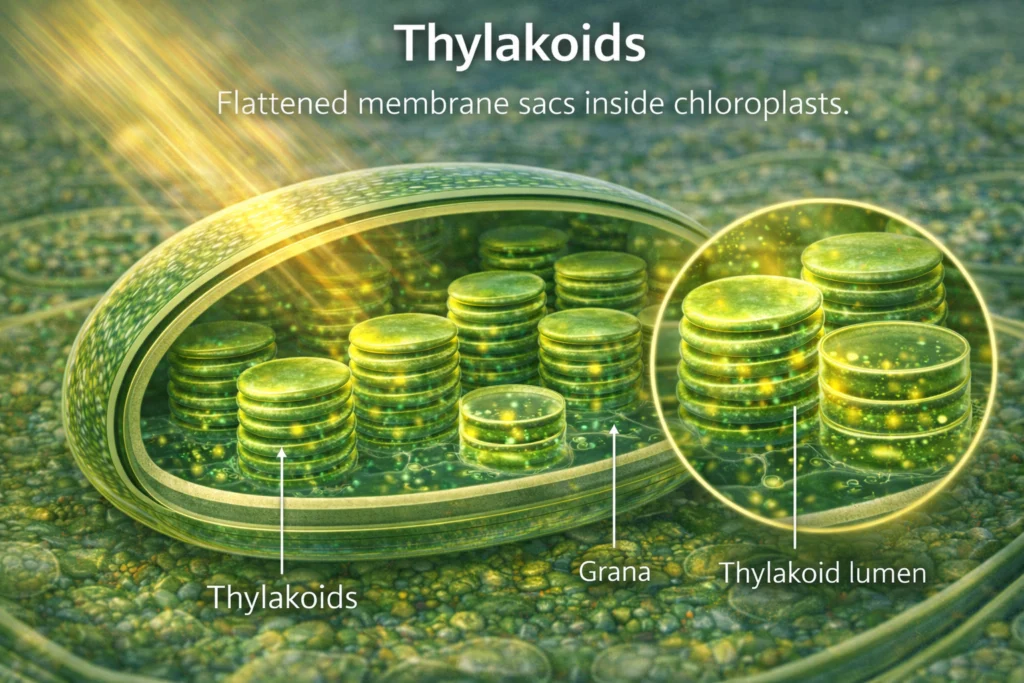
Thylakoids are flattened membrane sacs inside chloroplasts.
Thylakoids are specialized internal membrane structures found within the chloroplasts of plant cells, algae, and some photosynthetic microorganisms. These disc-shaped sacs form an interconnected system of membranes that plays a central role in the light-dependent reactions of photosynthesis. Multiple thylakoids are often arranged in stacks known as grana, which increase the total membrane surface area available for capturing light energy and carrying out essential biochemical reactions.
The thylakoid membrane contains chlorophyll pigments, accessory pigments, photosystems (Photosystem I and Photosystem II), electron transport chains, and ATP synthase complexes. These components work together to absorb light energy, excite electrons, and drive the conversion of solar energy into chemical energy. When light strikes the chlorophyll molecules embedded in the thylakoid membrane, electrons become energized and move through a sequence of protein complexes, generating a flow of electrons that ultimately leads to the production of ATP and NADPH. At the same time, water molecules are split in a process known as photolysis, releasing oxygen as a by-product.
Inside each thylakoid is a space called the thylakoid lumen, where protons accumulate during the light reactions, creating an electrochemical gradient across the membrane. This gradient powers ATP synthase to produce ATP, a key energy molecule used later in the Calvin cycle to synthesize glucose. The organized arrangement of thylakoids and grana ensures efficient light capture and energy transformation, allowing plants to maximize photosynthetic productivity.
Because thylakoids host the primary light-harvesting and energy-conversion processes of photosynthesis, they are essential for the survival of photosynthetic organisms and for maintaining the global flow of energy through ecosystems. Their structural design, extensive membrane surface, and integrated protein systems enable the efficient conversion of sunlight into chemical energy that ultimately supports nearly all forms of life on Earth.
- Location: Suspended within the stroma
- Structure: Membrane contains photosystems I and II, electron transport chains, and ATP synthase
- Function: Site of light-dependent reactions
- Importance: Generates ATP and NADPH required for glucose synthesis
Stroma
Definition:
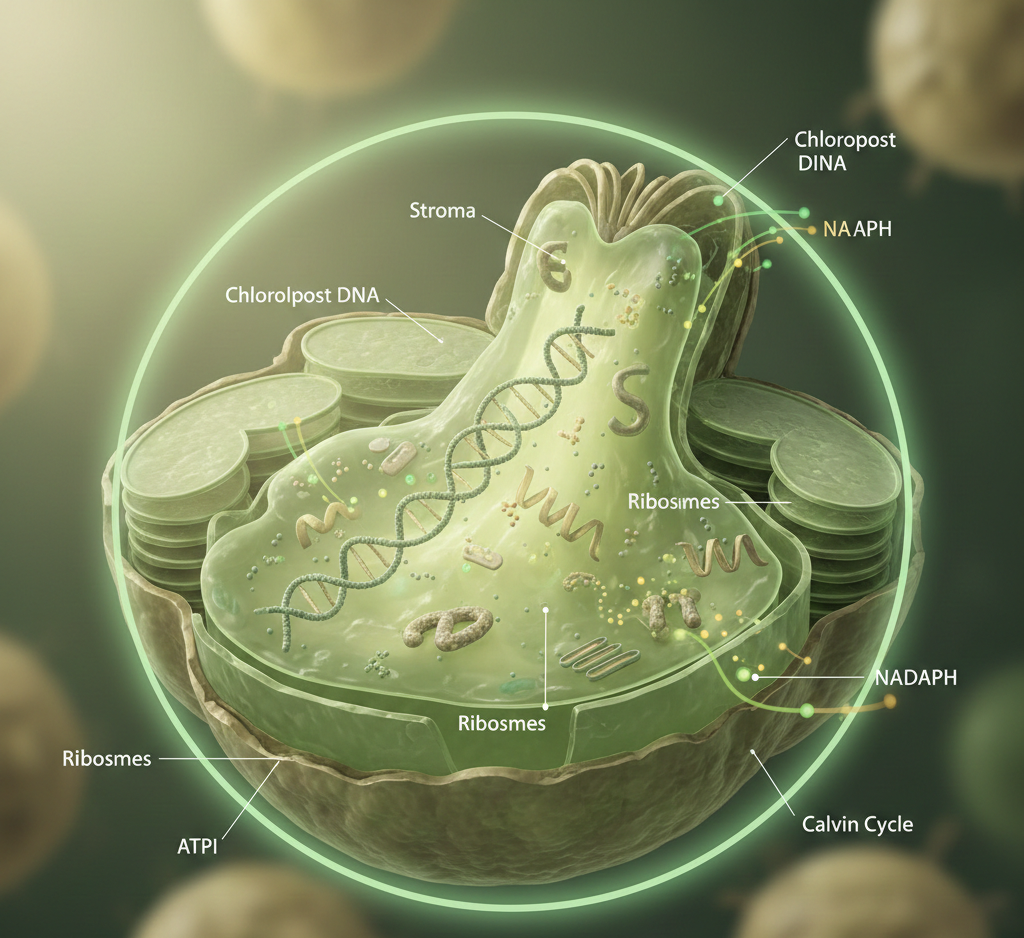
Stroma is the fluid matrix surrounding thylakoids.
The stroma is the semi-fluid, enzyme-rich internal region of the chloroplast that surrounds the thylakoid membranes. It serves as the central site for several essential biochemical reactions involved in photosynthesis, particularly the light-independent reactions known as the Calvin cycle, where carbon dioxide is converted into glucose and other organic compounds. The stroma provides the necessary environment for these reactions by containing enzymes, metabolic intermediates, and essential molecules required for carbohydrate synthesis.
Structurally, the stroma is enclosed within the inner membrane of the chloroplast and fills the space between the inner membrane and the thylakoid system. It contains chloroplast DNA, ribosomes, RNA, and various enzymes responsible for protein synthesis and metabolic processes. Because chloroplasts possess their own genetic material and protein-producing machinery, the stroma plays an important role in supporting the semi-autonomous functioning of the chloroplast.
During photosynthesis, the energy-rich molecules ATP and NADPH, produced in the thylakoid membranes during the light-dependent reactions, move into the stroma where they are used to drive the Calvin cycle. In this cycle, carbon dioxide molecules are fixed and converted into glyceraldehyde-3-phosphate (G3P), which is later used to form glucose, starch, and other carbohydrates essential for plant growth and energy storage. The stroma also participates in the synthesis of amino acids, fatty acids, and other biomolecules necessary for cellular metabolism.
Because the stroma houses key enzymes and metabolic pathways required for carbon fixation and organic molecule synthesis, it plays a crucial role in completing the photosynthesis process. Its fluid environment allows efficient movement of molecules and coordination between the light-dependent reactions in the thylakoids and the biochemical reactions occurring in the chloroplast interior, making it an indispensable component of plant energy production and overall cellular functioning.
- Location: Inside the chloroplast
- Structure: Contains enzymes, DNA, ribosomes, and starch granules
- Function: Site of the Calvin cycle where carbon fixation occurs
- Importance: Responsible for forming carbohydrates during photosynthesis
Steps of Photosynthesis Process
Light-Dependent Reactions
- Definition: Reactions requiring sunlight
- Location: Thylakoid membranes
- Process: Chlorophyll absorbs light, water molecules split, oxygen is released, ATP and NADPH are produced
- Importance: Provides energy molecules for the next stage
Calvin Cycle (Light-Independent Reactions)
- Definition: Reactions that do not directly require light
- Location: Stroma of chloroplast
- Process: Carbon dioxide is fixed into organic molecules using ATP and NADPH to synthesize glucose
- Importance: Produces sugars that serve as plant food
Functions of the Photosynthesis Process
- Produces glucose as a primary food source
- Releases oxygen required for respiration
- Stores solar energy in chemical bonds
- Maintains atmospheric gas balance
- Forms the base of ecological food chains
- Supports biomass production in ecosystems
Significance and Uses
- Provides food directly or indirectly to all organisms
- Maintains oxygen levels in the atmosphere
- Reduces carbon dioxide, helping regulate climate
- Supplies raw materials for agriculture and forestry
- Supports renewable bioenergy research
- Enables growth of crops essential for human survival
Common Mistakes or Misconceptions
- Photosynthesis does not occur only during the day; some steps continue without direct light.
- Oxygen released during photosynthesis comes from water, not carbon dioxide.
- Only green plants perform photosynthesis; algae and some bacteria also perform it.
- The Calvin cycle is not truly “dark reactions”; it simply does not require direct light.
Essential Points for Revision
- Photosynthesis occurs in chloroplasts.
- Light reactions occur in thylakoids; Calvin cycle occurs in stroma.
- Chlorophyll absorbs red and blue light best.
- Water splitting produces oxygen.
- ATP and NADPH drive glucose formation.
- The overall equation should be memorized for exams.
You can also visit Biology
Summary of the Photosynthesis Process
Photosynthesis is the fundamental biological process that converts solar energy into chemical energy stored in glucose. Occurring in chloroplasts, it involves coordinated light reactions and the Calvin cycle, producing oxygen and organic food molecules essential for life. Understanding photosynthesis helps explain ecosystem productivity, global oxygen supply, and the energy foundation of food chains.
FAQs
1. What is the main purpose of photosynthesis?
The main purpose is to produce glucose using sunlight, carbon dioxide, and water.
2. Which organelle performs photosynthesis?
Chloroplasts perform photosynthesis in plant cells.
3. What gas is released during photosynthesis?
Oxygen is released as a by-product.
4. Which pigment is essential for photosynthesis?
Chlorophyll is the primary light-absorbing pigment.
5. Why is photosynthesis important for humans?
It provides food, oxygen, and energy resources necessary for survival.