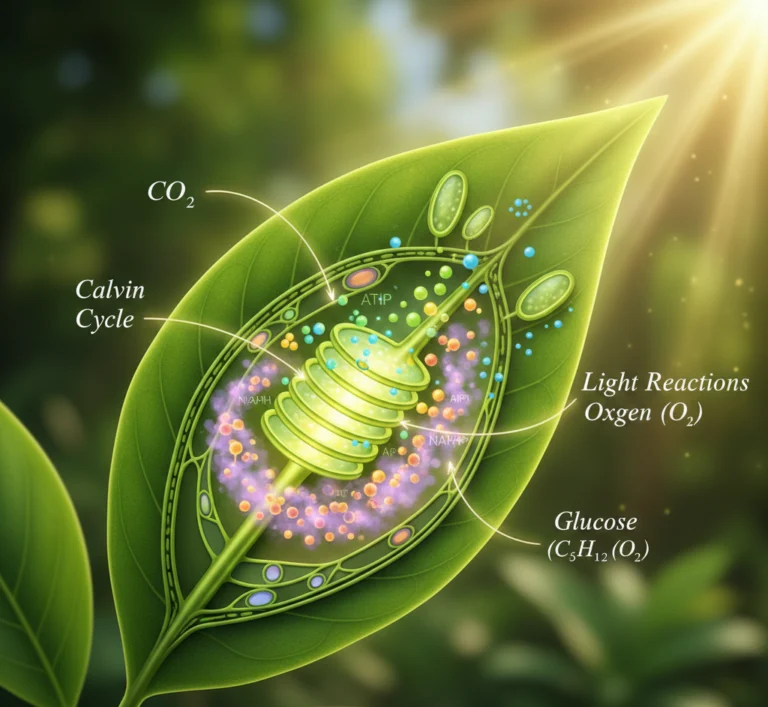
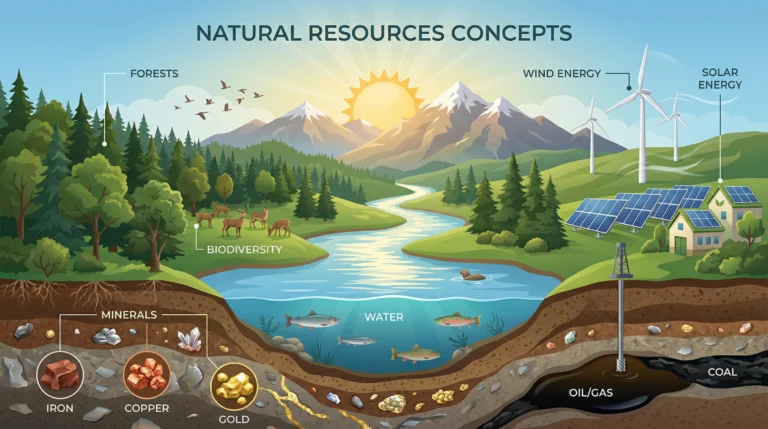
Colorful educational illustration of natural resources showing forests, water, wildlife, renewable energy, and underground minerals.

Natural Resources Concepts

Natural resources include water, forests, minerals, and energy sources that support life, ecosystems, and economic development. Understanding their types, uses, and conservation helps promote sustainable use and environmental balance for future generations.

Natural Resources Concepts Read More »
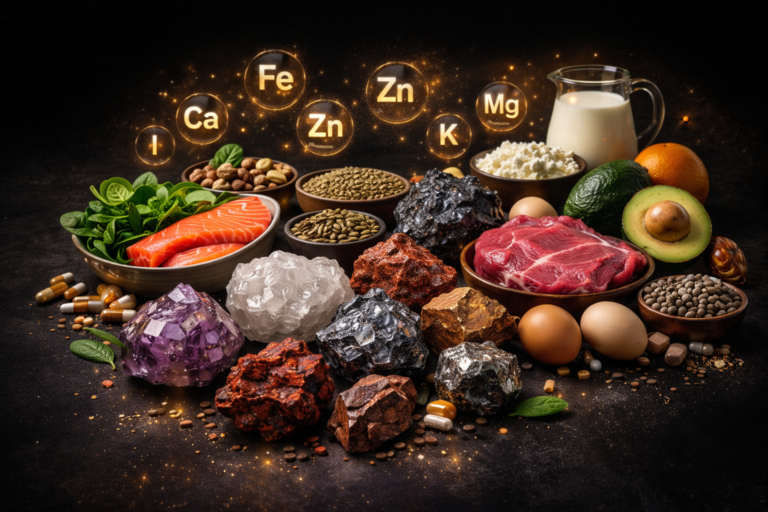
Realistic black-background image showing various natural mineral crystals and mineral-rich foods such as fish, leafy greens, nuts, dairy, eggs, seeds, and fruits arranged together to represent essential dietary minerals.

Minerals

Learn about minerals, their types, functions, and importance in human health. Understand major and trace minerals, sources, and key roles in body growth and metabolism.

Minerals Read More »

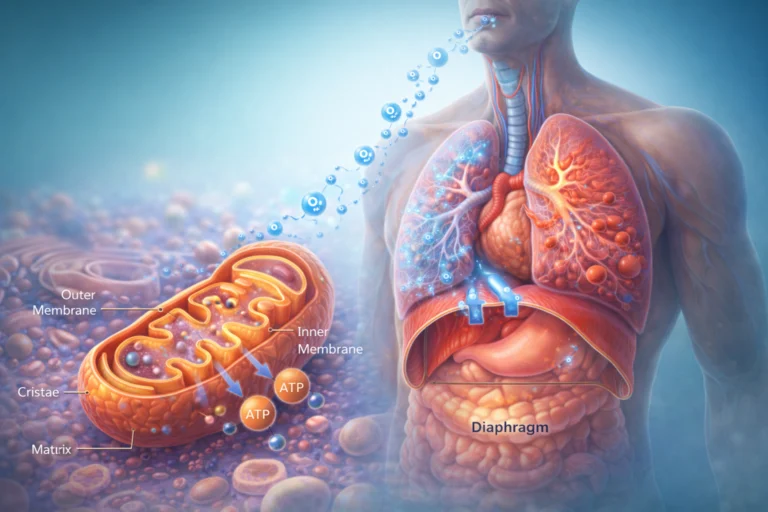
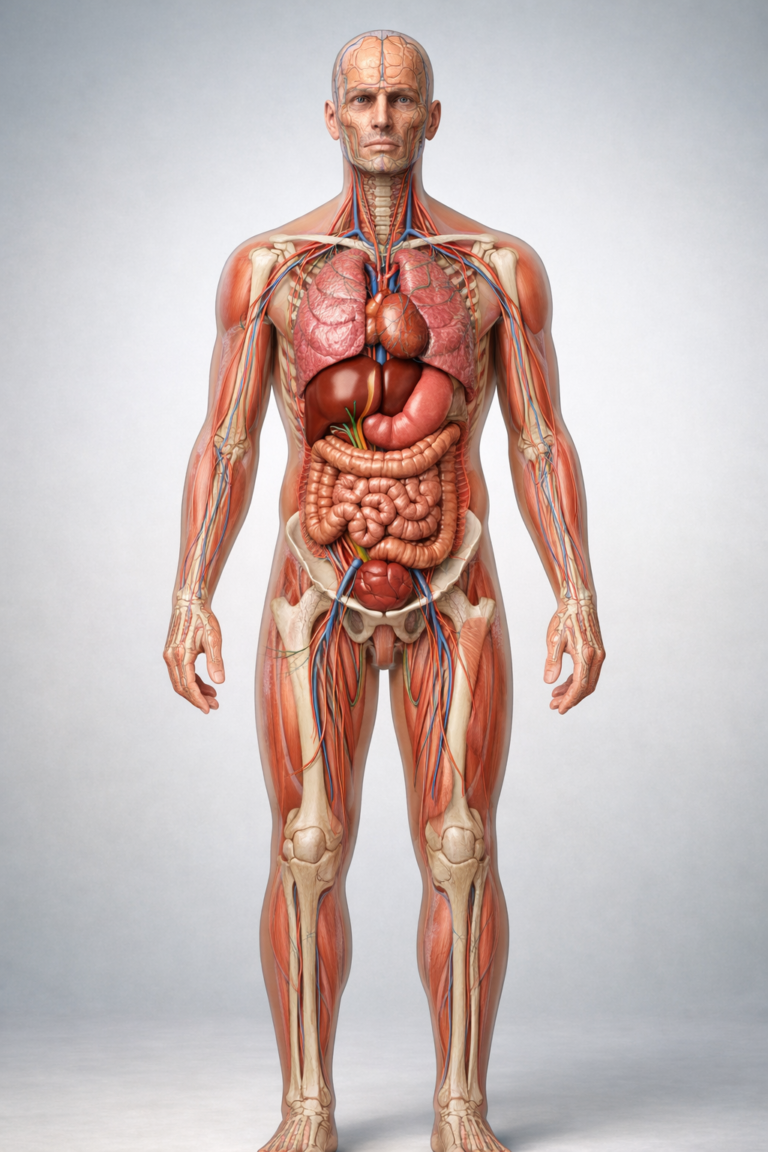
A highly realistic anatomical illustration of a human body showing semi-transparent skin with clearly visible internal organ systems, including the digestive, respiratory, circulatory, nervous, muscular, skeletal, endocrine, and excretory systems, presented in a clean clinical style for human physiology education.

Human Physiology – Structure, Function, and Coordination of the Human Body

Human Physiology explains how the human body functions through the coordinated activity of multiple organ systems. Rather than working independently, systems such as the respiratory, circulatory, nervous, muscular, endocrine, and digestive systems interact continuously to maintain internal balance. This integration enables efficient energy production, movement, metabolism, and adaptation to environmental changes. Understanding system integration is essential for grasping how the body maintains stability, responds to stress, and sustains life.

Human Physiology – Structure, Function, and Coordination of the Human Body Read More »

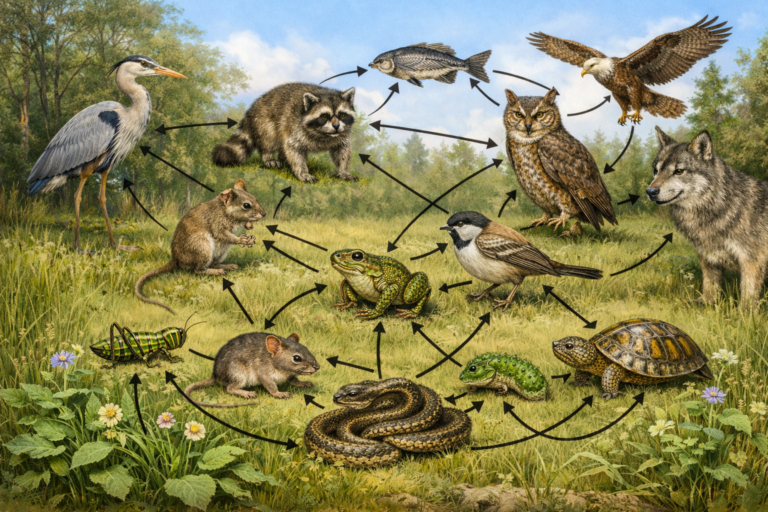
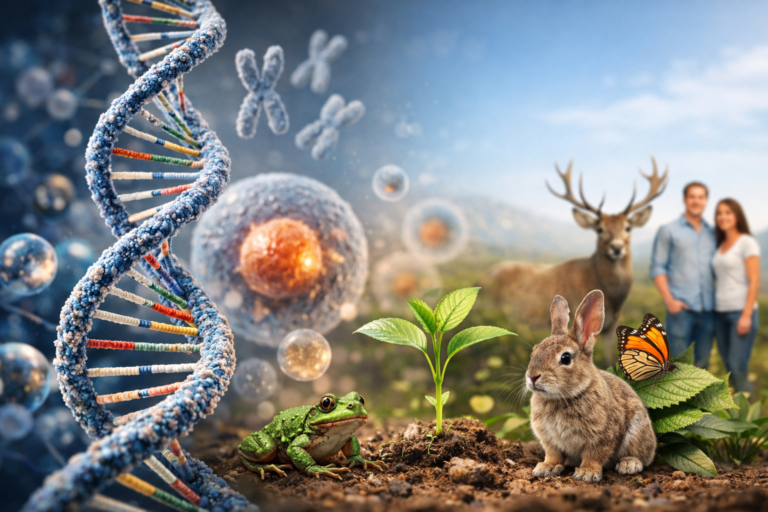
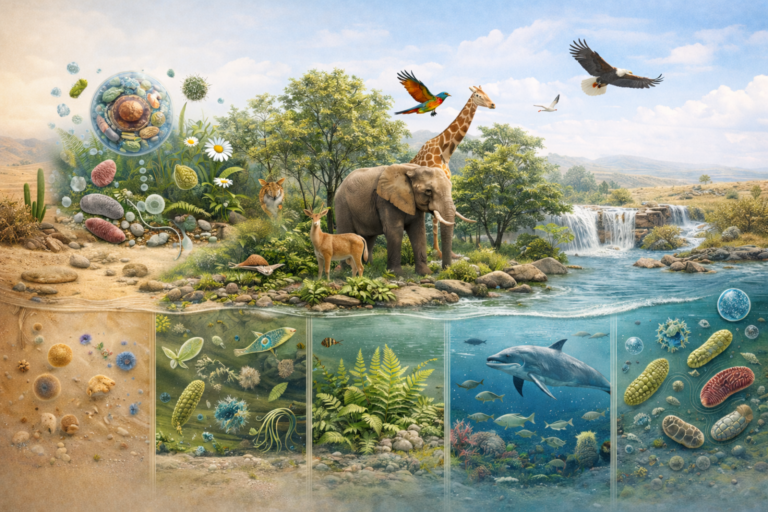
Realistic featured image showing the Living World & Basics with microorganisms, plants, animals, and diverse ecosystems illustrating biological organization and biodiversity.

Introduction to Living World & Basics

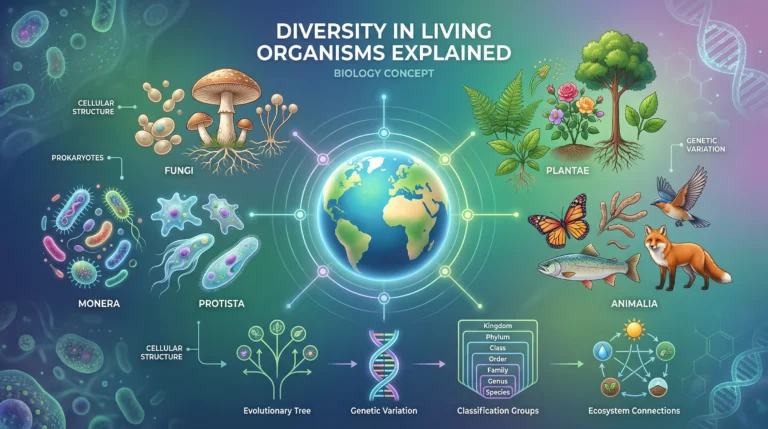
The Living World & Basics introduces the fundamental concepts of biology by explaining the characteristics, classification, and diversity of living organisms. It explores how life is organized from microscopic cells to complex organisms and ecosystems. This topic helps students understand biological organization, evolutionary relationships, and biodiversity, forming a strong foundation for further studies in life sciences and environmental biology.

Introduction to Living World & Basics Read More »