The beginning of a new financial year always brings fresh opportunities for investors, but it also comes with responsibilities that many people ignore until it’s too late. For fixed deposit holders, one of the most crucial early steps is understanding how to save TDS on FD before banks start deducting tax on interest income. Surprisingly, thousands of investors lose a portion of their returns every year simply because they delay or skip a small but powerful formality. If you are someone who relies on FD income or uses it as a safe investment tool, this is the moment to act smart and protect your earnings.
This is the moment to act smart and learn how to save TDS on FD effectively.
At Informosio, we simplify complex tax-saving strategies into clear, actionable insights so you can understand how to save TDS on FD effectively, avoid unnecessary deductions, and make smarter financial decisions in the new financial year.
Why TDS Matters More Than You Think
Tax Deducted at Source on fixed deposits is not just a routine deduction, it directly impacts your real returns. Banks automatically deduct TDS when your FD interest crosses a certain threshold, and once that happens, getting a refund becomes a long and sometimes frustrating process. This is exactly why understanding how to save TDS on FD at the beginning of the financial year can make a huge difference. Instead of waiting for refunds, smart investors prevent unnecessary deductions in the first place.
Many people assume that TDS is unavoidable, but that is not entirely true. If your total income is below the taxable limit, you have a legal right to stop TDS from being deducted. The key lies in awareness and timely action. This is why every investor should understand how to save TDS on FD early.
The First Step Every FD Investor Must Take
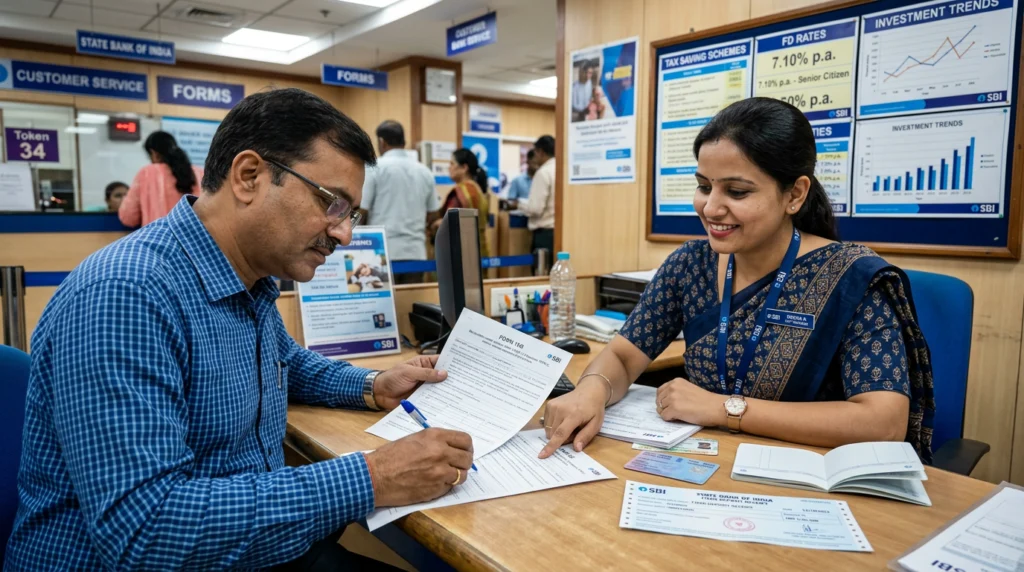
The most important action to save TDS on FD is submitting Form 15G or Form 15H to your bank. This simple declaration tells the bank that your total income is below the taxable limit and that no tax should be deducted from your FD interest. What makes this step critical is timing. If you submit the form late, the bank may already deduct TDS, and reversing it becomes a lengthy process.
Form 15G is meant for individuals below 60 years of age, while Form 15H is designed for senior citizens. Both forms serve the same purpose but apply to different age groups. Submitting these forms at the start of the financial year ensures that your FD income remains intact without unnecessary deductions.
Income Limits You Must Know
To successfully save TDS on FD, understanding income eligibility is essential. These forms are not for everyone, and submitting them incorrectly can lead to penalties. The basic condition is that your total taxable income should be below the exemption limit set by the government.
For most individuals, this limit is based on the current income tax regime. If your total income, including FD interest, does not exceed the basic exemption threshold, you can submit Form 15G or 15H. However, if your income crosses the limit, even slightly, you are not eligible to use these forms, and TDS deduction becomes mandatory.
This is where many investors make mistakes. They only consider FD interest but ignore other income sources like salary, rental income, or capital gains. To truly save TDS on FD, you must calculate your total income carefully before submitting any declaration.
Common Mistakes That Cost Investors Money
A surprising number of FD investors lose money due to simple errors. One of the most common mistakes is not submitting Form 15G or 15H at all. Many people assume the bank will handle everything automatically, which is not the case.
Another mistake is submitting the form after TDS has already been deducted. While you can still claim a refund later, the process takes time and effort. There is also the risk of incorrect declarations, where investors submit the form despite having taxable income, which can attract scrutiny from tax authorities.
Some investors also forget that these forms must be submitted every financial year. Submitting it once does not carry forward automatically. To consistently save TDS on FD, this must become a yearly habit.
How Banks Decide to Deduct TDS
Banks follow strict rules when it comes to TDS on fixed deposits. Once your interest income crosses the specified threshold, the bank is required to deduct tax at the prescribed rate. This happens automatically through their systems, without any manual intervention.
What many investors don’t realize is that banks do not consider your total income across all sources. They only look at the interest generated within that bank. This means even if your overall income is below the taxable limit, TDS can still be deducted unless you submit the required declaration.
This is why proactive planning is essential. If your goal is to save TDS on FD, you cannot rely on the bank to make decisions based on your financial situation. You must take control.
Smart Strategies to Avoid TDS Legally
Beyond submitting forms, there are several smart strategies that can help you save TDS on FD more effectively. One approach is spreading your investments across multiple banks to keep interest below the TDS threshold in each institution. While this does not eliminate tax liability, it helps avoid automatic deductions.
Another strategy is opting for tax-saving fixed deposits, which offer deductions under specific sections of the income tax law. Although these come with a lock-in period, they provide dual benefits of savings and tax efficiency.
Senior citizens can also benefit from higher exemption limits and special provisions designed to reduce their tax burden. Understanding these options can significantly improve your ability to save TDS on FD without complications.
Why Early Action Gives You an Advantage
Timing is everything when it comes to tax planning. Acting early in the financial year ensures that your forms are processed before any interest payout triggers TDS deduction. Waiting until the last moment often results in missed opportunities and unnecessary tax deductions.
Early action also allows you to plan your investments more strategically. Instead of reacting to deductions, you can structure your FD portfolio in a way that minimizes tax impact from the beginning.
Investors who consistently follow this approach not only save money but also avoid the stress of dealing with refunds and paperwork later.
The Hidden Impact on Your Returns
Many investors focus only on interest rates while ignoring the impact of taxes. However, even a small percentage deducted as TDS can reduce your effective returns significantly over time. This is especially true for large FD investments where interest income is substantial.
By taking steps to save TDS on FD, you are essentially protecting your earnings and ensuring that your investment works at its full potential. This small effort can lead to noticeable gains in the long run.
What Happens If You Ignore This Step
Ignoring TDS planning can lead to unnecessary financial setbacks. Once TDS is deducted, you will need to file an income tax return to claim a refund. This process can take months, depending on processing timelines.
There is also the possibility of errors or delays, which can further complicate the situation. For many investors, this becomes an avoidable headache that could have been prevented with a simple form submission.
Understanding how to save TDS on FD is not just about saving money, it is about avoiding unnecessary stress and ensuring smoother financial management.
Stay informed with Informosio in-depth coverage of Finance, Business News, Stock Market updates, IPO announcements and Company News.
Final Thoughts
The new financial year is the perfect time to reset your financial strategy and take smarter decisions. For fixed deposit investors, the priority should be clear: act early, stay informed, and use the available tools to your advantage. Learning how to save TDS on FD is not complicated, but it requires awareness and timely action.
By submitting the right forms, understanding income limits, and planning your investments carefully, you can ensure that your FD returns remain untouched by unnecessary deductions. In a world where every percentage matters, this small step can make a big difference in your overall financial growth.
🌐Connect with us
Informosio Official – General updates, current affairs, and informative content