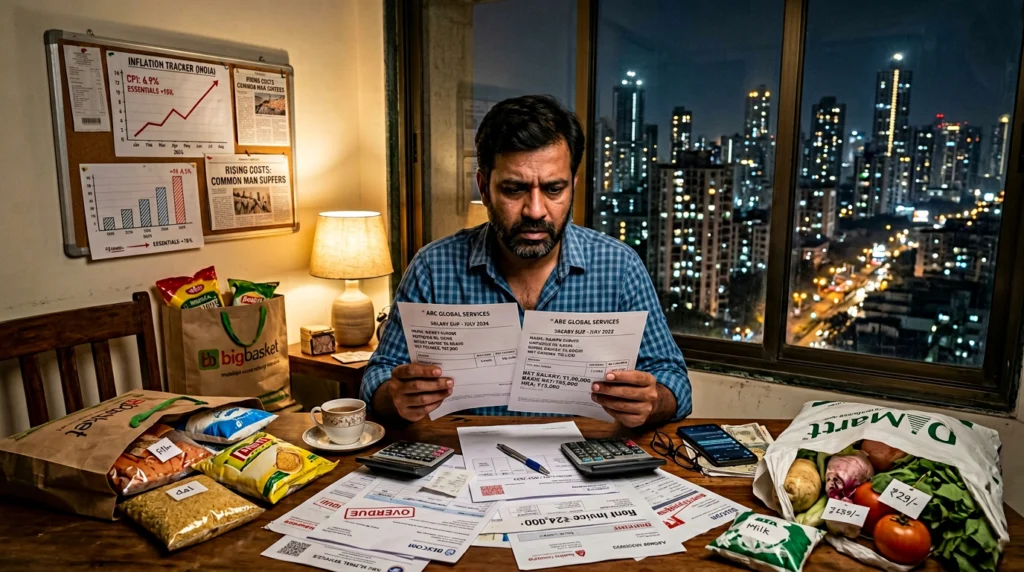
A decade ago, earning Rs 1 lakh per month in India was considered a major milestone. It meant financial comfort, savings, and even a luxurious lifestyle for many. Today, that same income often feels surprisingly inadequate. This shift is not just psychological. It reflects a deeper salary value decline that is quietly affecting millions of working professionals across the country.
People are not necessarily earning less. In fact, salaries have increased. But what has changed drastically is what that money can actually buy. The gap between income and expenses has widened, creating a sense of financial pressure even among those who are technically earning more than before.
At Informosio, we simplify complex money trends into clear, actionable insights so you can understand what’s driving the salary value decline, how inflation is silently impacting your income, and what financial moves you should consider before your purchasing power weakens further.
The Illusion of Higher Income
At first glance, earning Rs 1 lakh per month appears to be a significant financial achievement. It creates a perception of stability, success, and upward mobility. However, this perception often hides a deeper reality. The concept of higher income becomes an illusion when the actual purchasing power of that income is reduced over time. Due to ongoing salary value decline, the real worth of money has weakened, meaning that what Rs 1 lakh can buy today is far less than what a smaller salary could buy a decade ago. This gap between nominal income and real value creates a misleading sense of financial growth, where people feel richer on paper but struggle in real life.
Rising Cost of Living Is the Biggest Factor
The most dominant force behind the ongoing salary value decline is the rapid increase in the cost of living. Essential expenses such as housing, food, transportation, education, and healthcare have all seen consistent price hikes. Urbanization and lifestyle changes have further accelerated these costs, especially in major cities. Rent alone consumes a large portion of monthly income, while grocery and utility bills continue to rise steadily. As a result, even a higher salary is quickly absorbed by basic needs, leaving little room for savings or discretionary spending. This growing imbalance between income and expenses is one of the key reasons why financial comfort feels out of reach.
Lifestyle Inflation Is Quietly Eating Your Income
As income increases, spending habits tend to evolve as well. This phenomenon, known as lifestyle inflation, plays a major role in accelerating salary value decline. People begin to upgrade their standard of living, opting for better gadgets, frequent dining, premium services, and travel experiences. While these changes improve short-term satisfaction, they also increase long-term financial pressure. Over time, these upgraded expenses become necessities rather than luxuries. This silent shift makes it difficult to maintain savings, as higher earnings are matched by equally higher spending patterns.
Housing Costs Are Outpacing Salaries
Housing has become one of the most significant contributors to salary value decline in India. Property prices and rental costs have risen sharply, especially in metropolitan areas. For many individuals, a large percentage of their monthly income is dedicated to rent or home loan repayments. This financial burden limits the ability to allocate funds toward savings, investments, or other essential expenses. The mismatch between salary growth and housing costs creates long-term financial stress, making even a seemingly high income feel insufficient.
Hidden Inflation Is Making Things Worse
Not all inflation is immediately visible. Hidden inflation is a subtle yet powerful factor that contributes to salary value decline. Companies often reduce product sizes, lower quality, or introduce additional charges while keeping prices unchanged. Subscription-based services have also replaced one-time payments, increasing recurring expenses. These small, often unnoticed changes accumulate over time, gradually eroding purchasing power. As a result, individuals end up spending more without realizing the true extent of the increase.
Savings Are Becoming Harder Than Ever
One of the clearest indicators of salary value decline is the growing difficulty in saving money. Despite earning higher salaries, many individuals find it challenging to set aside a meaningful portion of their income. Rising expenses, unexpected costs, and lifestyle commitments leave little room for savings. This situation creates financial vulnerability, as people lack adequate emergency funds or long-term investments. The inability to save consistently also affects future financial security, making it harder to achieve major life goals.
Social Pressure and Comparison Culture
In today’s digital age, social media and peer influence have intensified financial pressure. People are constantly exposed to curated lifestyles that promote spending and consumption. This comparison culture contributes significantly to salary value decline, as individuals feel compelled to match the lifestyles of others. Whether it is buying a new car, upgrading gadgets, or taking expensive vacations, these decisions are often driven by social expectations rather than financial readiness. This leads to unnecessary expenses and reduced financial stability over time.
Taxation and Reduced Take-Home Income
Another critical factor behind salary value decline is the impact of taxation. As individuals move into higher income brackets, a larger portion of their salary is deducted as tax. This reduces the actual amount available for spending and saving. Additionally, indirect taxes on goods and services further increase overall expenses. While salaries may appear higher in gross terms, the net income often does not reflect the same level of growth, contributing to the feeling of financial stagnation.
Why Rs 1 Lakh Feels Like Rs 50,000 Today
The combined effect of inflation, rising expenses, lifestyle changes, and taxation explains why Rs 1 lakh today feels similar to Rs 50,000 in the past. This shift is a direct result of ongoing salary value decline, where the real purchasing power of money has decreased significantly. The gap between income growth and cost escalation has widened, making it difficult for individuals to maintain the same standard of living despite earning more.
What This Means for the Future
The trend of salary value decline indicates a challenging financial future for many working professionals. As economies evolve and urban living becomes more expensive, the pressure on income will continue to increase. Relying solely on salary growth will no longer be sufficient to achieve financial security. Individuals will need to adopt smarter financial strategies to keep up with changing economic conditions.
How to Adapt to Salary Value Decline
Adapting to salary value decline requires a proactive approach to financial management. Individuals should focus on building multiple income streams, investing in assets that outpace inflation, and controlling unnecessary expenses. Financial awareness and disciplined money habits are essential to maintaining stability. By understanding the true value of money and making informed decisions, individuals can better navigate the challenges posed by a changing economic landscape.
Stay informed with Informosio in-depth coverage of Finance, Business News, Stock Market updates, IPO announcements and Company News.
Conclusion
The idea that Rs 1 lakh salary is no longer enough is not just a perception. It is a reflection of deeper economic changes. The ongoing salary value decline has reshaped how people experience income and expenses. While salaries have increased, the cost of maintaining a comfortable lifestyle has risen even faster.
Understanding this shift is the first step toward making better financial decisions in a rapidly changing economy.
🌐Connect with us
Informosio Finance – Finance news, business insights, startups, and market trends