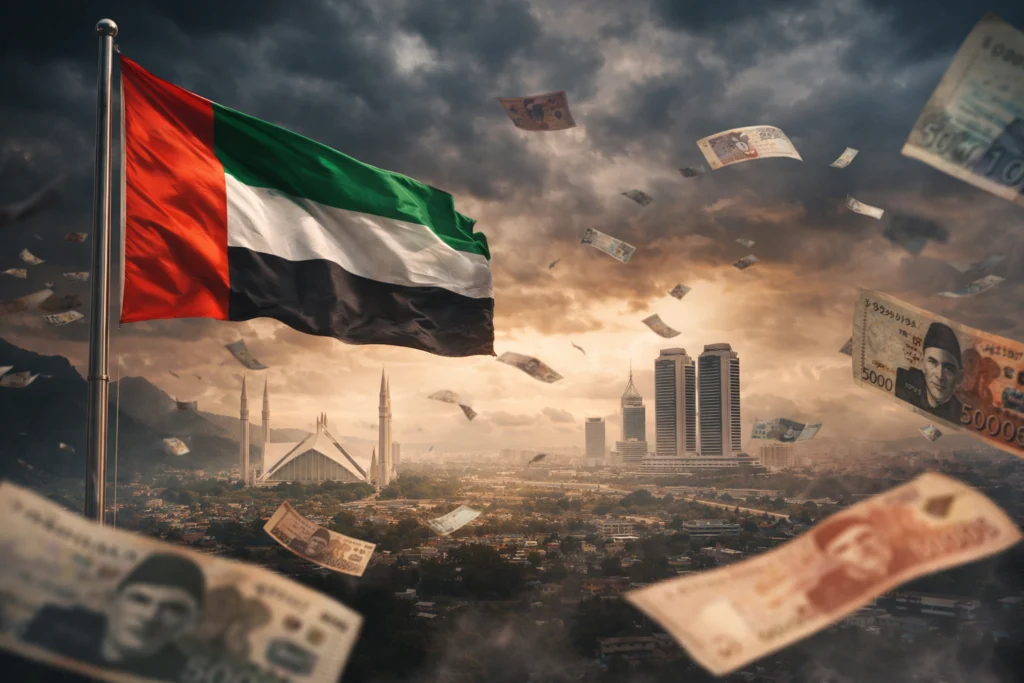
Pakistan is once again under intense financial pressure as it prepares to repay a massive $3.5 billion to the United Arab Emirates within just three weeks. This sudden urgency has reignited global discussions around the Pakistan debt crisis, raising serious concerns about the country’s economic stability, foreign reserves, and long-term financial survival. The situation is not just about a repayment deadline, it reflects deeper structural weaknesses that continue to challenge Pakistan’s economy.
At Informosio, we break down complex global financial crises into clear, actionable insights so you can understand what’s driving the Pakistan debt crisis, what risks are rising, and what it means for the global economy.
Why UAE Wants Its Money Back Now
The demand from the UAE is not entirely unexpected. Over the years, Pakistan has relied heavily on friendly nations like the UAE, Saudi Arabia, and China for financial support. These loans often come with short-term rollover agreements rather than long-term restructuring. Now, as global economic conditions tighten and lenders reassess risks, the UAE appears to be securing its financial position by asking for repayment instead of extending deadlines.
This move highlights a critical shift. Friendly nations are becoming more cautious, and Pakistan can no longer depend on automatic rollovers. The Pakistan debt crisis is entering a new phase where external support is no longer guaranteed.
The Pressure on Foreign Reserves
Pakistan’s foreign exchange reserves have been under strain for years. Although there have been temporary improvements due to IMF programs and bilateral assistance, the reserves remain fragile. Repaying $3.5 billion in such a short period could significantly reduce the country’s buffer, making it harder to manage imports, stabilize the currency, and control inflation.
The Pakistan debt crisis becomes even more alarming when you consider that reserves are already barely sufficient to cover a few months of imports. Any sudden outflow of billions could push the economy closer to a balance of payments crisis.
IMF Factor and Global Oversight
The International Monetary Fund plays a crucial role in Pakistan’s financial survival. Any major repayment decision is closely linked to IMF conditions and ongoing negotiations. Pakistan often needs IMF approval or support to unlock further funding from other countries.
In this case, the repayment to the UAE could be part of a broader strategy to maintain credibility with international lenders. By honoring its commitments, Pakistan may be trying to signal financial discipline. However, this comes at the cost of increasing short-term pressure under the Pakistan debt crisis.
Economic Reality on the Ground
While high-level financial decisions dominate headlines, the real impact is felt by ordinary citizens. Inflation remains high, the cost of living continues to rise, and economic growth is sluggish. The Pakistan debt crisis directly affects daily life through higher fuel prices, expensive imports, and reduced government spending.
Businesses are also struggling with uncertainty. Currency fluctuations and policy instability make it difficult for companies to plan investments or expansion. This creates a cycle where economic growth slows down, reducing the country’s ability to generate revenue and repay debts.
Why This Situation Is Different
Pakistan has faced debt challenges before, but this situation stands out for several reasons. First, the timeline is extremely short. Repaying such a large amount within three weeks leaves little room for negotiation or delay. Second, global financial conditions are tighter, meaning fewer options for emergency funding.
Third, geopolitical dynamics are shifting. Countries that once provided unconditional support are now reassessing their financial exposure. This makes the Pakistan debt crisis more complex and unpredictable than in the past.
Possible Ways Pakistan Can Manage the Crisis
Pakistan is not without options, but each comes with its own risks. One approach is to seek additional funding from other allies or financial institutions. However, this could increase overall debt levels and deepen the Pakistan debt crisis in the long run.
Another option is to negotiate a rollover or restructuring of the loan. While this would ease immediate pressure, it depends on the willingness of the UAE and other stakeholders. Pakistan could also rely on IMF assistance, but that often requires strict economic reforms, including subsidy cuts and tax increases.
Privatization of state-owned enterprises is another potential solution. By selling assets, the government can raise funds quickly. However, this is politically sensitive and may face public resistance.
Impact on Pakistan’s Currency
The Pakistani rupee is highly sensitive to external financial pressures. Large repayments can weaken the currency, especially if reserves decline sharply. A weaker rupee makes imports more expensive, further fueling inflation.
The Pakistan debt crisis has already contributed to currency volatility in recent years. If the repayment leads to a significant drop in reserves, the rupee could face additional downward pressure, creating a ripple effect across the economy.
Global Market Reaction
International investors closely monitor situations like this. A sudden repayment obligation signals risk, which can affect investor confidence. If investors perceive Pakistan as financially unstable, it could lead to capital outflows and reduced foreign investment.
The Pakistan debt crisis is not just a domestic issue, it has global implications. Financial markets react quickly to signs of instability, and even a small shift in perception can have significant consequences.
Political Implications
Economic crises often translate into political challenges. The government faces pressure to manage the situation without imposing excessive hardship on citizens. At the same time, it must maintain credibility with international lenders.
The Pakistan debt crisis could influence policy decisions, elections, and public sentiment. Economic stability is closely tied to political stability, making this repayment deadline more than just a financial event.
Long-Term Lessons
This situation highlights the risks of relying heavily on external borrowing. While loans can provide short-term relief, they often create long-term vulnerabilities. The Pakistan debt crisis underscores the need for structural reforms, including improving exports, increasing tax collection, and reducing dependence on imports.
Without these changes, similar crises are likely to repeat. The current situation serves as a reminder that financial sustainability requires more than temporary solutions.
Stay informed with Informosio in-depth coverage of Finance, Business News, Stock Market updates, IPO announcements and Company News.
Conclusion
Pakistan’s race to repay $3.5 billion to the UAE within three weeks is a critical moment that reflects the broader challenges of the Pakistan debt crisis. It is not just about meeting a deadline, but about navigating a complex web of economic pressures, global expectations, and domestic realities. The outcome will have far-reaching implications for the country’s financial future, investor confidence, and economic stability. As the deadline approaches, all eyes remain on how Pakistan manages this high-stakes situation.
🌐Connect with us
Informosio Official – General updates, current affairs, and informative content