
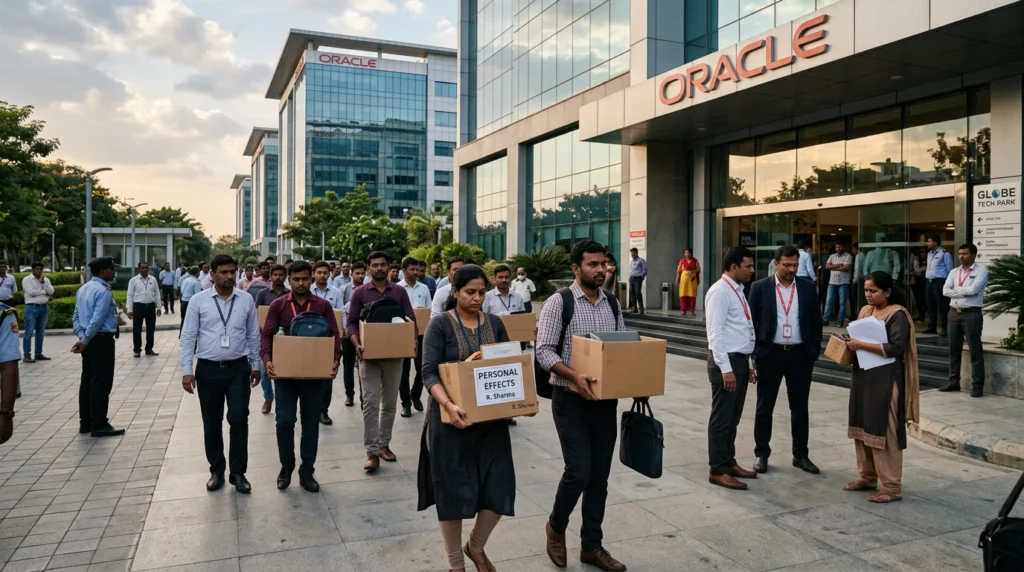
Oracle Layoffs India 2026: What Employees Are Really Saying
The latest wave of Oracle layoffs India has sparked intense discussion across the tech industry, raising concerns not only about job security but also about how major corporations are restructuring their workforce in 2026. While layoffs in the global tech sector are not new, what makes this development stand out is the growing number of employee voices sharing their real experiences, offering a rare glimpse into what actually happens behind corporate announcements.
Over the past few weeks, reports have surfaced indicating that Oracle layoffs India are part of a broader restructuring strategy aimed at cost optimization and operational efficiency. However, employees affected by these decisions are now shedding light on details that go far beyond official statements, creating a narrative that is both revealing and concerning.
At Informosio, we uncover what companies don’t openly say so you can understand what’s really behind Oracle layoffs India, which warning signs most people miss, and what could happen next in the tech job market.
Why Oracle Is Cutting Jobs in India
At the core of Oracle layoffs India lies a familiar corporate strategy. Companies across the global tech ecosystem are increasingly focusing on automation, cloud integration, and AI-driven processes. These transitions often reduce dependency on certain roles while increasing demand for highly specialized skills.
In Oracle’s case, industry insiders suggest that the layoffs are linked to internal restructuring across specific departments, particularly those considered non-core or redundant in the company’s evolving business model. While the company has not publicly disclosed exact numbers, the pattern aligns with a broader global trend where tech giants are tightening budgets after aggressive expansion in previous years.
India, being a major hub for IT operations, naturally becomes a focal point during such restructuring efforts. This is why Oracle layoffs India are drawing significant attention, especially among professionals working in similar sectors.
Employees Reveal Severance Package Reality
One of the most talked-about aspects of Oracle layoffs India is the severance package offered to affected employees. According to multiple employee accounts, the compensation structure appears to vary depending on tenure, role, and internal policies.
Some employees have reported receiving packages that include a few months of salary along with additional benefits such as extended health insurance. While this may seem standard on paper, several workers claim that the actual experience feels less supportive when considering the sudden nature of the layoffs and the competitive job market.
There is also a growing sentiment that communication around severance details was not as transparent as expected. Employees say they were given limited time to process the information, adding to the overall stress of the situation. These firsthand accounts are shaping public perception of Oracle layoffs India, making it a topic of deeper scrutiny.
Sudden Layoffs and Workplace Uncertainty
A recurring theme in discussions around Oracle layoffs India is the abruptness of the decision. Many employees claim that there were no clear warning signs leading up to the layoffs, which made the situation even more difficult to handle.
This sudden approach has triggered anxiety not just among those directly affected but also among current employees who now feel uncertain about their own job security. In a competitive industry like IT, where stability is already a concern, such developments can significantly impact morale and productivity.
The ripple effect of Oracle layoffs India is therefore extending beyond immediate job losses, influencing how employees perceive long-term career prospects within large multinational corporations.
Impact on India’s IT Job Market
The impact of Oracle layoffs India is not limited to one company. It reflects a broader shift in the Indian IT job market, where demand is increasingly moving toward niche skills such as artificial intelligence, cybersecurity, and advanced cloud computing.
For mid-level professionals, this transition can be particularly challenging. Many roles that were once considered stable are now being re-evaluated, forcing workers to upskill or risk becoming obsolete. This trend is likely to continue as companies prioritize efficiency and innovation over workforce expansion.
Despite these challenges, experts believe that the Indian tech industry remains resilient. While layoffs create short-term disruptions, they also pave the way for new opportunities in emerging sectors. However, the transition period can be difficult, as highlighted by the ongoing discussions around Oracle layoffs India.
What This Means for Tech Professionals
For professionals observing Oracle layoffs India, the key takeaway is clear: adaptability is no longer optional. The modern tech landscape demands continuous learning and skill enhancement.
Employees are now realizing the importance of staying relevant in a rapidly changing environment. This includes gaining expertise in high-demand areas, building a strong professional network, and staying informed about industry trends.
The situation also underscores the need for financial preparedness. Sudden layoffs can happen even in well-established companies, making it essential for individuals to have a safety net in place.
Corporate Strategy vs Human Impact
While companies often justify layoffs as necessary for growth and sustainability, the human impact of such decisions cannot be ignored. The stories emerging from Oracle layoffs India highlight the emotional and psychological challenges faced by affected employees.
Job loss is not just a financial setback; it also affects confidence, stability, and future planning. This is why there is increasing pressure on corporations to handle layoffs more responsibly, with better communication and support systems.
Balancing business objectives with employee well-being is becoming a critical challenge for organizations worldwide. The way companies address this issue will likely shape their reputation in the long run.
The Bigger Picture in 2026
The developments surrounding Oracle layoffs India are part of a larger narrative unfolding in 2026. The global economy is undergoing significant changes, driven by technological advancements and shifting business priorities.
As companies continue to evolve, workforce restructuring will remain a common theme. However, the focus is gradually shifting toward creating a more agile and skilled workforce rather than simply reducing headcount.
For India, this means both challenges and opportunities. While layoffs may create uncertainty in the short term, they also highlight the need for innovation, skill development, and adaptability in the workforce.
Stay informed with Informosio in-depth coverage of Finance, Business News, Stock Market updates, IPO announcements and Company News.
Conclusion
The ongoing Oracle layoffs India situation offers valuable insights into the current state of the tech industry. From restructuring strategies to employee experiences, it reveals the complexities behind corporate decisions that often remain hidden from public view.
As more employees come forward with their stories, the conversation is likely to evolve, prompting companies to rethink how they approach layoffs in the future. For professionals, the message is clear: staying prepared, adaptable, and informed is the best way to navigate an uncertain job market.
🌐Connect with us
Informosio Official – General updates, current affairs, and informative content