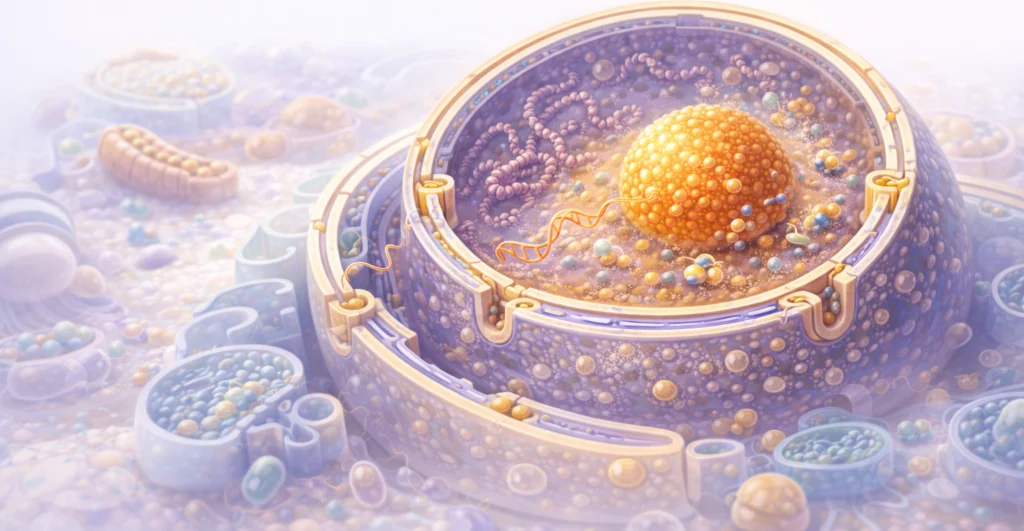
At the heart of every eukaryotic cell lies a highly organized structure responsible for maintaining order, coordination, and continuity of life. This central compartment governs how a cell behaves, grows, and responds to its environment by managing genetic instructions with remarkable precision. Acting as the command hub, it ensures that vital processes such as development, repair, and reproduction occur in a regulated and timely manner. Its presence is a defining feature that separates complex organisms from simpler forms of life, highlighting its evolutionary importance.
The nucleus is one of the most essential and complex structures in eukaryotic cells. Often described as the control center of the cell, it plays a central role in regulating genetic information, cell growth, metabolism, and reproduction. Without this organelle, higher life forms as we know them would not exist. By safeguarding hereditary material and controlling how that information is used, this structure enables cells to specialize, adapt, and function efficiently within tissues and organs.
Beyond genetic storage, it also serves as a coordination point for critical biochemical activities. From storing DNA to coordinating protein synthesis, the nucleus ensures that cellular activities occur in a controlled and organized manner. This article provides a clear, professional, and in-depth explanation of the nucleus, combining structure, function, and biological significance in a way that is easy to understand and academically reliable. Through this exploration, readers will gain a solid foundation for understanding how cellular regulation supports life at every level.
What Is the Nucleus?
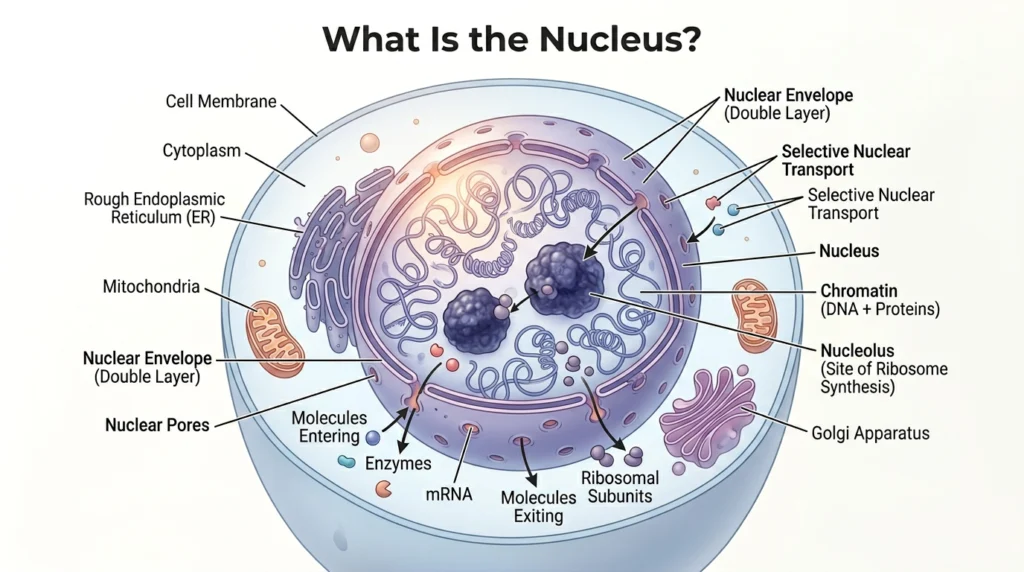
This specialized, membrane-bound compartment is a defining feature of eukaryotic cells, including those of plants, animals, fungi, and protists. The nucleus is a membrane-bound organelle found in eukaryotic cells such as plant, animal, fungal, and protist cells. It houses the cell’s genetic material in the form of DNA and acts as the regulatory hub for gene expression and cell division. By enclosing hereditary material within a protective boundary, it ensures that genetic instructions remain stable and precisely regulated.
In contrast to simpler organisms, cells with this structure benefit from an added level of organization. Unlike prokaryotic cells, which lack a defined nucleus, eukaryotic cells use this compartment to separate genetic processes from the cytoplasm. This separation allows for greater complexity and control in cellular functions. As a result, activities such as growth, specialization, and reproduction can occur with a high degree of accuracy and efficiency.
Key defining characteristics include:
- A double-layered nuclear membrane
- Presence of chromatin (DNA and proteins)
- One or more nucleoli
- Selective transport via nuclear pores
Discovery and Historical Significance
The nucleus was first described in 1831 by the Scottish botanist Robert Brown while studying orchid cells. This discovery marked a turning point in cell biology, as it revealed that cells contain a central structure responsible for vital functions.
Over time, advances in microscopy and molecular biology demonstrated that the nucleus is not merely a container for DNA but an active and dynamic organelle involved in regulating nearly every aspect of cellular life.
Structure of the Nucleus Explained
Understanding the structure of the nucleus is essential to appreciating how it performs its functions.
Nuclear Envelope
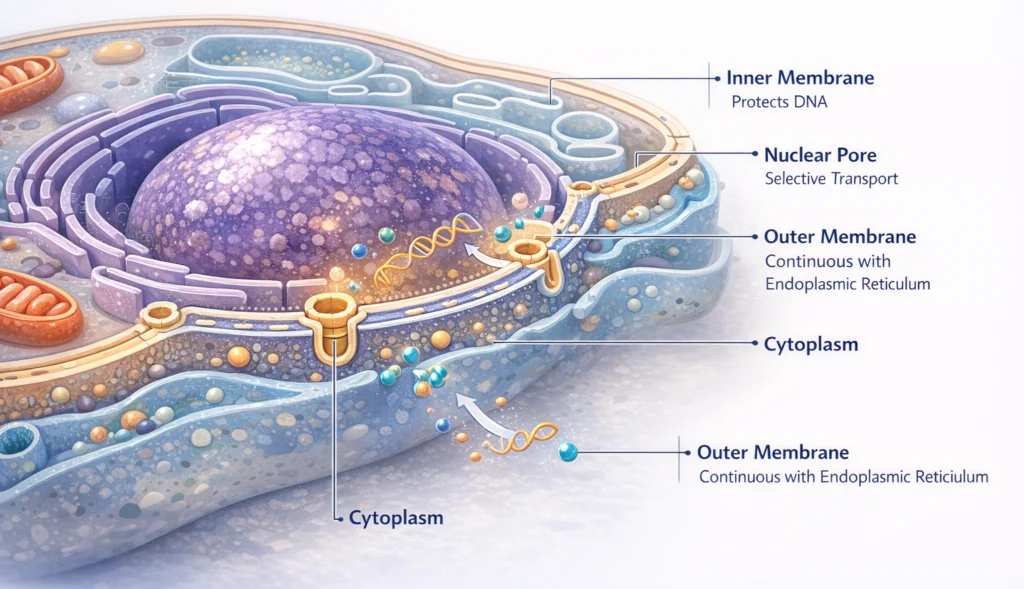
This protective boundary plays a crucial role in maintaining cellular organization and safeguarding genetic material. The nuclear envelope is a double membrane that encloses the nucleus and separates it from the cytoplasm. Its inner and outer layers create a controlled environment where vital genetic processes can occur without interference from surrounding cellular activities.
Beyond protection, this structure also supports regulation and communication. Embedded pores allow selective exchange of molecules such as RNA and proteins, ensuring efficient coordination between internal genetic activities and the rest of the cell. Through this combination of isolation and controlled interaction, the envelope contributes significantly to cellular stability and proper function.
Key features include:
- Inner and outer membranes
- Continuity with the endoplasmic reticulum
- Structural support and protection for DNA
Nuclear Pores
These specialized gateways are essential for controlled communication within the cell. Nuclear pores are large protein complexes embedded in the nuclear envelope. They regulate the movement of molecules between the nucleus and cytoplasm. By acting as selective channels, they ensure that only specific substances can pass through at the right time.
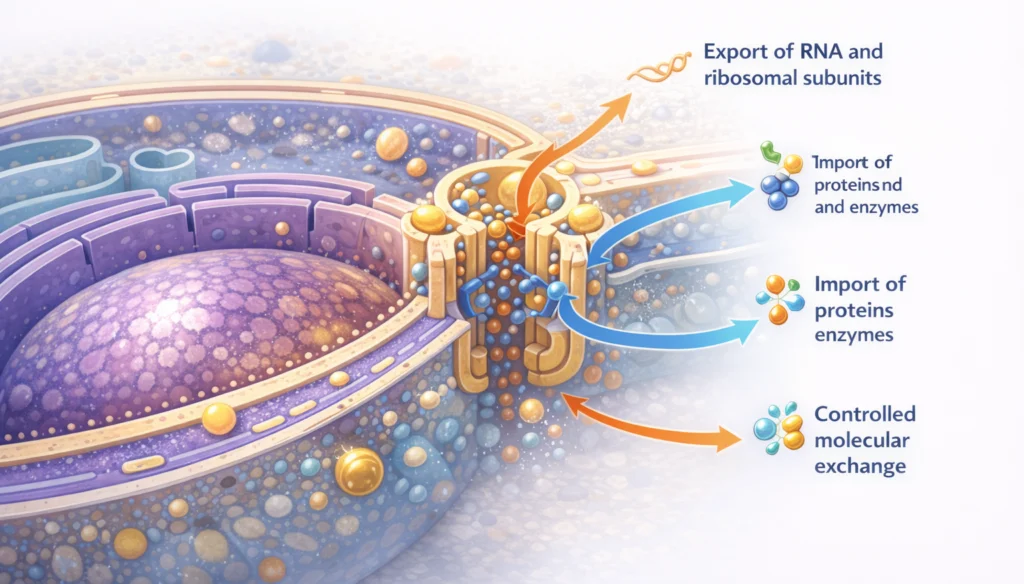
Through this regulation, important materials such as RNA, proteins, and enzymes are transported efficiently while harmful or unnecessary molecules are restricted. This precise control supports proper gene activity, protein production, and overall cellular balance.
They allow:
- Export of RNA and ribosomal subunits
- Import of proteins and enzymes
- Controlled molecular exchange
Nucleoplasm
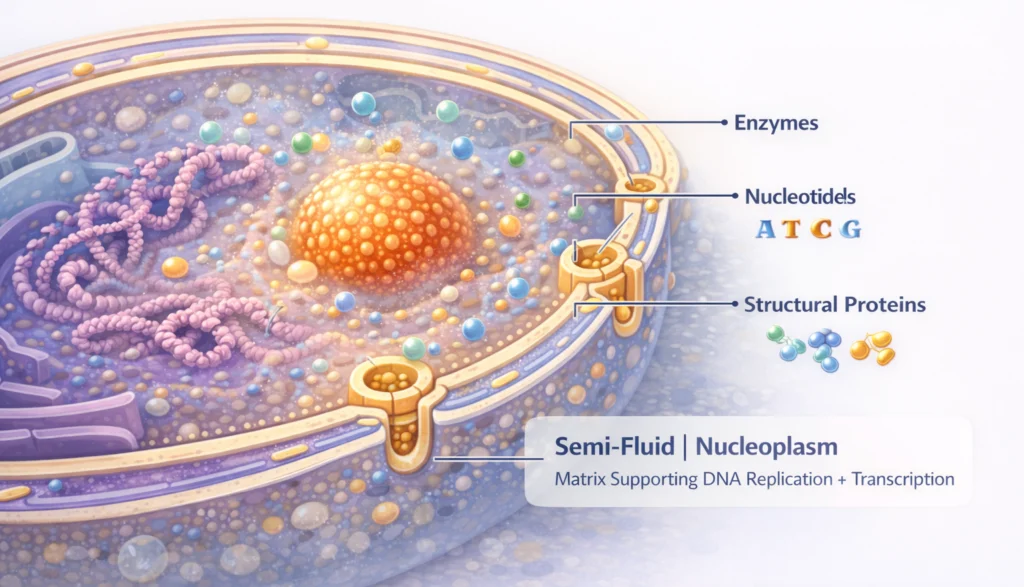
This semi-fluid substance forms the internal environment where essential genetic activities take place. The nucleoplasm is the semi-fluid matrix inside the nucleus. It contains enzymes, nucleotides, and structural proteins necessary for DNA replication and transcription. By providing the right chemical conditions, it supports the smooth execution of these complex processes.
In addition to hosting enzymes and building blocks, this matrix helps maintain the organization of genetic material and associated structures. Its composition allows molecules to move efficiently, ensuring that replication and gene expression occur accurately and without disruption.
Chromatin
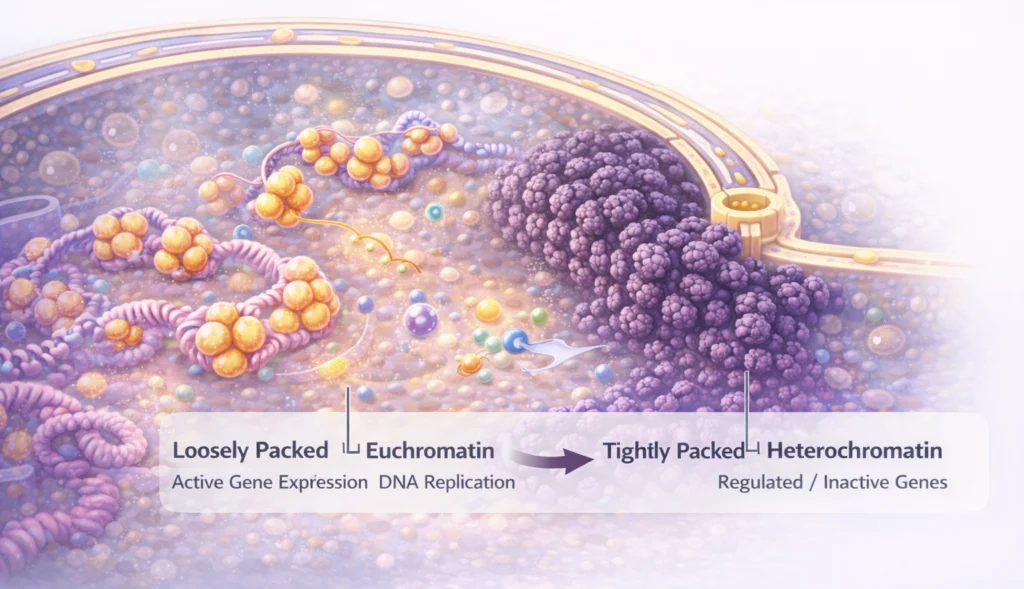
This genetic material is responsible for storing and organizing hereditary information within the cell. Chromatin is the DNA-protein complex that carries genetic information. It consists of DNA wrapped around specialized proteins called histones, allowing long genetic strands to fit into a compact and manageable form.
Its structure is dynamic and changes depending on cellular needs. When loosely packed, genes are more accessible for expression, while tightly packed regions help regulate activity and maintain stability. This flexible organization ensures accurate control over genetic processes such as replication and transcription.
It exists in two forms:
| Type | Description | Function |
|---|---|---|
| Euchromatin | Light, loosely packed | Active gene expression |
| Heterochromatin | Dark, tightly packed | Gene regulation and stability |
Nucleolus
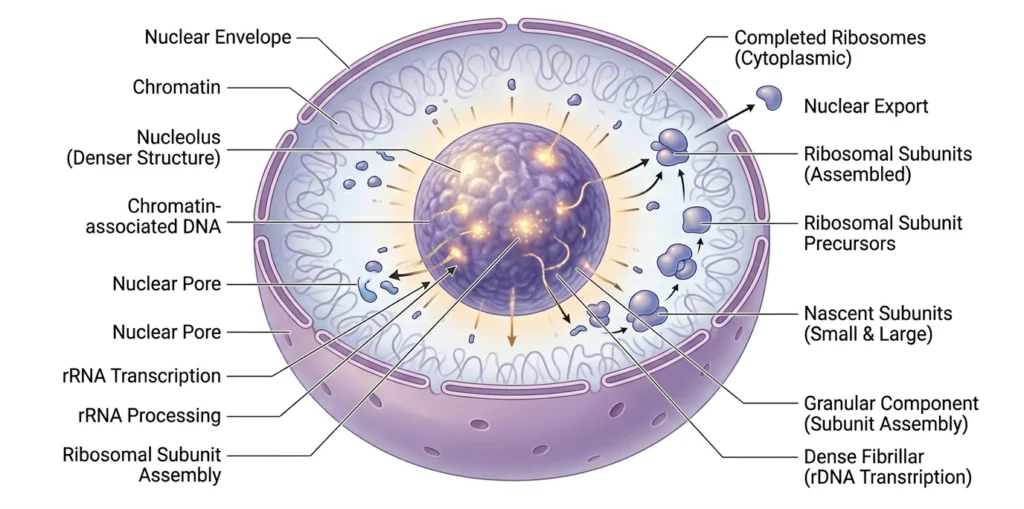
This prominent, dense structure plays a key role in protein production within the cell. The nucleolus is a dense, spherical region within the nucleus responsible for ribosome production. It synthesizes ribosomal RNA (rRNA) and assembles ribosomal subunits. By coordinating these steps, it initiates the formation of essential machinery required for translating genetic instructions into proteins.
Beyond assembly, this region responds dynamically to the cell’s metabolic needs. When protein demand increases, its activity intensifies, reflecting its importance in growth, repair, and overall cellular function.
Functions of the Nucleus
This central cellular structure coordinates a wide range of activities essential for survival and continuity. The nucleus performs multiple critical functions that sustain cellular life. It safeguards genetic material, regulates when and how genes are expressed, and ensures that vital instructions are accurately transmitted during cell division.
By controlling DNA replication and RNA synthesis, it maintains stability while allowing adaptability to changing conditions. It also plays a key role in coordinating growth, metabolism, and reproduction, making it indispensable for proper cellular organization and long-term biological function.
Genetic Information Storage
A secure and well-regulated environment is essential for preserving hereditary instructions. The nucleus stores DNA, which contains instructions for protein synthesis, cell structure, metabolism, and growth and development. These encoded messages guide how a cell is built, how it functions, and how it responds to internal and external signals.
By enclosing this genetic blueprint within a protected compartment, the risk of damage or unwanted mutation is significantly reduced. This level of protection ensures long-term stability while allowing precise control over when and how genetic information is used.
Regulation of Gene Expression
Precise control over genetic activity allows cells to function efficiently and adapt to changing conditions. By controlling which genes are transcribed into RNA, the nucleus regulates cell specialization, response to environmental signals, and the timing of protein production. This selective activation ensures that only the necessary instructions are used at the right moment.
Through this regulation, identical genetic material can produce diverse cell types with specialized roles. It also enables rapid adjustment to stress, nutrients, or signals, maintaining balance and coordination within tissues and organs.
DNA Replication
Accurate duplication of genetic material is essential for growth and repair. Before cell division, DNA replication occurs inside the nucleus, ensuring that each daughter cell receives an identical set of genetic instructions. This tightly regulated process copies the entire genome with high precision. By maintaining fidelity during replication, cells preserve genetic stability across generations. Any errors are carefully monitored and corrected, reducing the risk of mutations and ensuring proper development and function.
Ribosome Production
The formation of protein-building machinery begins within a specialized internal region. Through the nucleolus, the nucleus initiates ribosome assembly, which is essential for protein synthesis in the cytoplasm. This process involves producing ribosomal RNA and combining it with proteins to form functional subunits. Once assembled, these subunits are transported to the cytoplasm, where they participate in translating genetic instructions into proteins. This tightly coordinated process supports growth, repair, and all metabolic activities of the cell.
Cell Cycle Control
Orderly progression through the stages of growth and division is essential for cellular health. The nucleus coordinates checkpoints in the cell cycle, helping prevent errors in division that could lead to abnormal cells. These control points ensure that DNA is accurately replicated and repaired before the cell moves forward. By monitoring internal conditions and external signals, this regulatory system can pause or stop division when problems are detected. Such oversight protects organisms from uncontrolled cell growth and maintains stability across tissues.
Nucleus and Cell Division
The role of the nucleus is especially critical during cell division.
Mitosis
This form of cell division enables growth, tissue repair, and maintenance in multicellular organisms. In mitosis, chromatin condenses into chromosomes, the nuclear envelope temporarily breaks down, and DNA is evenly distributed to daughter cells. These tightly regulated steps ensure that each new cell receives an exact copy of genetic material.
Once separation is complete, cellular structures reorganize to restore normal function. The accuracy of this process is vital for maintaining genetic stability and supporting healthy development.
Meiosis
This specialized type of cell division is essential for sexual reproduction. In meiosis, genetic material is recombined, chromosome number is reduced by half, and genetic diversity is increased. These changes produce reproductive cells that carry unique combinations of traits, contributing to variation within a species.
By halving the chromosome count, this process ensures stability across generations when fertilization occurs. These processes ensure growth, repair, and reproduction in multicellular organisms, supporting long-term survival and evolution.
Nucleus in Different Cell Types
Animal Cells
In animal cells, the genetic control center is usually round in shape and positioned near the middle of the cell. Animal cell nuclei are typically round and centrally located. They are involved in regulating metabolism, growth, and tissue repair. This central placement allows efficient coordination of cellular activities.
By directing gene expression and responding to internal signals, this structure helps maintain normal function in tissues and organs. Its proper operation is essential for development, healing, and overall physiological balance.
Plant Cells
In plant cells, the primary genetic control structure is often displaced toward the cell’s edge. Plant cell nuclei are often pushed to the side due to the large central vacuole. Despite this, their function remains the same. The vacuole occupies most of the internal space, influencing the position of other components.
Even with this altered placement, regulation of genetic activity, growth, and development continues efficiently. This arrangement supports processes such as photosynthesis, cell expansion, and response to environmental conditions.
Fungal and Protist Cells
Cells belonging to fungi and protists display a wide range of structural diversity. These cells contain nuclei that may vary in number and shape but maintain the same core functions. Some species possess a single control center, while others may have multiple within one cell, depending on their life cycle and complexity.
Despite these differences, regulation of genetic material, growth, and reproduction remains consistent. This flexibility allows such organisms to adapt to diverse environments while preserving essential cellular processes.
Differences Between Nucleus and Prokaryotic DNA Region
| Feature | Nucleus | Prokaryotic Nucleoid |
|---|---|---|
| Membrane | Present | Absent |
| DNA organization | Linear chromosomes | Circular DNA |
| Ribosome production | In nucleolus | In cytoplasm |
| Complexity | High | Low |
This distinction explains why eukaryotic cells can perform more specialized functions.
Medical and Scientific Importance
Cellular health and disease are closely connected to the condition of the genetic control center. Abnormalities in the nucleus are linked to many diseases, including cancer. Changes in nuclear size, shape, or DNA organization are often used as diagnostic markers in pathology. Such alterations help specialists identify abnormal cell behavior at an early stage.
In scientific research, this structure is central to studies in genetics, molecular biology, and biotechnology. Insights gained from its behavior support advances in cancer diagnosis, gene therapy, and the development of targeted medical treatments.
In genetics and biotechnology, the nucleus is central to:
- Gene therapy
- DNA sequencing
- Cloning research
- Cancer studies
Understanding the nucleus is fundamental to advances in modern medicine.
Common Misconceptions About the Nucleus
Several misunderstandings exist regarding this vital cellular structure. The nucleus is not present in all cells, as prokaryotes lack it. It does not directly make proteins but instead controls the instructions required for their synthesis. It is also dynamic rather than a static structure. These clarifications are important for building an accurate understanding of cell biology.
By addressing such myths, learners can better grasp how cellular regulation truly works. Correcting these misconceptions improves biological literacy, enabling students and readers to distinguish between simplified explanations and scientifically accurate concepts.
References
- Byju’s Biology – The Nucleus
- Britannica – Nucleus (Biology)
- Wikipedia – Cell Nucleus
- National Human Genome Research Institute – Nucleus
- NCBI Bookshelf – Cell Nucleus
- National Cancer Institute – Nucleus Definition
- Biology Online – Nucleus
- Khan Academy – Nucleus and Ribosomes
- Nature Scitable – Nucleus Definition
Conclusion
The nucleus is far more than a simple cellular compartment. It is a highly organized, dynamic structure that governs genetic stability, cellular regulation, and biological complexity. From DNA storage to ribosome formation and cell division, the nucleus enables life at the cellular level to function with precision and efficiency.
A strong understanding of the nucleus is essential for students, researchers, and anyone seeking to grasp the foundations of biology and modern medicine.
You may also visit the Biology section.
🌐 Connect With Us
👉 Informosio Tech – Science & Technology news, AI trends, gadgets, and innovations