Definition

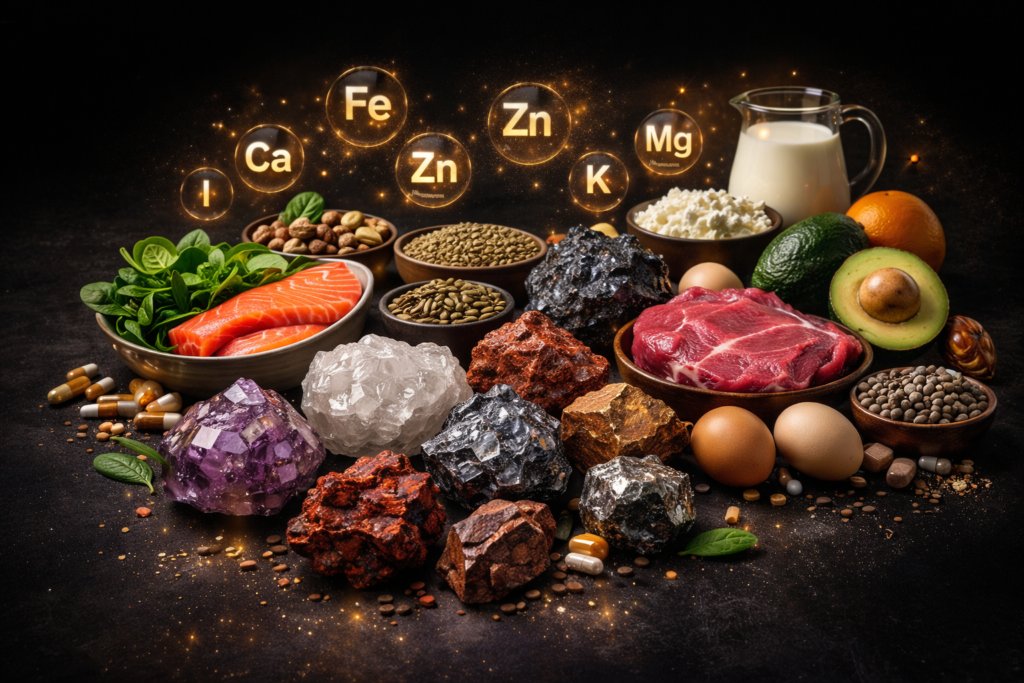
Minerals are naturally occurring, inorganic substances that are essential for the proper functioning of living organisms. They provide structural support, regulate bodily processes, and are crucial for overall health. In nutrition, These nutrients are refer specifically to chemical elements needed for life. These nutrients cannot be synthesized by the human body, so they must be obtained from dietary sources such as plants, animals, water, or supplements. They play a key role in various physiological processes and are indispensable for growth, development, and maintaining overall health.
Minerals are broadly classified into major nutrients and trace nutrients based on the amount required by the body. Major nutrients, including calcium, phosphorus, potassium, sodium, and magnesium, are needed in relatively large quantities. They are vital for forming bones and teeth, regulating fluid balance, transmitting nerve impulses, and facilitating muscle contractions. Trace minerals, such as iron, zinc, copper, iodine, and selenium, are required in smaller amounts but are equally critical. They function as cofactors for enzymes, assist in hormone production, support immunity, and participate in red blood cell formation.
Each mineral has unique roles in the body. Calcium is fundamental for bone and teeth strength, blood clotting, and nerve signaling. Phosphorus contributes to the structural integrity of bones and teeth, as well as energy storage and transfer through ATP. Potassium and sodium regulate fluid and electrolyte balance, muscle contraction, and nerve function. Magnesium supports over 300 enzymatic reactions, muscle and nerve activity, and energy production. Trace minerals also perform specialized functions: iron carries oxygen in hemoglobin, zinc promotes immune health and wound healing, copper aids red blood cell formation, iodine is necessary for thyroid hormone synthesis, and selenium acts as an antioxidant and supports immunity.
These nutrients are not only biologically essential but also occur naturally in the environment. They are present in rocks, soil, and water, and enter the food chain through plants that absorb them from the soil. Animals and humans then obtain minerals by consuming these plants or other animals. Their chemical composition and crystalline structure determine physical properties such as hardness, density, and color, which are useful for classification and industrial applications.
The functions of nutrients in humans include maintaining bone and teeth strength, regulating nerve impulses and muscle contractions, facilitating enzyme and hormone functions, maintaining fluid balance and blood pressure, and preventing deficiency-related diseases such as anemia or goiter. These nutrients also have important practical applications in agriculture, medicine, and industry. In plants, These nutrients are crucial for growth, photosynthesis, and metabolic reactions.
Common misconceptions about nutrients include the belief that the body can produce them, that all These nutrients are required in large quantities, or that trace minerals are unimportant. Understanding mineral bioavailability—the extent to which minerals are absorbed and utilized—is important for proper nutrition. Factors such as the mineral’s chemical form, dietary inhibitors, and interactions with vitamins affect their absorption.
In conclusion, minerals are inorganic, naturally occurring substances that are essential for life. They are indispensable for growth, metabolism, cellular function, and overall health. Both major and trace nutrients have specific roles that contribute to physiological balance, disease prevention, and optimal functioning of living organisms. A balanced diet rich in minerals ensures proper development, health maintenance, and protection against deficiencies. Knowledge of minerals is fundamental for students of biology, nutrition, and health sciences.
Overview
Minerals play a vital role in both human health and plant growth. They are necessary for strong bones, proper nerve function, muscle contraction, enzyme activity, and overall cellular health. Unlike vitamins, These nutrients are inorganic and cannot be synthesized by the body, so they must be obtained from the diet or environment.
Distribution and Occurrence
Minerals are found throughout the Earth in rocks, soil, and water. Plants absorb nutrients from soil, which then enter the food chain as animals consume plants. In humans, These nutrients are stored in bones, teeth, and tissues, while some circulate in the blood.
Structure of Minerals
Minerals have a defined chemical composition and crystalline structure. This structured arrangement determines their physical properties such as hardness, color, and density. They can exist as single elements (like iron) or as compounds (like calcium carbonate).
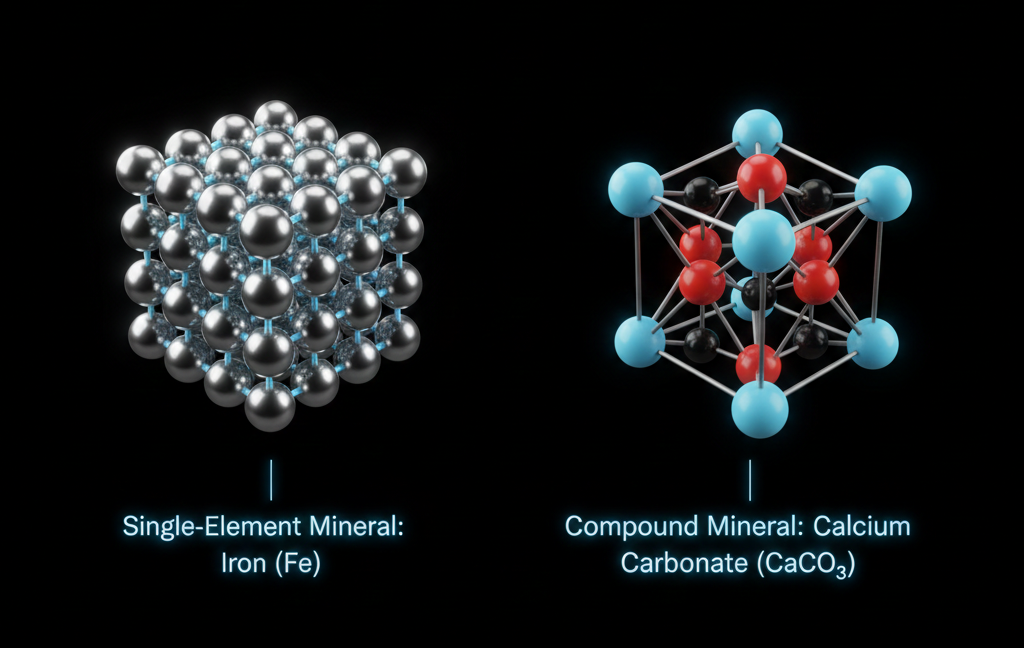
Diagram Explanation (Text Only)
A typical mineral structure includes:
- Crystal lattice – the repeating three-dimensional arrangement of atoms.
- Unit cell – the smallest portion of the crystal lattice that repeats.
- Mineral grain – individual crystals within a rock.
- Impurities – elements that can alter color or hardness.
Parts of Nutrients
1. Major Minerals
Definition:
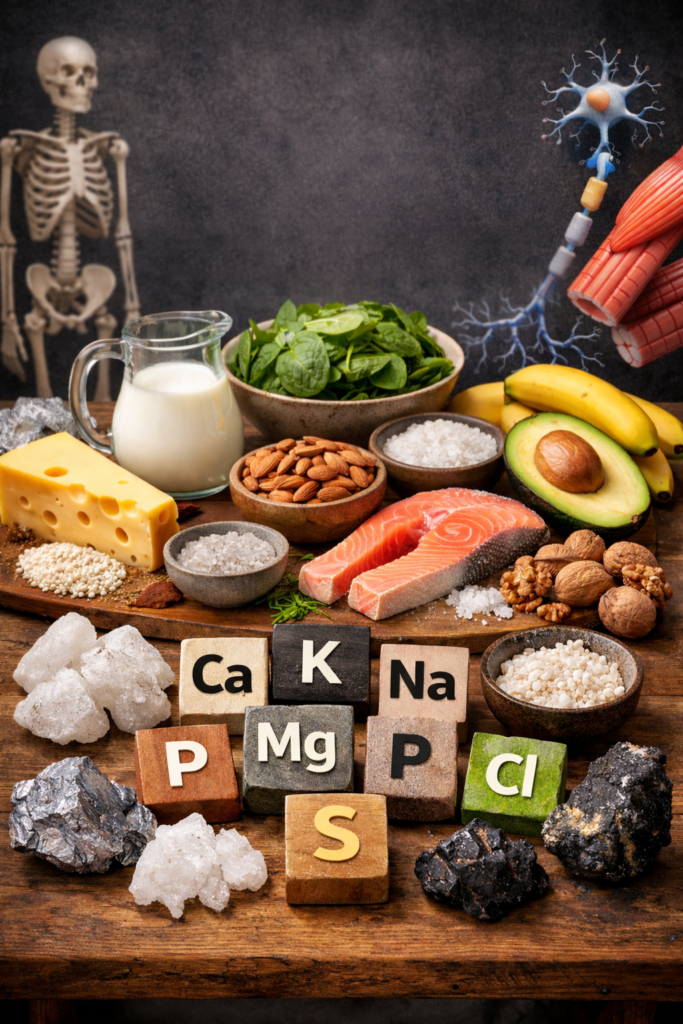
Major minerals are nutrients required in large amounts by the body. These nutrients are needed in relatively higher quantities, usually more than 100 milligrams per day, to support essential physiological processes necessary for normal growth, development, and maintenance of health. Major nutrients contribute to the formation and strength of bones and teeth, regulate fluid balance within cells and body tissues, support proper muscle contraction, enable nerve impulse transmission, and assist in various metabolic reactions. Because the human body cannot synthesize these nutrients, they must be obtained regularly through a balanced diet. Important examples of major minerals include calcium, phosphorus, potassium, sodium, magnesium, chloride, and sulfur, each performing specific structural and functional roles in maintaining overall body stability and health.
Location: Found in food, water, and supplements.
Structure: Ionic compounds or simple elements.
Function: Maintain body functions such as nerve signaling, bone formation, and fluid balance.
Importance: Essential for life and preventing deficiency diseases.
Examples:
- Calcium: Found in dairy, bones, and teeth; vital for bone strength, muscle function, and blood clotting.
- Phosphorus: Found in bones and teeth; supports energy storage and cell structure.
- Potassium: Present in fruits and vegetables; regulates heart rhythm, muscle contraction, and fluid balance.
- Sodium: Present in salt; essential for nerve transmission and fluid regulation.
- Magnesium: Found in nuts and leafy greens; supports enzyme reactions and muscle function.
2. Trace Minerals
Definition:
Trace minerals are nutrients required in very small amounts. These nutrients are needed in quantities generally less than 100 milligrams per day but are essential for maintaining normal body functions. Trace nutrients help in enzyme activity, hormone production, immune system function, oxygen transport, and various metabolic processes. Important examples of trace minerals include iron, zinc, iodine, selenium, copper, manganese, fluoride, and chromium. Even though they are required in small amounts, a deficiency of trace nutrients can lead to significant health problems, showing their critical importance in maintaining overall health.
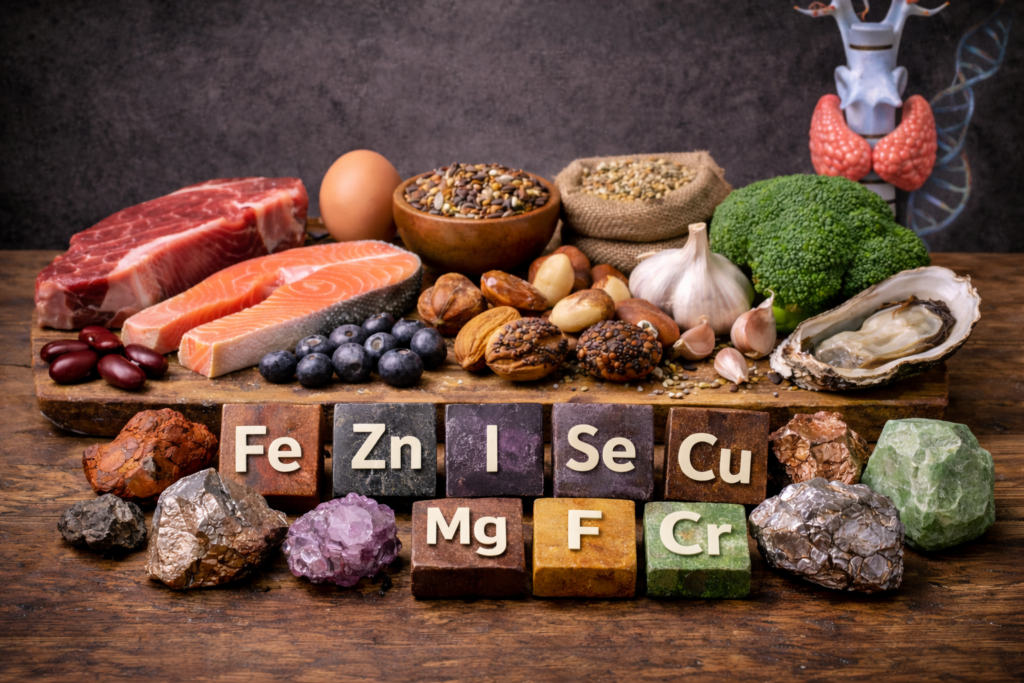
Location: Present in various foods and water sources.
Structure: Usually part of enzymes or proteins.
Function: Support metabolism, hormone production, and antioxidant activity.
Importance: Prevent deficiencies that can lead to health disorders.
Examples:
- Iron: Supports hemoglobin formation and oxygen transport.
- Zinc: Important for immunity, wound healing, and growth.
- Copper: Helps in red blood cell formation and energy production.
- Iodine: Required for thyroid hormone production.
- Selenium: Acts as an antioxidant and supports immune function.
Functions in the Body
- Maintain strong bones and teeth.
- Regulate muscle contractions and nerve signals.
- Support enzyme function and hormone production.
- Balance fluids and electrolytes in the body.
- Prevent chronic diseases and nutrient deficiencies.
Importance and Applications
- Biological relevance: Essential for growth, reproduction, and cellular processes.
- Chemical role: Serve as cofactors for enzymes, participate in metabolic reactions.
- Practical applications: Used in medicine, agriculture (fertilizers), and industry (construction, electronics).
Common Mistakes or Misconceptions
- Believing minerals can be synthesized by the body.
- Assuming all nutrients are required in large amounts.
- Confusing vitamins with nutrients.
- Overlooking the importance of trace minerals.
Key Points for Examination
- Minerals are inorganic and essential for life.
- Major nutrients are needed in gram quantities; trace nutrients in milligram or microgram quantities.
- Calcium, phosphorus, potassium, sodium, and magnesium are major nutrients.
- Iron, zinc, copper, iodine, and selenium are trace nutrients.
- Minerals must be bioavailable to function in the body.
Conclusion and Summary
Minerals are inorganic substances essential for life. They support growth, metabolism, and body functions. Major and trace nutrients play specific roles, from forming bones to supporting enzyme activity. Ensuring a balanced intake of minerals through diet or supplements is crucial for maintaining health. Understanding nutrients is fundamental in biology and nutrition.
You can Visit also Earth Science
FAQs
Q1: What are the major minerals in the human body?
A1: Calcium, phosphorus, potassium, sodium, and magnesium.
Q2: What is the difference between major and trace minerals?
A2: Major minerals are required in large amounts; trace minerals are needed in very small amounts.
Q3: Can the body produce minerals?
A3: No, minerals are inorganic and must be obtained from food, water, or supplements.
Q4: Why are minerals important for plants?
A4: Minerals support growth, enzyme function, and nutrient cycles in plants.
Q5: How do minerals enter the human body?
A5: Through consumption of plants, animals, water, and sometimes supplements.