
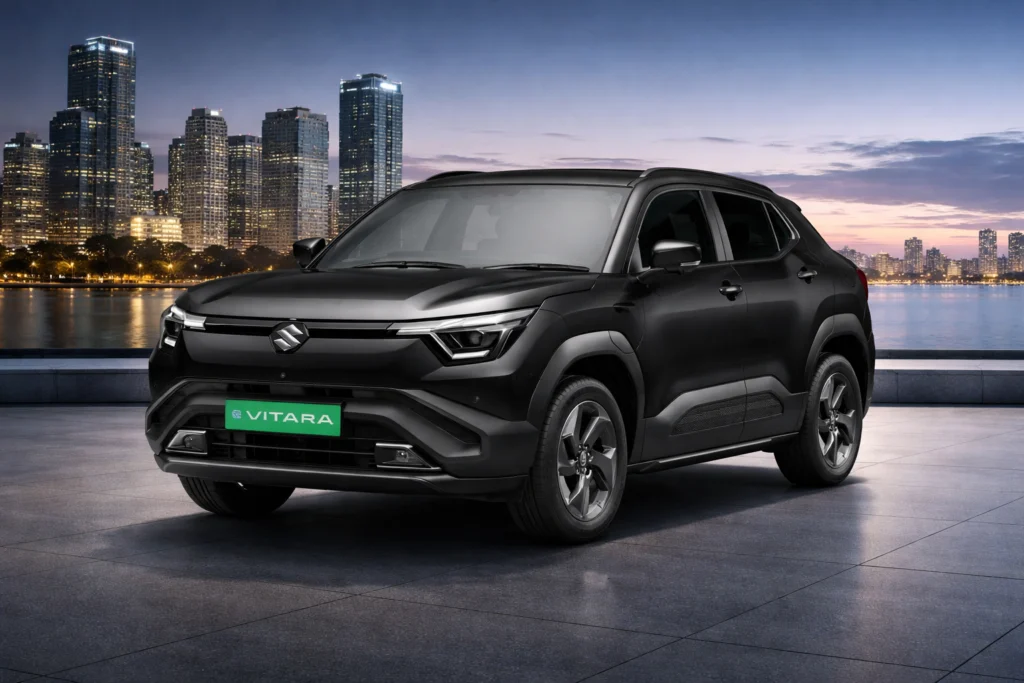
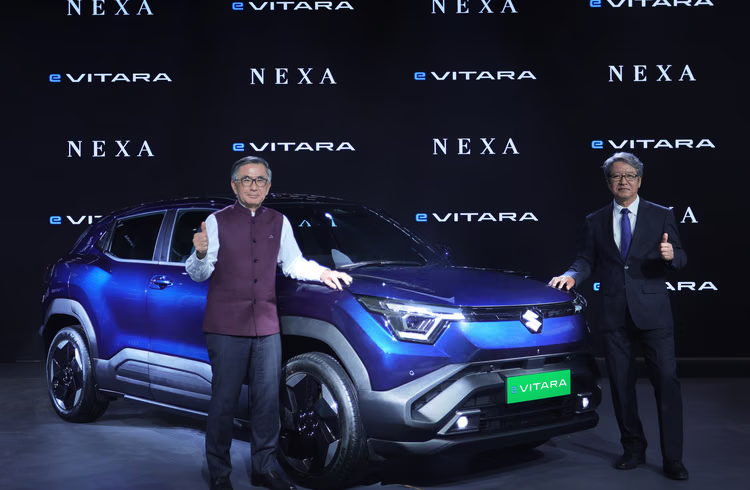
India’s electric vehicle market has entered a new phase with the official launch of the Maruti eVitara. After years of speculation about when Maruti Suzuki would enter the full-electric passenger vehicle space, the country’s largest carmaker has finally unveiled its first mass-market electric SUV. And it has done so with an aggressive pricing strategy, a battery subscription twist, and global ambitions.
The eVitara is not just another electric SUV. It represents a major strategic shift for Maruti Suzuki and could significantly influence how EVs are priced, sold, and adopted in India. In this detailed blog, we explore its pricing, battery options, range, design, features, competition, and what this launch means for the future of electric mobility in India.
A Turning Point for Maruti Suzuki
For decades, Maruti Suzuki has dominated the Indian car market with petrol and CNG vehicles known for affordability and low maintenance costs. While competitors such as Tata Motors, Hyundai and MG Motor aggressively expanded their electric portfolios, Maruti followed a phased approach, initially focusing on hybrids before committing to a full-electric SUV.
The launch of the eVitara marks a decisive shift in that strategy.
Built on a dedicated electric platform developed specifically for EV architecture, the eVitara is engineered to optimize battery placement, enhance cabin space and deliver improved weight distribution. It signals that Maruti is no longer observing the EV transition from the sidelines—it is now actively participating.
Even before its official Indian pricing announcement, thousands of units were exported to global markets, reinforcing India’s position as an emerging EV manufacturing hub.
Disruptive Pricing Strategy with Battery-as-a-Service (BaaS)
One of the biggest headlines surrounding the eVitara is its pricing model.
Instead of bundling the battery cost into the ex-showroom price, Maruti Suzuki has introduced a Battery-as-a-Service (BaaS) structure. The SUV starts at an aggressive base price, while the battery is offered on a pay-per-use rental model charged per kilometre.
Why This Matters
Battery packs are the most expensive component of any EV. By separating battery ownership from the vehicle cost, Maruti has:
- Reduced the initial purchase price significantly
- Lowered entry barriers for first-time EV buyers
- Introduced a flexible usage-based cost system
This model could make electric SUVs accessible to middle-class buyers who previously found EVs too expensive.
Additionally, buyers receive benefits such as a complimentary home charger installation and access to charging infrastructure support, improving overall ownership convenience.
Exterior Design: Modern and Bold
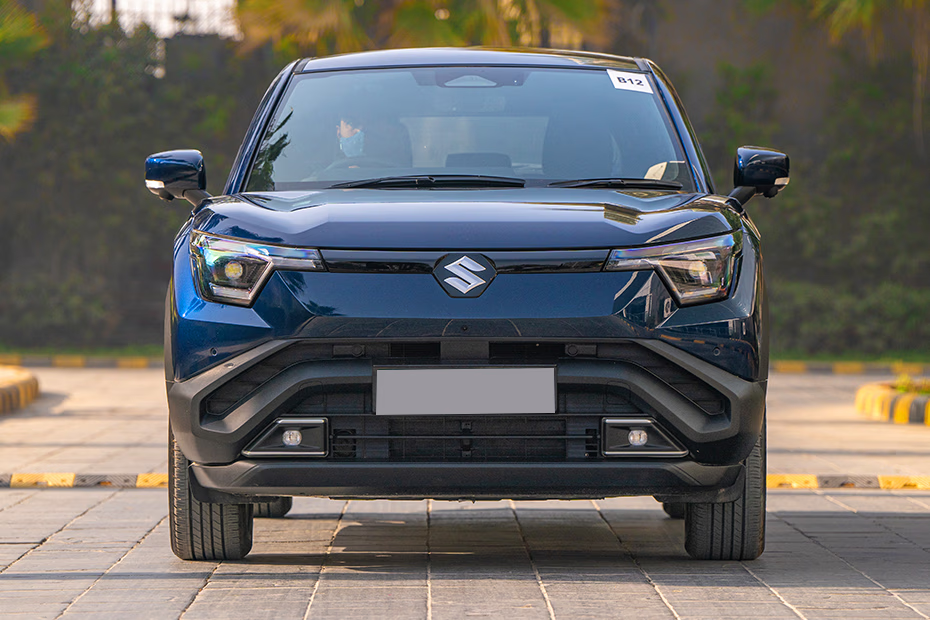
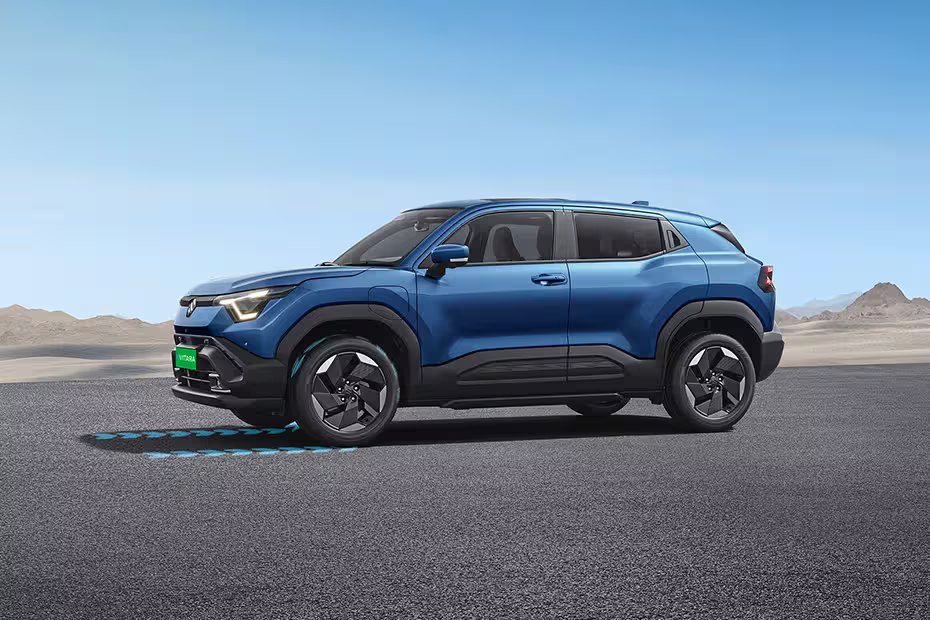
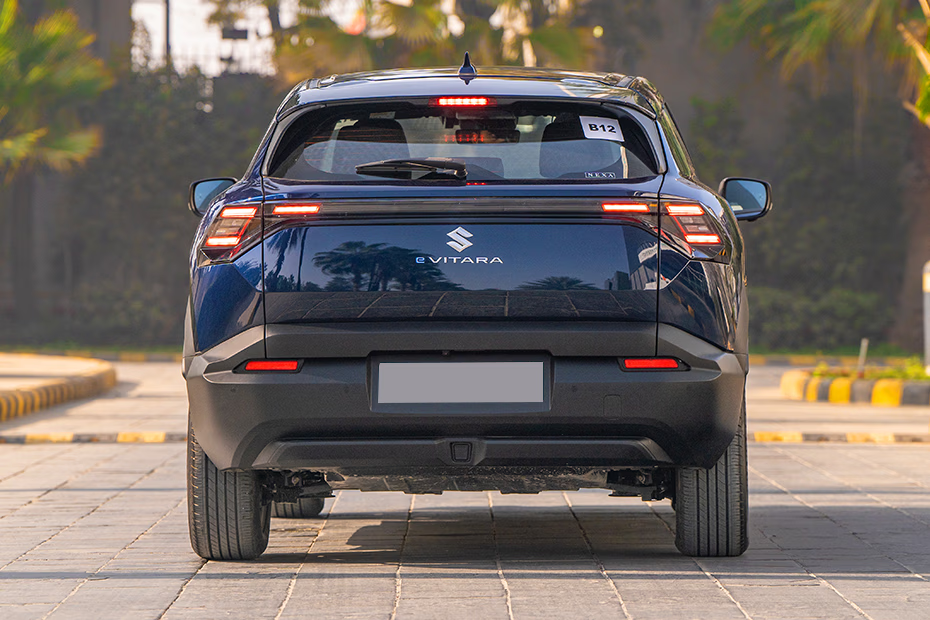
The eVitara carries a fresh, futuristic design language that separates it from traditional Maruti SUVs.
Key exterior highlights include:
- Sharp LED headlamps with signature DRLs
- Sculpted body lines for aerodynamic efficiency
- High ground clearance suitable for Indian roads
- Strong SUV stance with bold wheel arches
The design draws inspiration from global electric concepts previously showcased by Suzuki, but the production version feels practical and road-ready. It strikes a balance between urban sophistication and SUV ruggedness.
Unlike many conservative Maruti designs of the past, the eVitara looks distinctly modern and purpose-built for the electric era.
Interior and Features: Tech-Focused Cabin
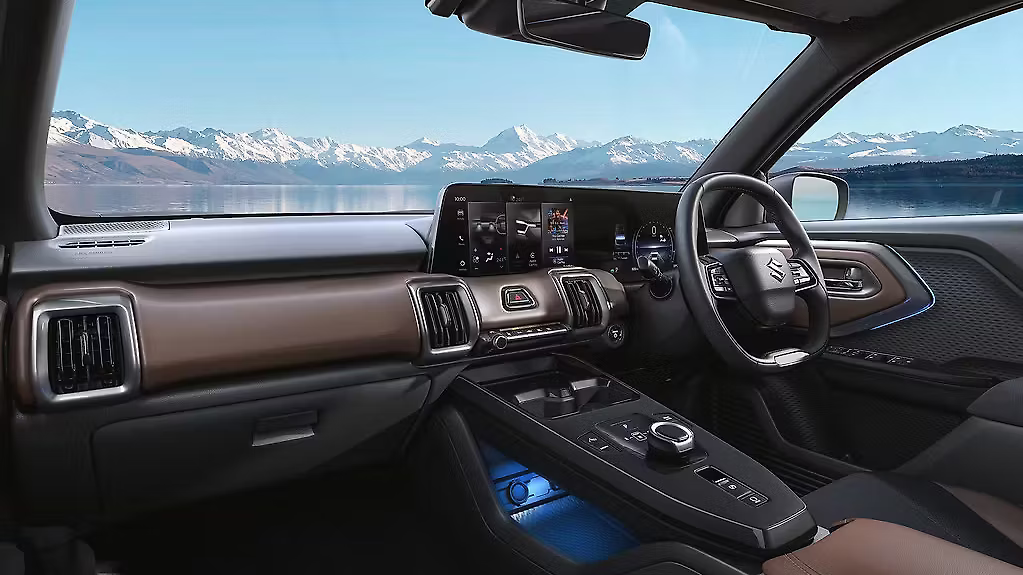
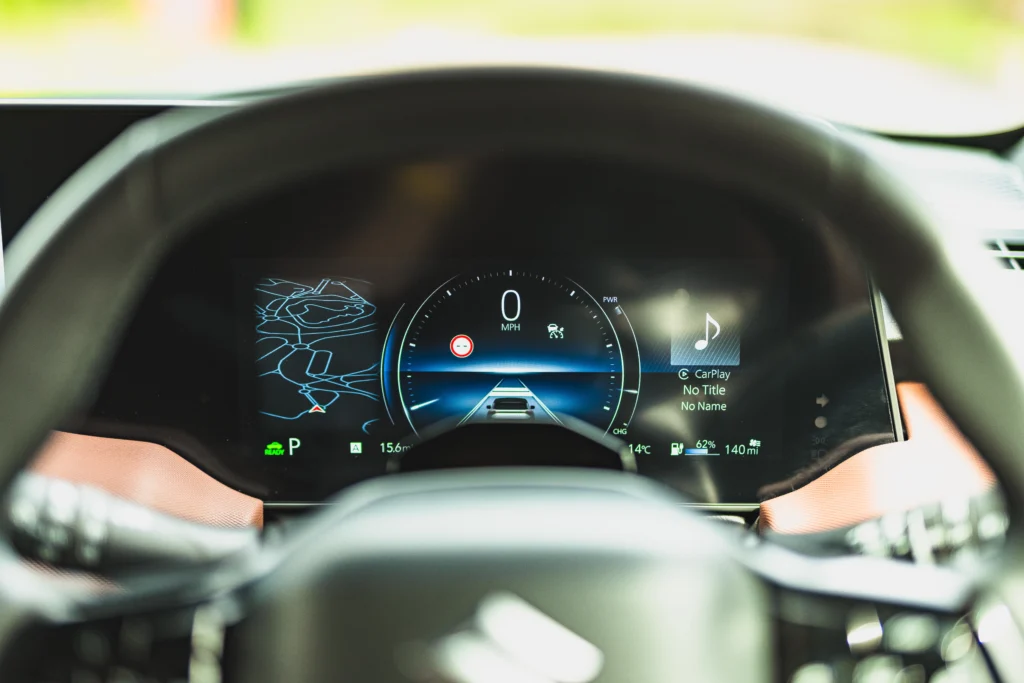
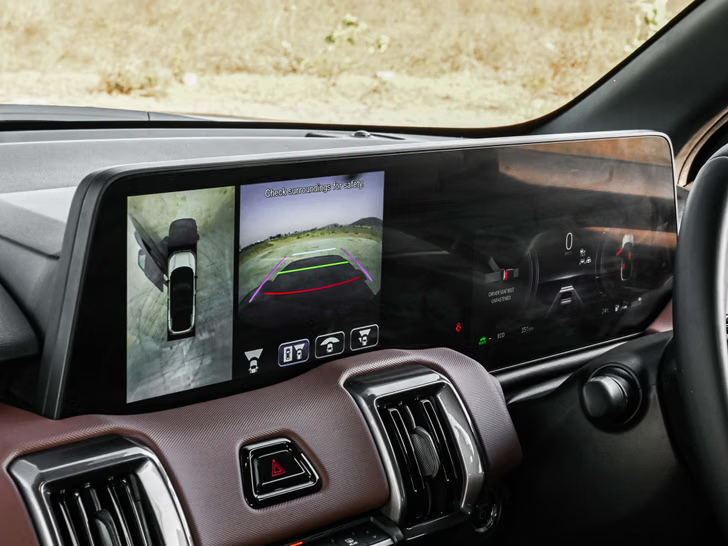
Step inside the eVitara, and the cabin feels noticeably premium compared to many existing Maruti offerings.
Major interior highlights include:
- Large touchscreen infotainment system
- Fully digital instrument cluster
- Wireless smartphone connectivity
- Ventilated seats
- Automatic climate control
- Premium upholstery options
The layout appears clean and minimalistic, with a focus on technology and comfort. The flat floor design, enabled by the EV platform, offers improved rear passenger legroom.
Connectivity and smart features are integrated to meet expectations of modern urban buyers who prioritize digital convenience.
Battery Options and Driving Range
Range anxiety remains one of the biggest concerns for EV buyers in India. Maruti has addressed this by offering two battery configurations.
- 49 kWh battery pack
- 61 kWh battery pack
The claimed driving range varies by variant, with the larger battery delivering over 500 km under standard testing conditions. Even the smaller battery option provides a range that comfortably supports daily city driving and occasional highway travel.
Charging Capabilities
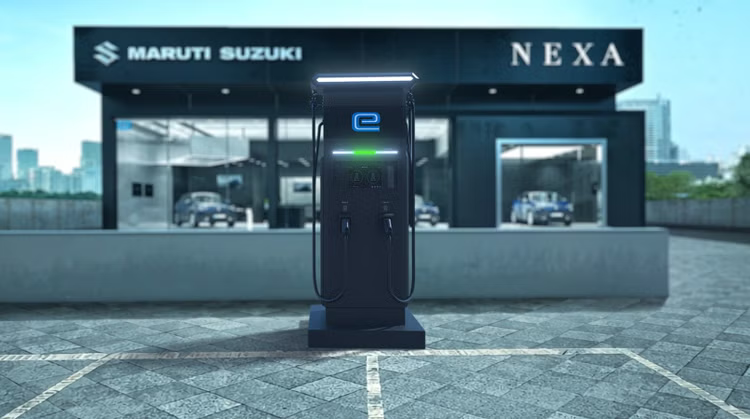
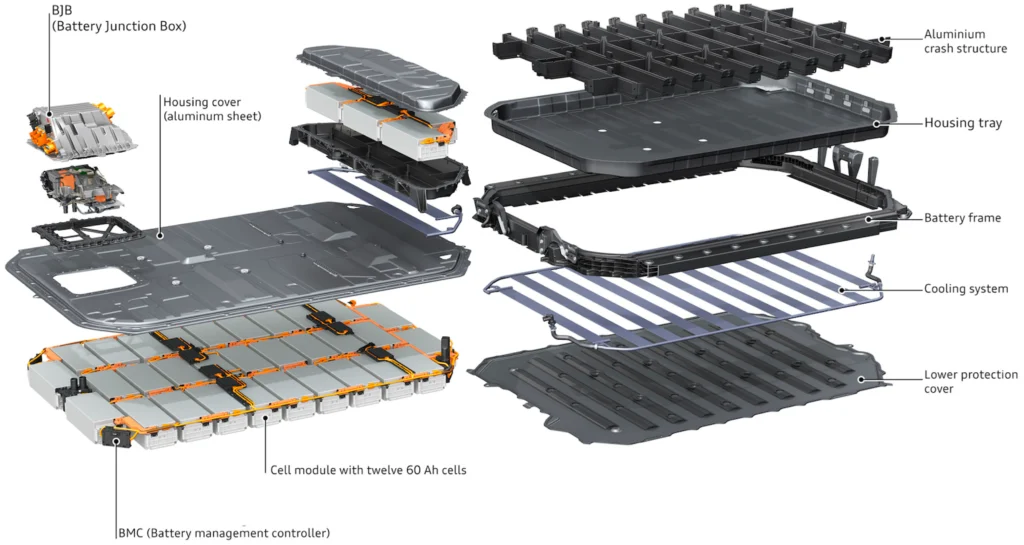
Charging flexibility is another strong point. The eVitara supports:
- Home AC charging
- DC fast charging
- Public charging network compatibility
Fast charging enables a significant top-up in under an hour, making long-distance trips more practical.
The underfloor battery placement also improves vehicle stability and center of gravity, enhancing handling dynamics.
Performance and Driving Experience
The eVitara is designed primarily for comfort, efficiency, and smooth acceleration rather than aggressive performance.
Electric motors provide instant torque delivery, ensuring quick response in city traffic. Highway cruising is expected to be stable and quiet, thanks to the silent nature of electric powertrains.
The dedicated EV platform also improves weight distribution, contributing to better cornering stability compared to converted petrol-based EV platforms.
Safety and Technology Package
Safety has become a crucial buying factor in India, and the eVitara aims to meet high standards.
Expected safety features include:
- Multiple airbags
- ABS with EBD
- Electronic Stability Control
- Tyre Pressure Monitoring System
- Advanced Driver Assistance Systems (ADAS) features in higher variants
With global markets in mind, structural integrity and crash safety have been emphasized during development.
Competition in the Mid-Size Electric SUV Segment
The eVitara enters a highly competitive market. Its primary rivals include:
- Hyundai Creta Electric
- Tata Curvv EV
- MG ZS EV
- Mahindra BE.05
Each of these competitors offers different strengths in terms of design, pricing, range, and brand perception.
How eVitara Stands Out
- Lower entry cost due to battery subscription model
- Massive service and dealership network of Maruti Suzuki
- Strong resale value expectations
- Global production backing
The trust factor associated with Maruti could play a major role in converting traditional petrol SUV buyers into EV adopters.
Running Costs and Ownership Benefits
With the BaaS model, buyers pay for battery usage per kilometre. This structure mimics fuel expenses, making cost comparisons easier for traditional car owners.
Electric vehicles generally offer:
- Lower maintenance costs
- No engine oil changes
- Fewer moving parts
- Reduced long-term service expenses
When combined with government EV incentives and potential fuel savings, total ownership cost may become competitive with petrol SUVs over time.
What This Means for India’s EV Future
The launch of the eVitara is bigger than just a single product introduction. It represents a structural shift in India’s electric mobility journey and signals several important developments:
- India’s largest carmaker fully entering the EV race – Maruti Suzuki’s participation brings credibility, scale, and confidence to the electric vehicle segment.
- Introduction of a new ownership model – The Battery-as-a-Service experiment could redefine how Indians purchase and pay for electric vehicles.
- Acceleration of mainstream EV adoption – With Maruti’s massive customer base, electric SUVs may now appeal to middle-class buyers beyond early adopters.
- Increased competition in the mid-size EV SUV segment – Rival brands may respond with aggressive pricing, better features, and improved range offerings.
- Boost to India’s EV manufacturing ecosystem – Higher production volumes can strengthen local battery supply chains, charging infrastructure expansion, and export potential.
India’s transition toward electric mobility depends on mass-market acceptance, and Maruti’s scale gives it the power to accelerate this shift significantly.
Final Verdict
The Maruti eVitara marks a historic moment for India’s automotive industry. With competitive pricing, multiple battery options, modern design, and a unique battery rental model, it aims to make electric SUVs more accessible to everyday buyers.
While long-term success will depend on real-world performance, battery rental acceptance, and charging infrastructure growth, the initial response suggests strong market interest.
For buyers considering switching to electric, the eVitara offers a compelling blend of affordability, practicality, and brand reliability.
Maruti Suzuki has finally stepped into the electric spotlight—and the Indian EV market may never be the same again.
Stay updated with emerging technologies by visiting our Science & Technology category.
🌐 Connect with us
Infomosio Official – General updates, current affairs, and informative content.