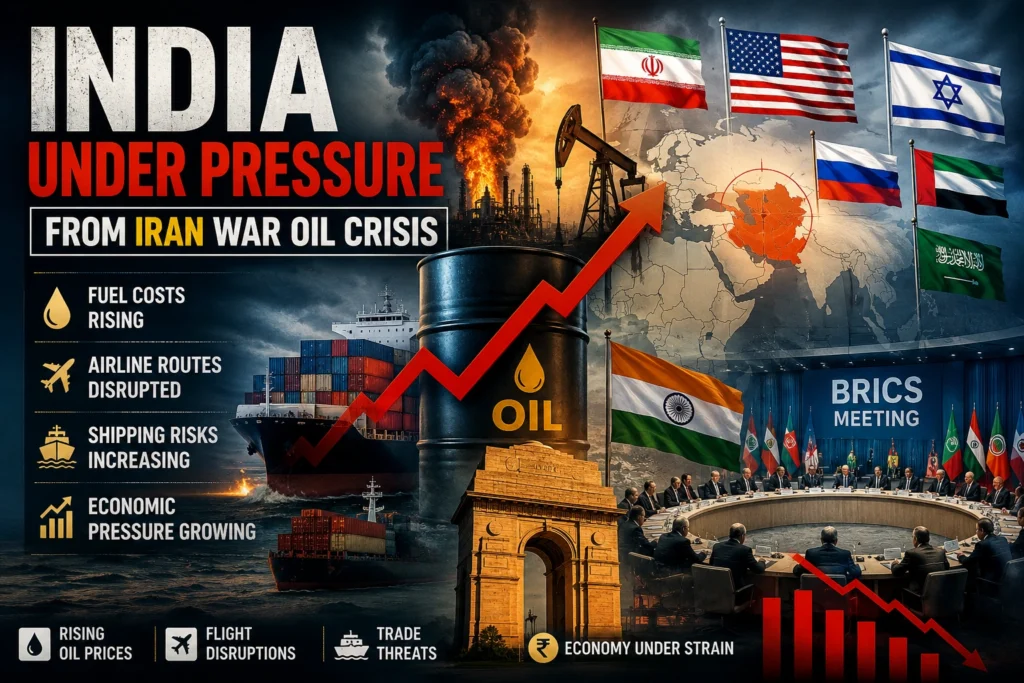
The ongoing Iran conflict is now placing India under growing economic and geopolitical pressure. Rising oil prices, disrupted airline routes, shipping insecurity, and uncertainty across global markets are all beginning to affect India’s economy directly. As tensions continue escalating across the Middle East, policymakers in New Delhi are facing one of the most difficult diplomatic balancing acts in recent years.
Today, discussions surrounding the India under pressure from Iran war oil crisis situation are dominating business and political conversations because the effects are spreading far beyond the battlefield. The conflict is now influencing fuel costs, aviation networks, global trade routes, and financial stability across Asia and Europe. Informosio continues covering these fast-moving geopolitical developments through simplified Daily Insight reporting that helps readers understand how global events are impacting India in real time.
Rising Fuel Prices Are Increasing Pressure on India
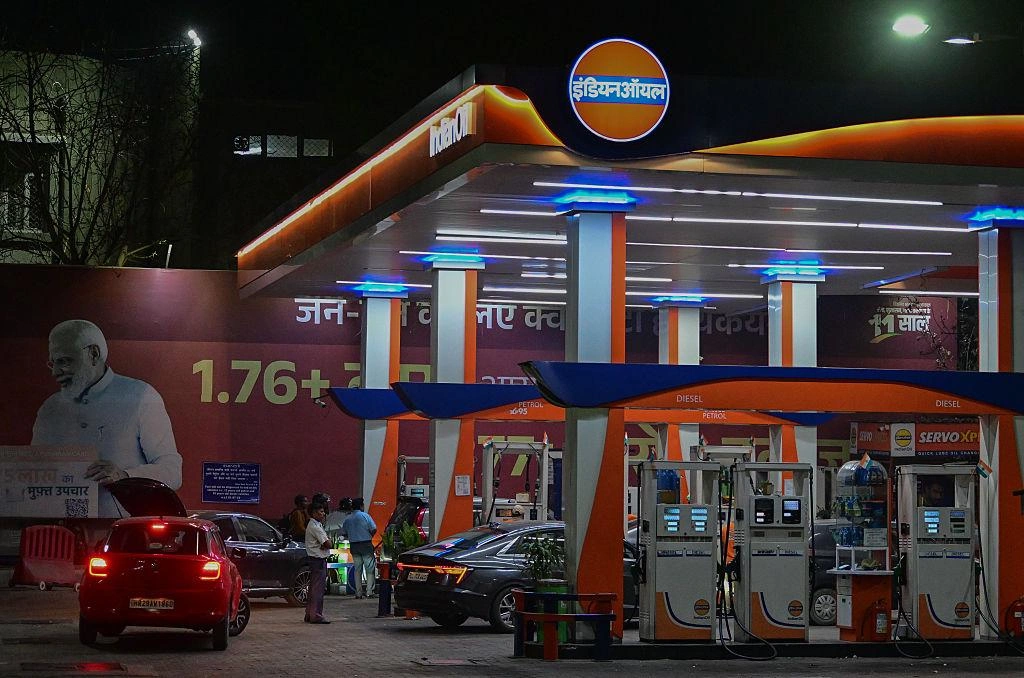
One of the biggest consequences of the Iran conflict has been the sharp rise in global oil prices. Energy markets remain highly unstable due to tensions surrounding the Strait of Hormuz, one of the world’s most important oil shipping routes.
India imports a significant percentage of its crude oil from the Middle East, making the country highly vulnerable to supply disruptions and price spikes. Economists warn that continued instability could create long-term inflationary pressure across multiple sectors.
The growing India under pressure from Iran war oil crisis situation is already affecting transportation costs, manufacturing expenses, and household budgets.
Higher fuel prices may eventually lead to:
- Increased petrol and diesel rates
- Higher logistics and delivery costs
- Rising airline ticket prices
- Food inflation
- Increased industrial expenses
Financial experts believe India may need additional economic measures if crude oil prices continue rising during the second half of 2026.
Airline Routes Facing Major Disruptions
The aviation industry is also facing serious challenges because of airspace restrictions and rising jet fuel prices linked to the conflict.
Several international flight paths passing through sensitive Middle Eastern regions have been affected, forcing airlines to reroute operations and increase travel times. Air India recently announced suspension and reduction of multiple international routes because of fuel costs and regional instability.
The airline sector has now become another major reason why the India under pressure from Iran war oil crisis story is gaining attention nationwide.
Industry analysts say airlines are struggling with:
- Higher operational costs
- Longer flight routes
- Fuel supply uncertainty
- Increased ticket prices
- Passenger demand fluctuations
Travel experts warn that global aviation could continue facing disruptions if tensions around the Gulf region intensify further.
Shipping Routes and Trade Security Becoming a Serious Concern
India’s economy depends heavily on international maritime trade, especially through the Strait of Hormuz. However, ongoing regional tensions are creating serious risks for commercial shipping operations.
Reports suggest that Indian-linked vessels operating near the Gulf are facing increased security concerns and navigation difficulties. Around 40–50 India-bound ships were reportedly trapped west of the Strait during peak tensions earlier this month.
The growing shipping uncertainty is becoming one of the most important parts of the India under pressure from Iran war oil crisis discussion because trade disruptions could eventually impact supply chains nationwide.
Industries potentially affected include:
- Energy imports
- Electronics supply chains
- Industrial manufacturing
- Fertilizer imports
- Consumer goods transportation
Shipping insurance costs are also rising sharply due to the increased geopolitical risk in the region.
BRICS Meeting Puts India in a Delicate Position
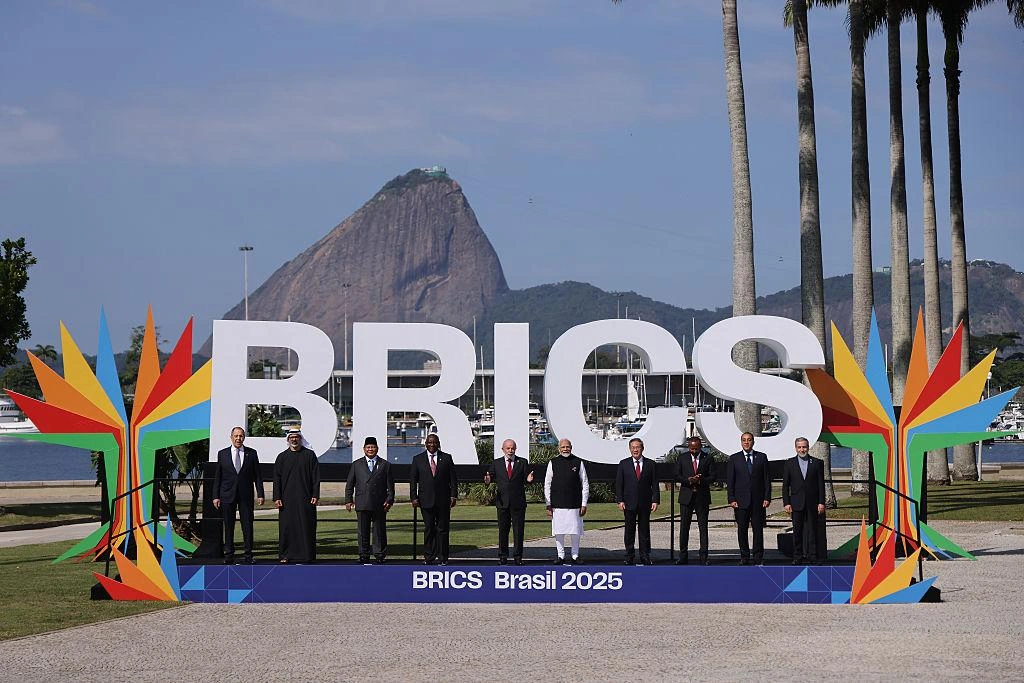
At the recent BRICS meetings in New Delhi, India found itself navigating highly sensitive geopolitical tensions involving Iran, the United States, Israel, Russia, UAE, and other Gulf nations.
Iran reportedly urged BRICS nations to take stronger positions against Western military actions, while divisions between BRICS members became increasingly visible.
The current India under pressure from Iran war oil crisis situation is becoming even more complicated because India is trying to maintain strategic partnerships with multiple competing powers simultaneously.
India’s diplomatic balancing act includes maintaining relations with:
- Iran for energy and regional connectivity
- Israel for defense cooperation
- UAE and Gulf nations for trade and oil
- Russia for strategic partnerships
- The United States for geopolitical and economic ties
Experts say India is attempting to avoid taking extreme public positions while focusing on protecting national interests and economic stability.
Indian Economy Facing Inflation and Currency Risks
The economic consequences of the conflict are now becoming more visible. Rising energy prices are placing pressure on inflation, currency stability, and investor confidence.
Reports suggest the Indian rupee has already experienced pressure amid global uncertainty and rising import costs. Foreign investors are also monitoring India carefully as geopolitical instability affects Asian markets.
The widening India under pressure from Iran war oil crisis situation could eventually impact:
- Stock markets
- Foreign investment flows
- Inflation control
- Economic growth projections
- Consumer spending
Economists believe prolonged energy instability may force governments and central banks to reconsider economic strategies throughout 2026.
Why the Strait of Hormuz Matters So Much
The Strait of Hormuz remains one of the world’s most important energy chokepoints. A large percentage of global oil and gas shipments passes through this narrow waterway connecting the Persian Gulf to international markets.
Any military escalation or blockade in this region immediately affects global energy prices and trade systems. Iran recently warned that ships entering the Strait must cooperate with its naval authorities amid rising tensions.
Because India depends heavily on energy imports passing through the region, the India under pressure from Iran war oil crisis issue has become a direct national concern rather than simply an international news story.
Could India Use the Crisis Strategically?
Despite the risks, some analysts believe India could strengthen its geopolitical importance during this period.
As global powers search for stable economic partners in Asia, India may attract stronger investment interest and strategic cooperation opportunities. The country’s growing manufacturing sector and diplomatic flexibility could increase its global influence.
However, experts warn that these opportunities will depend heavily on how effectively India manages inflation, energy security, and foreign policy during the crisis.
Ordinary Indians May Feel the Effects Soon
The consequences of the conflict are not limited to governments and corporations. Ordinary citizens may eventually feel the economic effects through rising daily expenses and transportation costs.
Possible impacts include:
- More expensive fuel
- Higher flight ticket prices
- Increased grocery costs
- Expensive imported products
- Slower delivery and logistics services
This is why the India under pressure from Iran war oil crisis issue is becoming increasingly important for households and businesses across the country.
Final Thoughts
India is now facing growing pressure from the ongoing Iran conflict as rising oil prices, disrupted airline operations, shipping insecurity, and geopolitical tensions continue affecting economic stability.
The country’s leadership is trying to balance relations with Iran, the United States, Israel, Russia, and Gulf nations simultaneously while protecting India’s energy security and economic growth.
The evolving India under pressure from Iran war oil crisis situation highlights how deeply global conflicts now affect economies, trade systems, and everyday life around the world.
FAQ
1. Why is the Iran conflict affecting India’s economy?
India relies heavily on Middle Eastern oil imports and international shipping routes connected to the Gulf region.
2. How are airline routes being affected?
Airlines are facing higher fuel costs and rerouting flights due to regional airspace restrictions.
3. Why is the Strait of Hormuz important for India?
A major percentage of India’s oil imports passes through the Strait of Hormuz.
4. Is India facing inflation risks because of the conflict?
Yes, rising fuel prices may increase transportation, food, and manufacturing costs.
5. Why is the BRICS meeting important in this situation?
India is trying to balance relations with Iran, the US, Israel, Russia, and Gulf nations simultaneously.
6. What is the focus keyword for this article?
The focus keyword is “India under pressure from Iran war oil crisis.”
Explore More on Informosio
Stay updated with the latest developments across global affairs, India, technology, and trending insights.
👉 Global News – Breaking world news, geopolitics, and international updates
👉 India News – Latest national updates, economy, policy, and breaking stories
👉 Informosio Tech – AI, innovation, and future technologies
👉 Daily Insights – Global trends and in-depth analysis