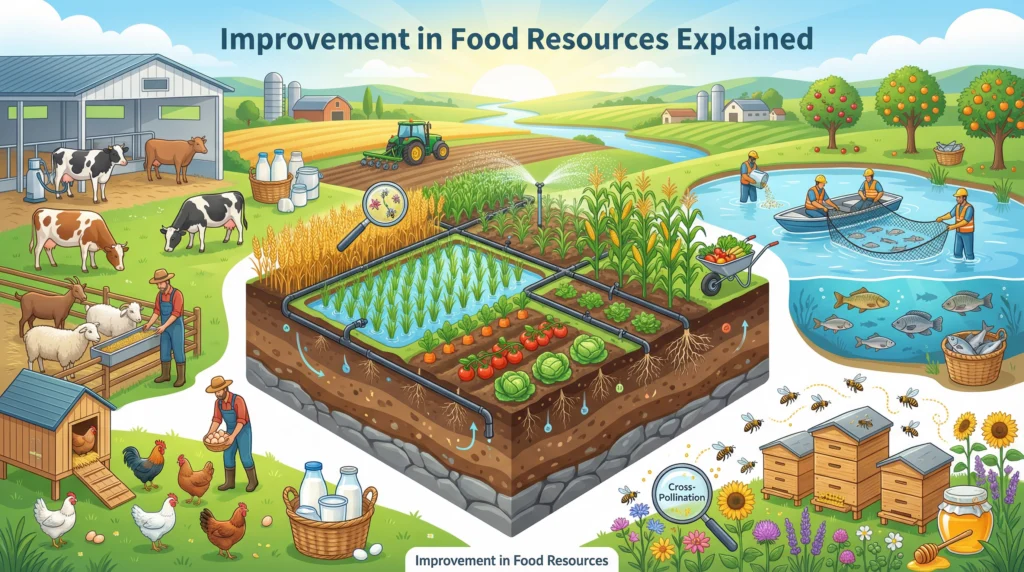
Food is the most basic requirement for human survival. As the global population continues to grow, the demand for food also increases rapidly. Meeting this demand requires efficient agricultural practices and scientific improvements in farming systems. The concept of improvement in food resources focuses on increasing the quantity and quality of food produced while maintaining sustainability and environmental balance.
Improvement in food resources involves scientific methods to enhance crop production, animal productivity, fisheries, and other food sources. These improvements help ensure food security, which means that people have reliable access to sufficient, safe, and nutritious food. In biology and agricultural science, this topic examines various techniques such as crop variety improvement, crop production management, crop protection management, and improvements in animal husbandry.
Understanding the improvement in food resources is important for students because it connects biology with agriculture, technology, and environmental science. It explains how scientific knowledge is applied to solve real-world problems related to food production.
Understanding Improvement in Food Resources
Improvement in food resources refers to the scientific and technological methods used to increase food production and enhance the quality of food products obtained from plants and animals. The main goal is to produce more food using available resources without causing environmental damage.
Food resources mainly come from two primary biological sources: plants and animals. Plants provide cereals, fruits, vegetables, and pulses, while animals provide milk, meat, eggs, and fish. Increasing food production from both these sources requires proper management and scientific improvement techniques.
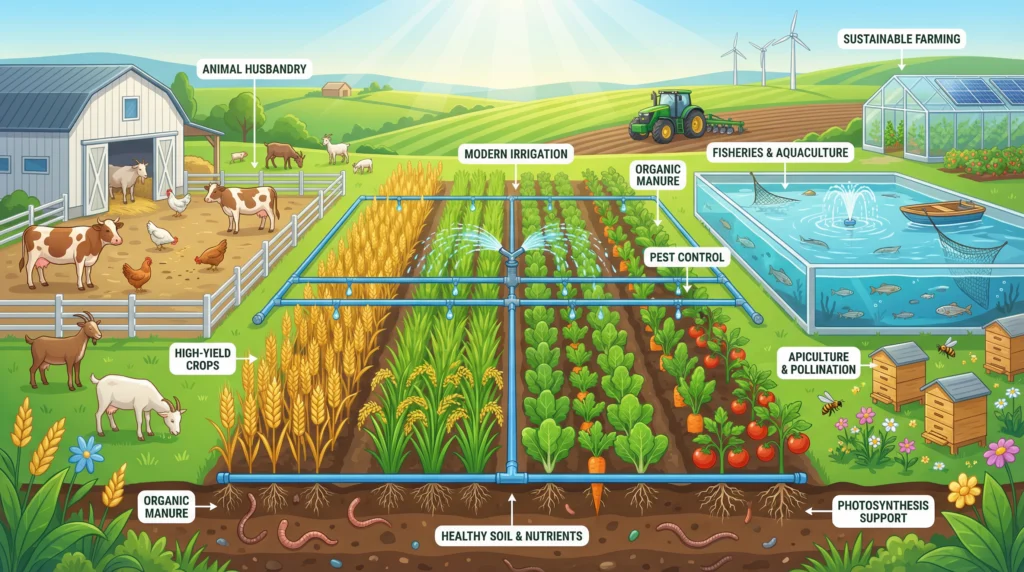
The improvement in food resources involves several strategies such as developing high-yielding crop varieties, improving soil fertility, protecting crops from pests and diseases, and improving animal breeds. These strategies together contribute to efficient agricultural productivity.
Agricultural scientists work continuously to develop improved farming methods that increase production while conserving soil, water, and biodiversity.
Crop Variety Improvement
Crop variety improvement is one of the most important aspects of agricultural development. It involves developing new crop varieties that produce higher yields, resist diseases, and adapt to different environmental conditions.
Scientists use plant breeding techniques to combine desirable traits from different plant varieties. These desirable traits may include higher productivity, disease resistance, improved nutritional value, and tolerance to environmental stresses such as drought or salinity.
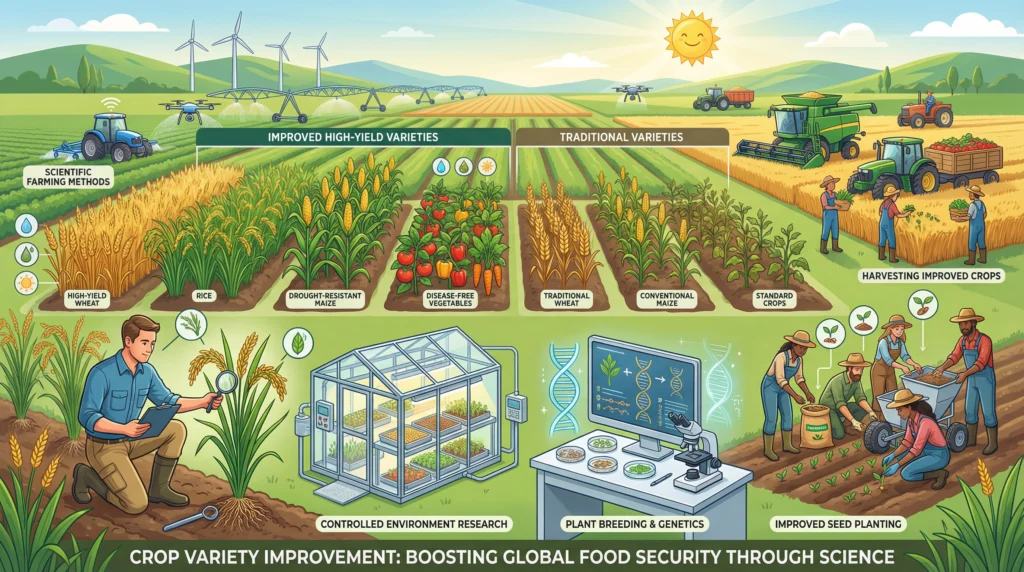
One important objective of crop variety improvement is to increase yield. High-yielding varieties can produce more food per unit area, which helps meet the growing food demand.
Another objective is improving crop quality. For example, protein-rich pulses and vitamin-rich vegetables contribute to better human nutrition. Early maturity is also an important trait. Crops that mature quickly allow farmers to grow multiple crops in the same field within a year, increasing overall productivity.
Resistance to diseases and pests is another important factor. Crops that resist infections require fewer pesticides, making agriculture more economical and environmentally friendly.
Climate adaptability is also essential. Improved crop varieties can survive in harsh environmental conditions such as extreme temperatures, drought, or flood. Plant breeding techniques used in crop variety improvement include hybridization, genetic selection, and modern biotechnology methods.
Crop Production Management
Crop production management refers to the techniques used to increase crop yield through proper use of resources such as nutrients, irrigation, and cropping systems. These practices play a crucial role in the overall improvement in Food Resources, as efficient management of crops directly increases agricultural productivity and food availability.
One important component of crop production management is nutrient management. Plants require essential nutrients for growth, including nitrogen, phosphorus, and potassium. These nutrients are supplied through fertilizers and manure. Proper nutrient supply ensures healthy plant growth and contributes significantly to the improvement in Food Resources by increasing both the quantity and quality of crop production.
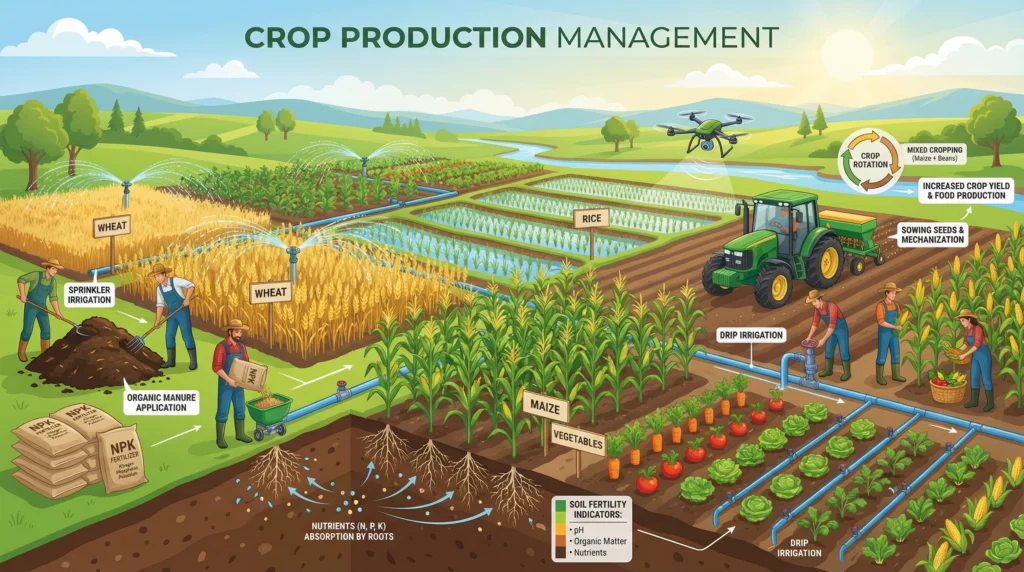
Fertilizers are chemical substances rich in plant nutrients. They provide nutrients quickly and improve crop productivity. However, excessive use of fertilizers may damage soil quality and cause environmental pollution.
Manure is organic matter obtained from plant or animal waste. It improves soil structure, increases water retention, and provides nutrients to plants. Another important factor in crop production management is irrigation. Irrigation refers to the artificial supply of water to crops. Water is essential for plant growth because it supports photosynthesis, nutrient transport, and metabolic activities.
Different irrigation methods are used depending on soil type and crop requirements. Traditional irrigation methods include canals and wells, while modern methods include drip irrigation and sprinkler irrigation. Modern irrigation techniques help conserve water and increase efficiency, thereby supporting sustainable agricultural practices and the long-term improvement in Food Resources. Cropping patterns are also important in crop production management. Cropping patterns refer to the arrangement and timing of crops grown in a field.
Mixed cropping involves growing two or more crops simultaneously in the same field to reduce the risk of crop failure. Intercropping involves growing different crops in alternating rows. This helps reduce pest attacks and increases productivity. Crop rotation involves growing different crops sequentially on the same land to maintain soil fertility and prevent pest accumulation.
Crop Protection Management
Crop protection management focuses on protecting crops from pests, diseases, and weeds that can reduce yield. Pests are organisms that damage crops by feeding on plant tissues. These include insects, rodents, and birds. Diseases in plants are caused by microorganisms such as bacteria, fungi, and viruses. These diseases can spread rapidly and destroy large areas of crops. Weeds are unwanted plants that grow along with crops and compete for nutrients, water, and sunlight. Farmers use various methods to protect crops from these harmful factors.
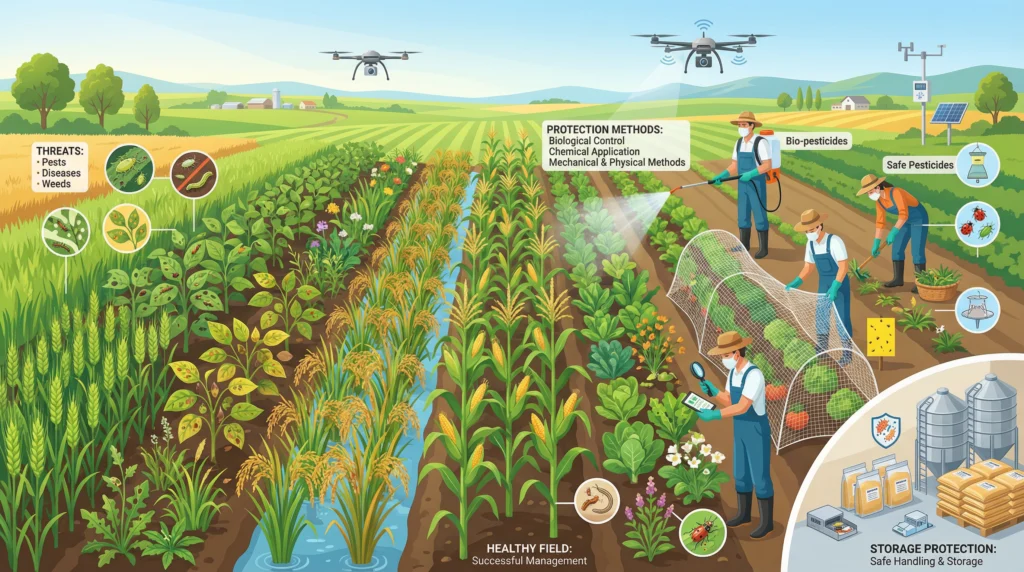
These methods include biological control, chemical control, and mechanical control. Biological control involves using natural predators or parasites to control pests. Chemical control involves using pesticides, insecticides, and fungicides to eliminate harmful organisms. Mechanical control includes physical removal of weeds or pests from fields. Proper crop protection helps prevent loss of food resources and improves agricultural productivity.
Animal Husbandry and Improvement in Food Resources
Animal husbandry refers to the scientific management of animals for obtaining food and other useful products such as milk, eggs, meat, wool, and leather. Improvement in animal husbandry involves selecting high-quality breeds, providing proper nutrition, and maintaining good health care for livestock. Breeding plays an important role in improving animal productivity. Selective breeding involves choosing animals with desirable traits and breeding them to produce improved offspring. Animal nutrition is another critical factor.
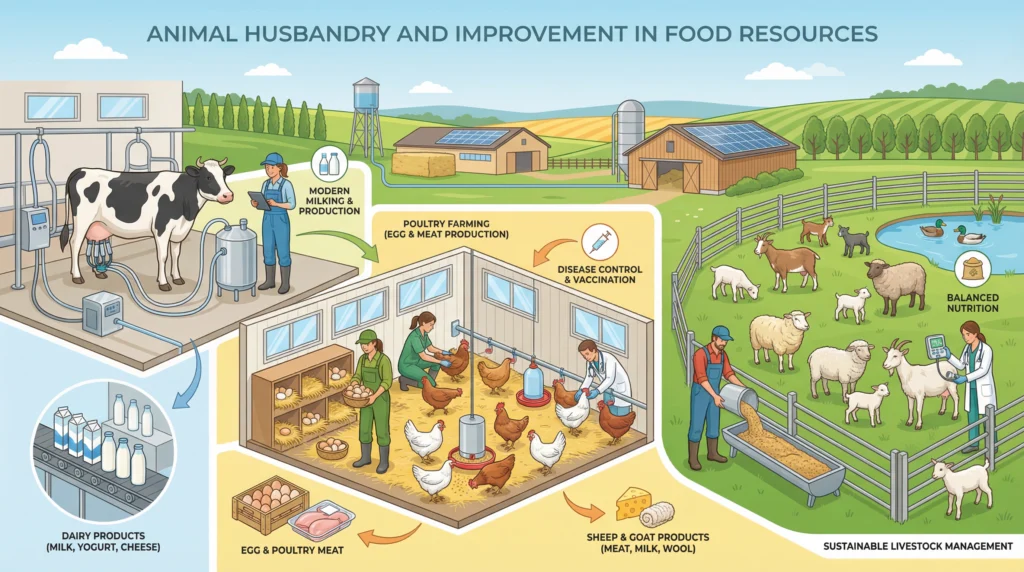
Animals require balanced diets containing carbohydrates, proteins, fats, vitamins, and minerals to maintain good health and productivity. Animal health management includes regular vaccination, disease prevention, and proper veterinary care. Improved animal husbandry practices help increase the production of milk, eggs, and meat, thereby contributing to the overall improvement in food resources.
Fish Production (Fisheries)
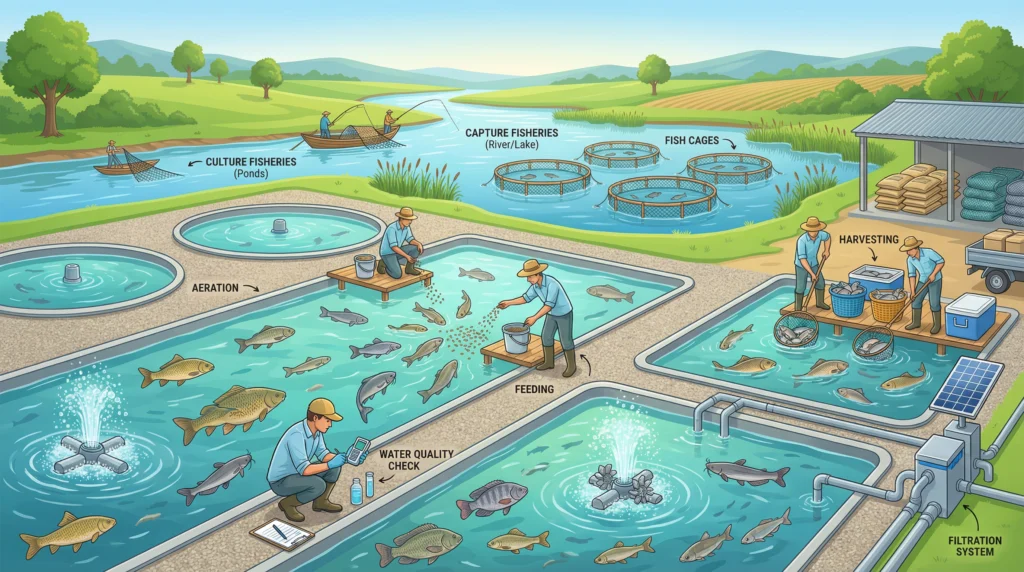
Fish is an important source of protein for humans. Fisheries play a major role in providing food and supporting livelihoods. Fish production is classified into two types: capture fisheries and culture fisheries. Capture fisheries involve catching fish from natural water bodies such as oceans, rivers, and lakes. Culture fisheries involve farming fish in controlled water environments such as ponds and tanks. Aquaculture is the practice of raising aquatic organisms under controlled conditions. It includes fish farming, prawn farming, and shellfish cultivation. Proper management of fisheries helps increase fish production and ensures sustainable use of aquatic resources.
Bee Keeping (Apiculture)
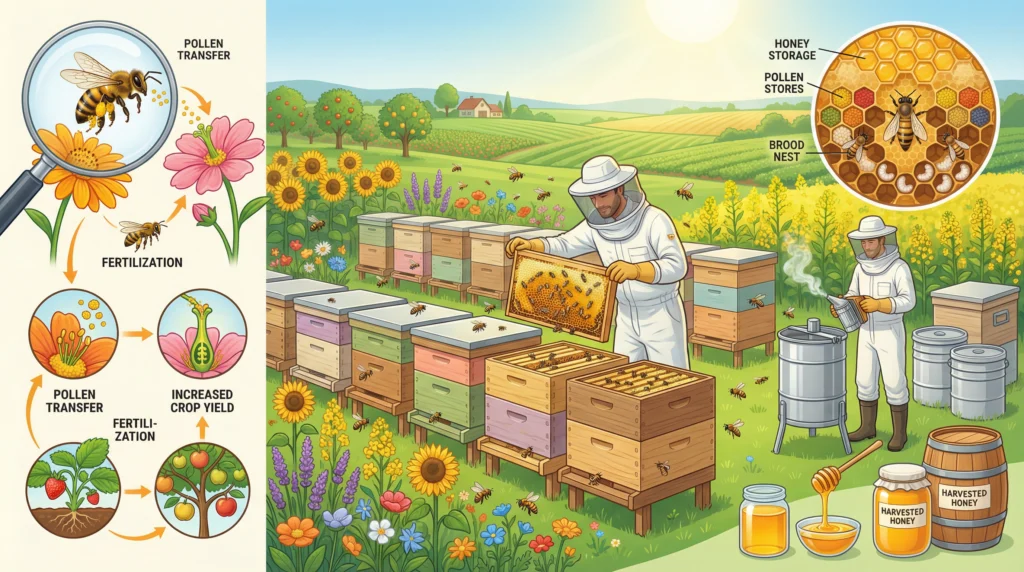
Beekeeping, also known as apiculture, involves the maintenance of honeybee colonies for producing honey and beeswax. Honey is a nutritious food rich in sugars, vitamins, and minerals. Beeswax is used in cosmetics, medicines, and candle production. Honeybees also play an important role in pollination, which improves crop yield. Successful beekeeping requires proper management of bee colonies, suitable environmental conditions, and protection from diseases and predators.
Real-Life Applications of Improvement in Food Resources
The improvement in food resources has significant real-world applications. It helps increase agricultural productivity, supports economic development, and improves food security.
Modern agricultural technologies such as genetically improved crops, efficient irrigation systems, and better animal breeding techniques have helped many countries increase their food production. Improved food resources also contribute to better nutrition and health for human populations.
Common Mistakes Students Make
Students often confuse crop variety improvement with crop production management. Crop variety improvement focuses on developing better plant varieties, while crop production management focuses on farming techniques.
Another common mistake is misunderstanding the difference between fertilizers and manure. Fertilizers are inorganic chemicals, whereas manure is organic matter derived from natural sources.
Students also sometimes mix up capture fisheries and culture fisheries, even though they represent two different fish production methods.
Exam-Oriented Tips
Students should clearly understand the objectives of crop variety improvement because exam questions often focus on these points.
It is important to remember the three major components of agricultural practices: crop variety improvement, crop production management, and crop protection management.
Students should also practice explaining differences between farming methods, irrigation techniques, and cropping patterns. Using examples while writing answers helps improve clarity and earn better marks in examinations.
Practice Questions
What is meant by improvement in food resources?
Answer: Improvement in food resources refers to scientific methods used to increase food production from plants and animals.
What is crop rotation?
Answer: Crop rotation is the practice of growing different crops sequentially on the same field to maintain soil fertility.
What is animal husbandry?
Answer: Animal husbandry is the scientific management of livestock to obtain products such as milk, meat, eggs, and wool.
What is aquaculture?
Answer: Aquaculture is the farming of aquatic organisms such as fish, prawns, and shellfish in controlled water environments.
Concept Review
The concept of improvement in food resources plays a crucial role in ensuring global food security. It involves scientific strategies to increase agricultural productivity and improve the quality of food obtained from plants and animals.
Key aspects include crop variety improvement, efficient crop production management, effective crop protection management, improved animal husbandry practices, fisheries development, and beekeeping. Each of these components contributes to increasing food availability and supporting sustainable agriculture.
Understanding the improvement in food resources helps students appreciate how biological science is applied in agriculture to solve real-world problems. By using scientific methods and responsible farming practices, society can produce sufficient food to support a growing population while protecting natural resources.
You may also visit the Biology section.
Frequently Asked Questions (FAQs)
What is the main aim of improvement in food resources?
The main aim is to increase food production while maintaining sustainability and environmental balance.
Why is crop variety improvement important?
Crop variety improvement increases yield, improves quality, and enhances resistance to diseases and environmental stress.
What are the main components of food resource improvement?
The main components include crop production, animal husbandry, fisheries, and apiculture.
How does irrigation help crop production?
Irrigation supplies water necessary for plant growth, photosynthesis, and nutrient transport.
What is the difference between fertilizers and manure?
Fertilizers are chemical nutrient sources, while manure is organic matter obtained from plant and animal waste.
Why are honeybees important for agriculture?
Honeybees help in pollination, which increases crop productivity and improves food production.
🌐 Connect With Us
👉 Informosio Tech – Science & Technology news, AI trends, gadgets, and innovations