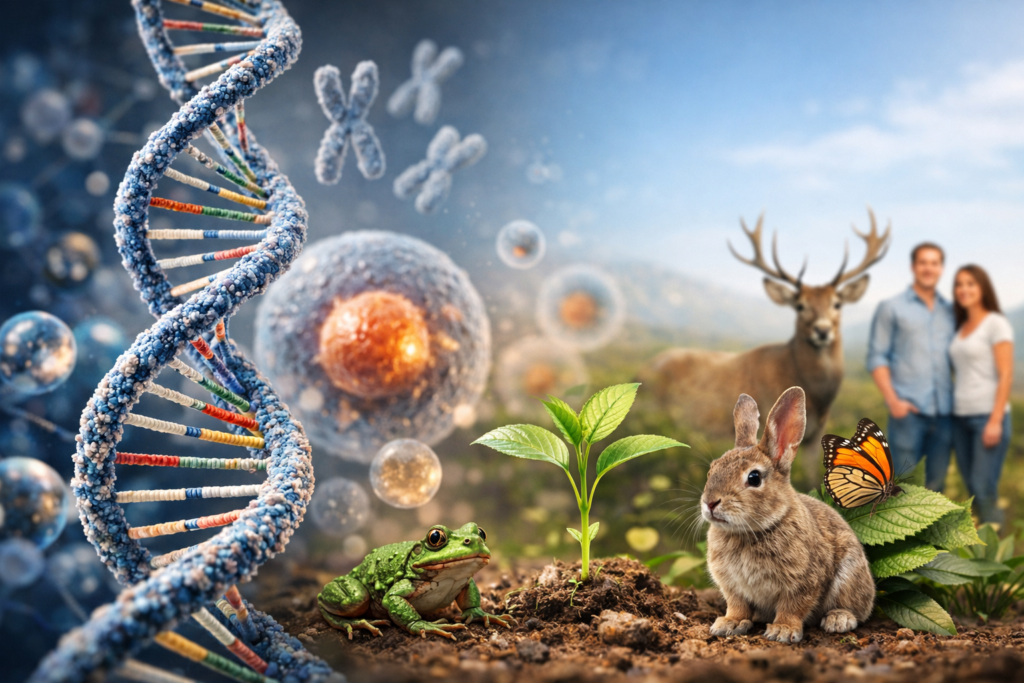
Genetics & Evolution form the scientific foundation for understanding how life originates, develops, adapts, and diversifies over time. Genetics explains how traits are inherited and expressed, while evolution describes how populations change across generations under the influence of natural forces. Together, they reveal why organisms look, behave, and function the way they do. Genetics & Evolution together explain how traits are inherited and how life changes over generations
From Mendel’s pea plant experiments to modern DNA sequencing, the study of Genetics & Evolution has transformed biology, medicine, agriculture, and biotechnology. This comprehensive guide explores heredity, variation, DNA, genes, chromosomes, sex determination, mutation, evolution, and the origin of life in a structured, professional, and exam-ready format.
Introduction to Genetics & Evolution
Genetics is the branch of biology that deals with heredity and variation. It focuses on how traits are transmitted from parents to offspring through genes. Evolution, on the other hand, explains long-term changes in populations that lead to diversity of life.
Together, Genetics & Evolution answer fundamental questions such as:
- Why do children resemble their parents?
- How do new traits arise?
- Why are organisms adapted to their environments?
- How did life originate on Earth?
Understanding these concepts is essential for students, researchers, and anyone interested in life sciences. Topics such as heredity, mutation, and natural selection are central to Genetics & Evolution. Genetics & Evolution is a core topic in modern biology.
Heredity and Variation
Meaning of Heredity
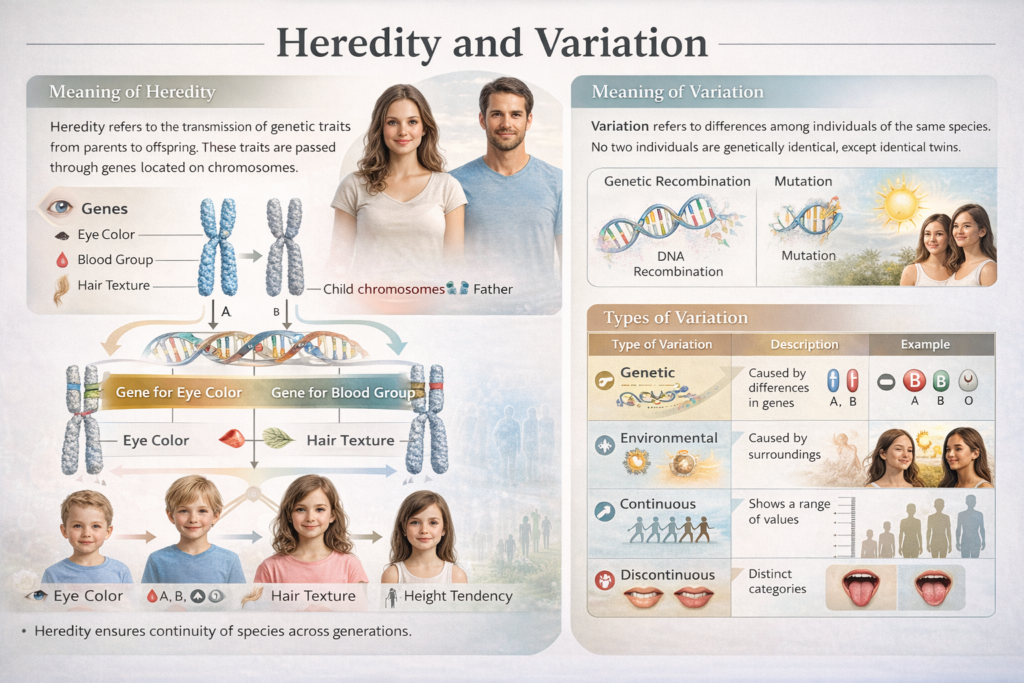
Heredity refers to the transmission of genetic traits from parents to offspring. These traits are pasHeredity is the process by which parents pass their characteristics to their offspring. These characteristics, known as traits, are controlled by genes that are present on chromosomes inside the nucleus of cells. Genes carry specific instructions that determine how an organism looks, grows, and functions.
For example, traits such as eye color, blood group, hair texture, and height tendency are inherited from parents. A child may have eye color similar to one or both parents because the genes responsible for eye color are transferred during reproduction.
Heredity explains why individuals of the same family share many similarities and why members of a species show common characteristics. At the same time, it ensures the continuity of a species by maintaining its basic features across generations while allowing minor variations to occur.
Meaning of Variation
Variation refers to the differences that occur among individuals of the same species in their physical features, behavior, and biological characteristics. Even though individuals belong to the same species, they are not exactly alike. The only exception is identical twins, who share the same genetic makeup.
Variation arises due to several factors. Genetic recombination during reproduction leads to new combinations of genes, making each individual unique. Mutations cause sudden changes in DNA, which can introduce new traits into a population. Environmental influences such as climate, nutrition, lifestyle, and exposure to sunlight also affect how certain traits are expressed.
Variation is very important in biology because it helps organisms adapt to changing environments. It provides the raw material for evolution, allowing species to survive, evolve, and continue over long periods of time.
Types of Variation
| Type of Variation | Description | Example |
|---|---|---|
| Genetic | Caused by differences in genes | Blood group |
| Environmental | Caused by surroundings | Skin tanning |
| Continuous | Shows a range of values | Height |
| Discontinuous | Distinct categories | Tongue rolling |
Variation is essential for evolution, as it provides raw material for natural selection.
Mendel’s Laws of Inheritance
Gregor Mendel is known as the Father of Genetics. His experiments on pea plants laid the foundation of modern genetics.
Mendel’s Experiments
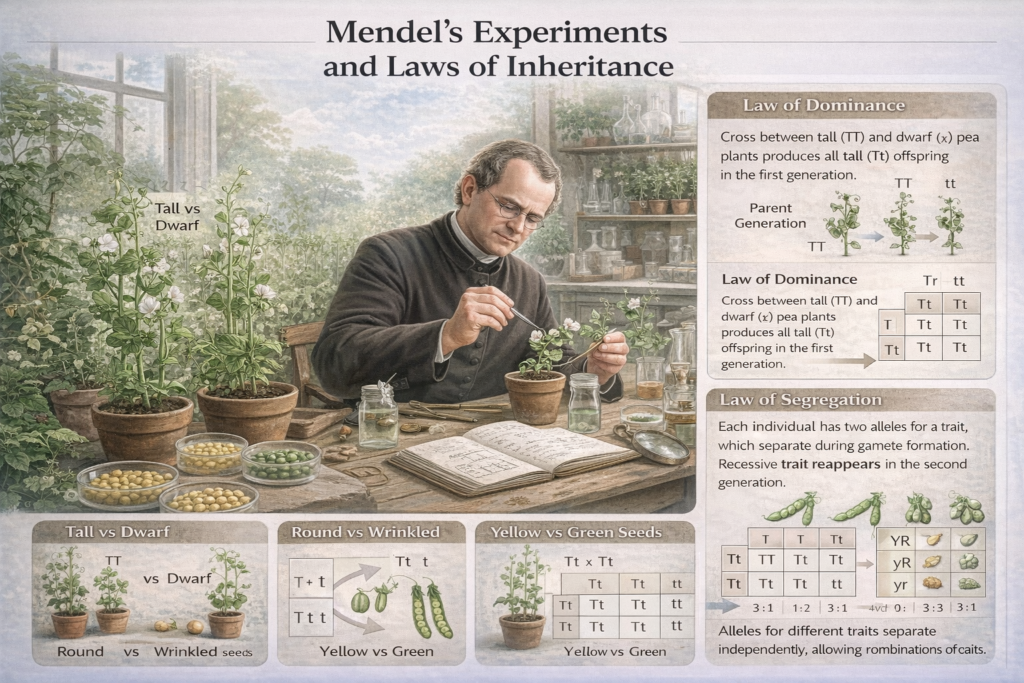
Gregor Mendel conducted his famous experiments on pea plants to understand how traits are passed from one generation to the next. He carefully selected pea plants because they showed clear and easily distinguishable contrasting traits, such as tall and dwarf plants or round and wrinkled seeds. Pea plants are naturally self-pollinating, which allowed Mendel to obtain pure lines, and they also have a short life cycle, making it easier to observe several generations in a limited time.
Mendel studied several pairs of contrasting traits, including tall versus dwarf height, round versus wrinkled seeds, and yellow versus green seed color. By cross-pollinating plants and analyzing the offspring over multiple generations, he discovered consistent patterns of inheritance.
From these experiments, Mendel proposed three fundamental laws of inheritance. The Law of Dominance states that when two contrasting forms of a trait are present together, only one form (the dominant trait) is expressed in the offspring, while the other (the recessive trait) remains hidden. For example, when a tall plant is crossed with a dwarf plant, all first-generation offspring are tall.
The Law of Segregation explains that each individual has two alleles for a trait, and these alleles separate during the formation of gametes. As a result, each gamete carries only one allele, and offspring receive one allele from each parent. This law accounts for the reappearance of the recessive trait in the second generation.
The Law of Independent Assortment states that alleles of different traits are inherited independently of one another, provided the genes are located on different chromosomes. This means the inheritance of one trait does not influence the inheritance of another.
Together, Mendel’s experiments and laws laid the foundation of modern genetics by explaining how traits are inherited in a predictable and scientific manner.
Law of Dominance
This law states that when two contrasting alleles are present, only one expresses itself (dominant), while the other remains hidden (recessive).
Example:
- Tall (T) is dominant over dwarf (t)
Law of Segregation
This law states that allele pairs separate during gamete formation, and each gamete receives only one allele.
Key points:
- Alleles do not blend
- Each offspring inherits one allele from each parent
Law of Independent Assortment
This law states that genes for different traits assort independently during gamete formation.
This law applies when:
- Genes are located on different chromosomes
- Genes are far apart on the same chromosome
DNA and RNA
DNA – The Genetic Material
Deoxyribonucleic Acid (DNA) is the hereditary material in most organisms. It stores genetic information required for growth, development, and reproduction.
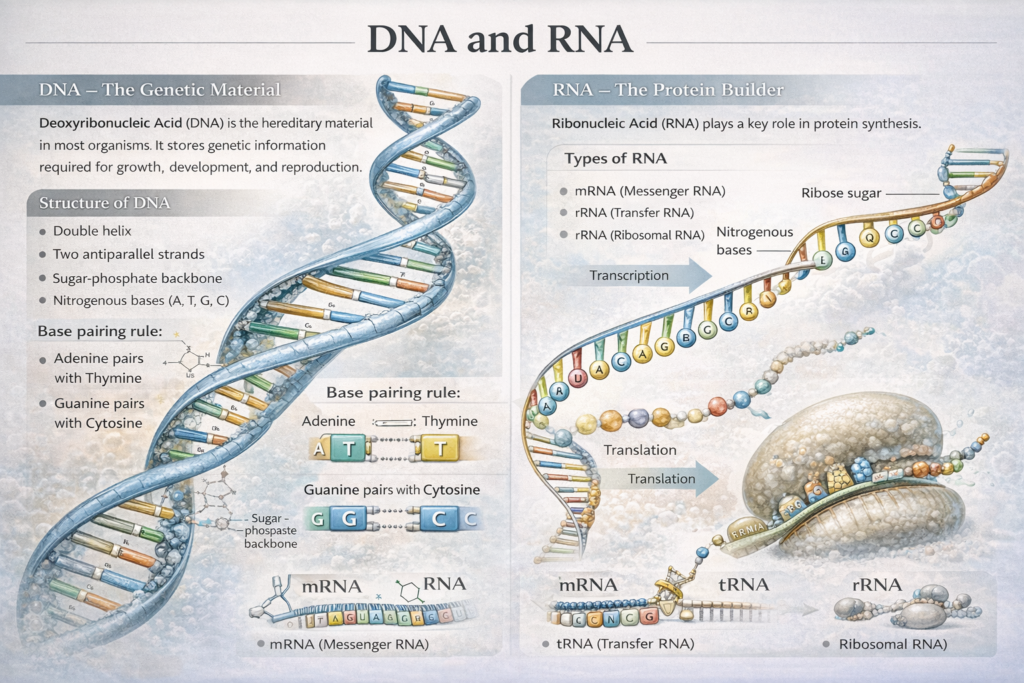
Structure of DNA:
- Double helix
- Two antiparallel strands
- Sugar-phosphate backbone
- Nitrogenous bases (A, T, G, C)
Base pairing rule:
- Adenine pairs with Thymine
- Guanine pairs with Cytosine
Functions of DNA
- Stores genetic information
- Controls protein synthesis
- Transfers traits to offspring
- Regulates cell activities
RNA – The Protein Builder
Ribonucleic Acid (RNA) plays a key role in protein synthesis.
Types of RNA:
- mRNA (Messenger RNA)
- tRNA (Transfer RNA)
- rRNA (Ribosomal RNA)
| Feature | DNA | RNA |
|---|---|---|
| Sugar | Deoxyribose | Ribose |
| Strands | Double | Single |
| Bases | A, T, G, C | A, U, G, C |
| Function | Genetic storage | Protein synthesis |
Chromosomes and Genes
Chromosomes
Chromosomes are thread-like structures present in the nucleus of cells. They are composed of DNA and proteins called histones.
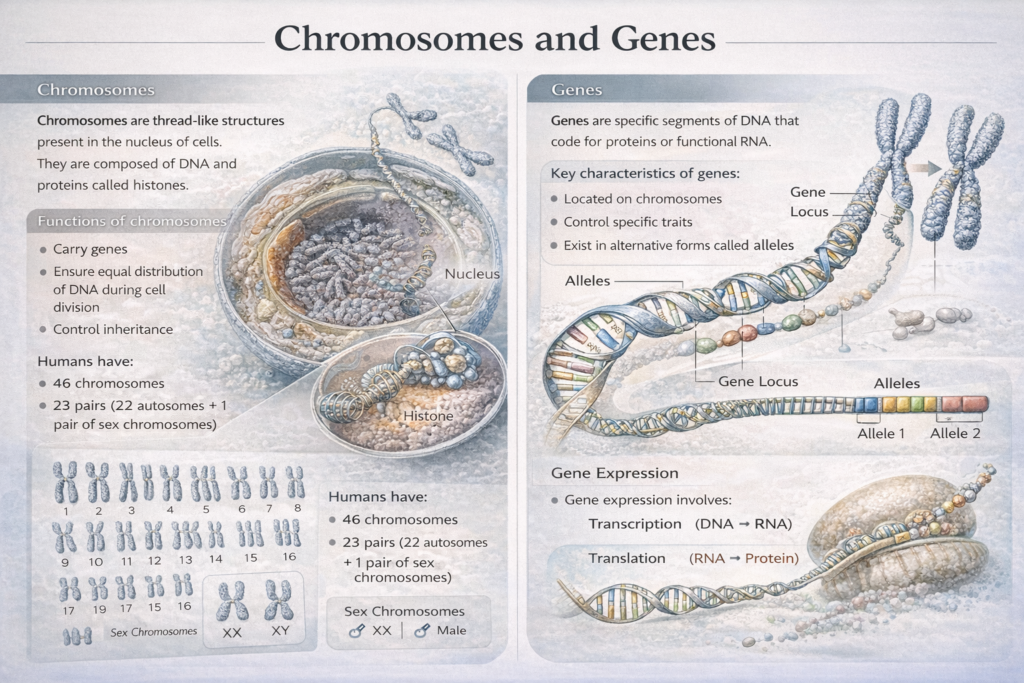
Functions of chromosomes:
- Carry genes
- Ensure equal distribution of DNA during cell division
- Control inheritance
Humans have:
- 46 chromosomes
- 23 pairs (22 autosomes + 1 pair of sex chromosomes)
Genes
Genes are specific segments of DNA that code for proteins or functional RNA.
Key characteristics of genes:
- Located on chromosomes
- Control specific traits
- Exist in alternative forms called alleles
Gene Expression
Gene expression involves:
- Transcription (DNA → RNA)
- Translation (RNA → Protein)
Proteins produced determine physical and functional traits.
Sex Determination
Sex determination refers to the biological mechanism that decides the sex of an organism.
Sex Determination in Humans
In humans, sex determination follows the XX–XY mechanism, which is based on the combination of sex chromosomes inherited by the child. Humans have 23 pairs of chromosomes, out of which one pair determines sex.
Females possess two X chromosomes (XX), while males have one X chromosome and one Y chromosome (XY). During reproduction, the mother always contributes an X chromosome through the ovum. The father, however, produces two types of sperm—one carrying an X chromosome and the other carrying a Y chromosome.
If an X-bearing sperm fertilizes the ovum, the resulting child will be female (XX). If a Y-bearing sperm fertilizes the ovum, the child will be male (XY). Therefore, the sex of the child is determined by the type of sperm from the father.
This mechanism ensures an approximately equal probability of male and female offspring and plays an important role in human genetics and population balance.
Other Sex Determination Mechanisms
| Organism | Mechanism |
|---|---|
| Birds | ZZ–ZW |
| Honey bees | Haplodiploidy |
| Reptiles | Temperature-dependent |
Sex determination is an important aspect of Genetics & Evolution as it influences population structure.
Mutation
Definition of Mutation
A mutation is a sudden change in the DNA of an organism that can be passed from parents to offspring. This change may occur in a single gene or in a larger part of a chromosome. Mutations can happen naturally during DNA replication or be caused by factors such as radiation, chemicals, or environmental conditions.
Mutations create new genetic variations by altering the genetic instructions of an organism. These variations may have no visible effect, may be harmful, or may sometimes be beneficial. Beneficial mutations play an important role in evolution by helping organisms adapt to changing environments.
Types of Mutations
- Gene mutation – Change in a single gene
- Chromosomal mutation – Change in chromosome structure or number
- Point mutation – Change in one nucleotide
Causes of Mutation
- Radiation
- Chemicals
- Errors during DNA replication
- Environmental factors
Effects of Mutation
Mutations can be:
- Harmful (genetic disorders)
- Neutral (no visible effect)
- Beneficial (advantage in survival)
Beneficial mutations drive evolution by increasing adaptability.
Evolution
Meaning of Evolution
Evolution is the slow and continuous process by which living organisms change over long periods of time. These changes occur in the inherited traits of populations and are passed from one generation to the next. As small changes accumulate over many generations, organisms become better adapted to their environment.
Over time, these gradual changes can become so significant that new species are formed. Evolution explains the diversity of life on Earth and helps us understand how simple organisms gave rise to complex plants and animals through natural processes. These processes are central concepts in Genetics & Evolution and modern biological science.
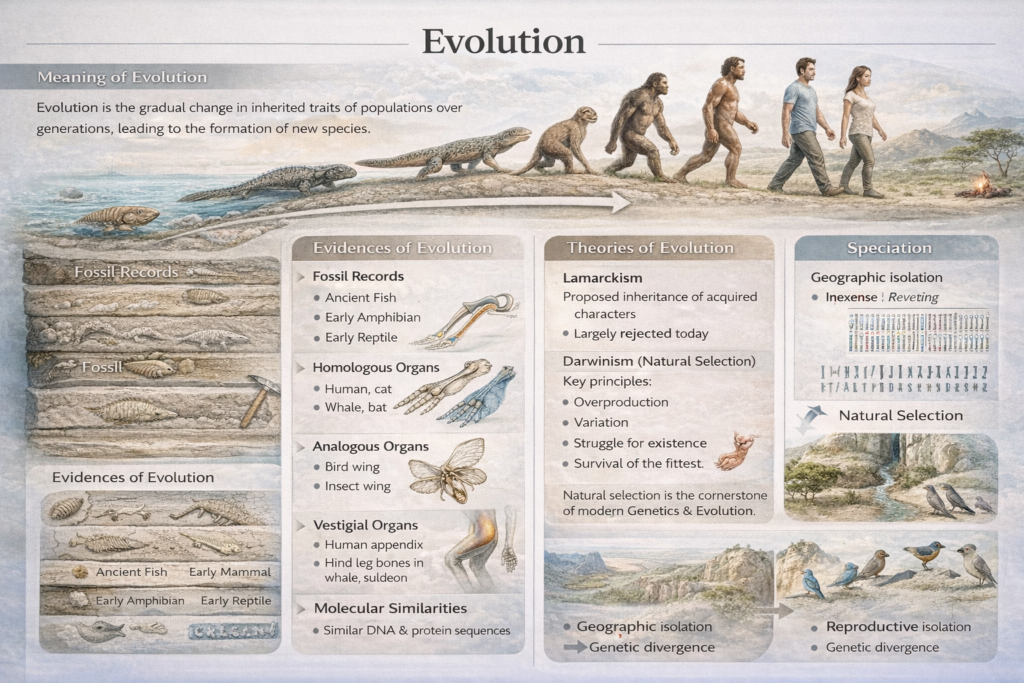
Evidences of Evolution
- Fossil records
- Homologous organs
- Analogous organs
- Vestigial organs
- Molecular similarities
Theories of Evolution
Lamarckism
Lamarckism is an early theory of evolution proposed by Jean-Baptiste Lamarck. It states that organisms acquire certain traits during their lifetime in response to environmental needs and pass these acquired traits to their offspring. A common example is the giraffe’s long neck, which Lamarck believed developed through repeated stretching and was inherited by the next generation. However, this theory is largely rejected today because modern genetics shows that acquired traits do not change DNA and therefore cannot be inherited; only genetic changes are passed to offspring.
Darwinism (Natural Selection)
Key pDarwinism is the theory of evolution proposed by Charles Darwin, which explains how organisms evolve through the process of natural selection. According to this theory, populations produce more offspring than can survive, leading to competition for limited resources. This concept is known as overproduction.
Within a population, individuals show variation in their traits. Some variations provide advantages that help certain individuals survive better in their environment. Because of limited food, space, and other resources, organisms face a struggle for existence, where only the best-adapted individuals survive.
The individuals with favorable traits are more likely to survive and reproduce, a process called survival of the fittest. These advantageous traits are passed on to the next generation. Over many generations, natural selection leads to adaptation and the evolution of new species. Natural selection is considered the cornerstone of modern Genetics & Evolution because it explains how genetic variations are shaped by the environment over time.
Speciation
Speciation is the formation of new species due to:
- Geographic isolation
- Reproductive isolation
- Genetic divergence
Origin of Life
Special Creation Theory
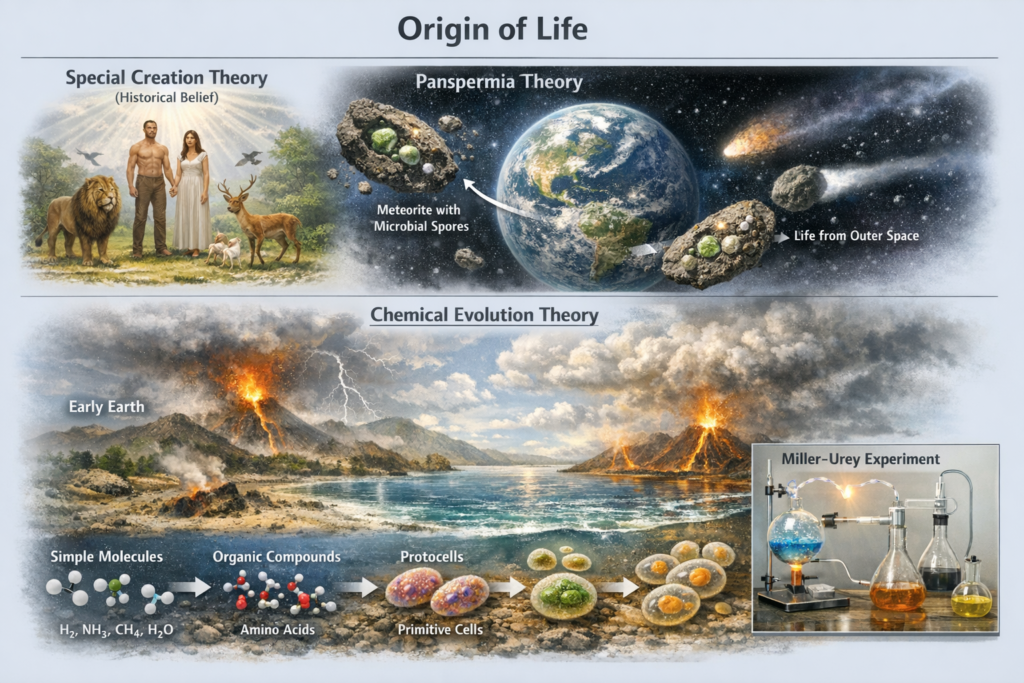
The Special Creation Theory states that all living organisms were created by a supernatural or divine power in their present form. According to this view, life did not evolve gradually over time but was created separately and intentionally.
However, this theory lacks scientific evidence and cannot be tested or verified using scientific methods. Because it does not rely on observations, experiments, or measurable data, the Special Creation Theory is not accepted in modern biology as an explanation for the origin and diversity of life. Understanding the origin of life is an important part of Genetics & Evolution.
Panspermia Theory
The Panspermia Theory suggests that life did not originate on Earth but arrived from outer space in the form of microscopic spores or microorganisms. According to this idea, these life forms may have traveled through space on meteorites, comets, or cosmic dust and eventually reached Earth, where they developed into more complex organisms.
Although the theory explains the possible transfer of life across space, it does not explain how life originally formed. Due to limited experimental evidence, the Panspermia Theory remains a hypothesis and is not widely accepted as a complete explanation for the origin of life.
Chemical Evolution Theory
The Chemical Evolution Theory was proposed by Oparin and Haldane and is the most widely accepted scientific explanation for the origin of life on Earth. According to this theory, life began through a gradual process of chemical changes that occurred on the primitive Earth over millions of years.
In the first stage, simple inorganic molecules present in the early atmosphere combined to form simple organic molecules such as amino acids. In the next stage, these simple molecules joined together to form more complex organic compounds like proteins and nucleic acids. Gradually, these complex molecules assembled into primitive cell-like structures called protocells, which were capable of carrying out basic life processes.
Over time, these protocells became more organized and evolved into the first true living cells. The famous Miller–Urey experiment supported this theory by showing that amino acids could be formed under laboratory conditions that simulated the primitive Earth’s atmosphere, providing strong evidence for chemical evolution.
Importance of Genetics & Evolution
Genetics & Evolution are essential in:
- Medical diagnosis and treatment
- Genetic engineering
- Agriculture and crop improvement
- Understanding biodiversity
- Conservation biology
They help explain both the unity and diversity of life on Earth.
Conclusion
Genetics & Evolution together explain the continuity, diversity, and adaptability of life. From the molecular structure of DNA to the large-scale patterns of evolution, these concepts provide a unified framework for understanding biology. Heredity ensures stability, variation introduces change, and evolution shapes life over time.
Mastering Genetics & Evolution not only strengthens scientific knowledge but also enhances our ability to address real-world challenges in medicine, agriculture, and environmental conservation. As research advances, these fields will continue to reveal deeper insights into the story of life on Earth.
A strong understanding of Genetics & Evolution is essential for studying modern biology and life sciences. Overall, Genetics & Evolution provide a scientific framework for understanding life’s origin, diversity, and continuity.
Frequently Asked Questions (FAQs)
What is Genetics & Evolution in biology?
Genetics & Evolution study heredity, variation, and long-term changes in populations that lead to biodiversity.
Why is variation important for evolution?
Variation provides the raw material for natural selection, allowing organisms to adapt and survive. Genetics & Evolution form the foundation of inheritance and evolutionary biology.
Is mutation always harmful?
No, mutations can be harmful, neutral, or beneficial. Beneficial mutations contribute to evolution.
What is the role of DNA in inheritance?
DNA stores genetic information and passes traits from parents to offspring.
Who is the father of genetics?
Gregor Mendel is known as the father of genetics.
How does natural selection work?
Organisms with favorable traits survive and reproduce more successfully, passing those traits to the next generation.