
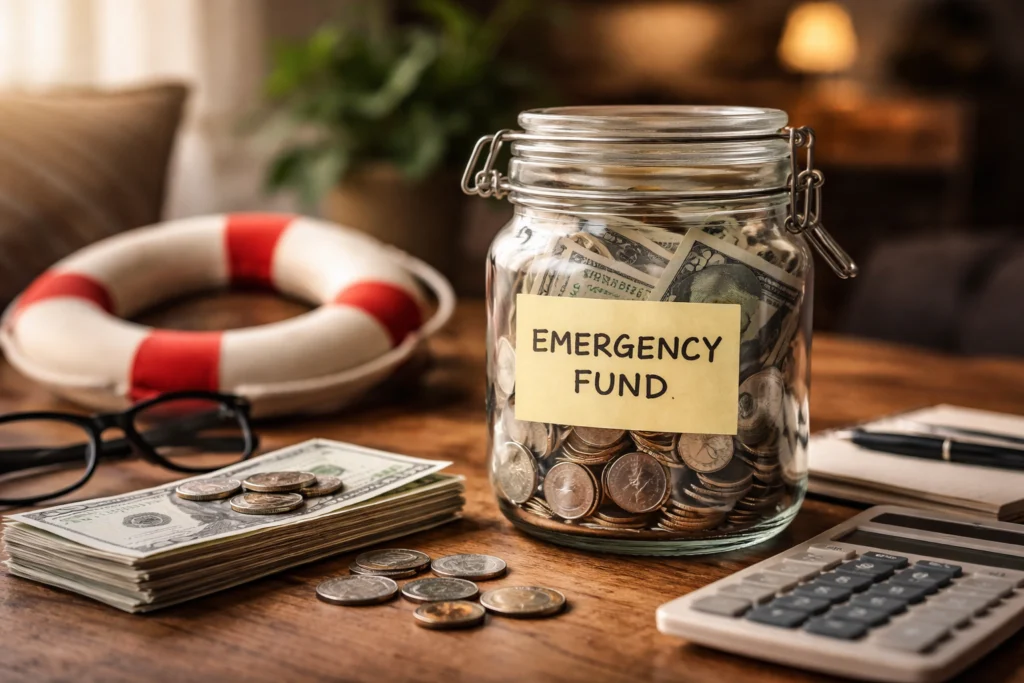
Life has a habit of surprising us when we least expect it. A sudden medical bill, an unexpected job loss, or a car repair that arrives at the worst possible time can quickly turn a stable financial situation into a stressful one. This is exactly where an Emergency Fund becomes essential.
Many people understand the concept of saving money, yet very few prioritize preparing for unpredictable financial shocks. Instead, they rely on credit cards, loans, or even borrowing from family. While those options might help temporarily, they often create a deeper financial burden later.
An Emergency Fund changes that equation completely. It provides a financial cushion that protects your daily life from unexpected disruptions. More importantly, it gives you something many people overlook when discussing money: peace of mind.
In this guide, you’ll learn why this financial safety net matters, how much you should save, and practical steps to build one faster than you might think.
Why an Emergency Fund Is More Important Than Most People Realize
Financial emergencies rarely announce themselves in advance. A job can disappear overnight, a medical expense can appear without warning, or a home repair can demand immediate attention.
Without an Emergency Fund, people often fall into a cycle of debt just to stay afloat. Credit cards become the backup plan, but the interest charges can quietly turn a short-term problem into a long-term financial struggle.
A properly built Emergency Fund helps you avoid that trap. Instead of scrambling to find money during a crisis, you already have a reserve set aside specifically for situations like these.
Beyond the practical financial benefit, there is also a psychological advantage. Knowing you have savings available for unexpected events reduces stress and allows you to make better decisions during difficult moments.
The Real Purpose of an Emergency Fund
Many people confuse general savings with an Emergency Fund, but they serve very different purposes.
Savings can be used for planned expenses such as vacations, gadgets, or future investments. An Emergency Fund, however, is strictly reserved for genuine financial emergencies.
These situations typically include:
- Sudden job loss
- Unexpected medical expenses
- Major car repairs
- Essential home repairs
- Urgent travel due to family emergencies
Using the money for non-urgent spending defeats its purpose. The goal is to create a financial buffer that remains untouched until you truly need it.
How Much Money Should You Save?
One of the most common questions people ask is how large an Emergency Fund should be.
Financial experts typically recommend saving between three to six months of essential living expenses. This amount provides enough coverage to handle most short-term financial disruptions.
For example, if your monthly essential expenses are $2,000, a fully built Emergency Fund would ideally range between $6,000 and $12,000.
However, this target does not mean you need to reach it immediately. Even a small reserve can make a meaningful difference. Starting with a goal of $500 or $1,000 can already protect you from many common financial surprises.
The key is consistency rather than perfection.
7 Practical Steps to Build an Emergency Fund Faster
Building financial security does not require a huge income. What it requires is a clear plan and consistent action.
1. Start With a Small, Achievable Goal
Trying to save several months of expenses immediately can feel overwhelming. Instead, begin with a manageable milestone such as $500.
Once you reach that goal, gradually increase your target and continue growing your Emergency Fund.
2. Automate Your Savings
Automation removes the temptation to spend money before saving it.
Set up an automatic transfer to your Emergency Fund every time you receive income. Even small weekly contributions can grow significantly over time.
3. Treat Savings Like a Monthly Bill
People rarely skip rent or electricity payments because those expenses are non-negotiable. Treat your Emergency Fund contribution the same way.
When saving becomes part of your routine, it stops feeling optional.
4. Redirect Unexpected Money
Tax refunds, bonuses, or unexpected cash gifts provide excellent opportunities to accelerate progress.
Instead of spending the entire amount, allocate a portion directly to your Emergency Fund.
5. Reduce One Expense Temporarily
You do not need to eliminate every luxury. Cutting just one recurring expense for a few months can significantly speed up your savings.
Many people build their initial Emergency Fund simply by reducing dining out, subscriptions, or impulse purchases.
6. Keep the Money Accessible but Separate
Your savings should be easy to access during an emergency but not so convenient that you are tempted to spend it casually.
A high-yield savings account is often an ideal place to store an Emergency Fund because it keeps your money safe while earning modest interest.
7. Rebuild After Using It
Eventually, most people will need to use part of their Emergency Fund. That is exactly what it is designed for.
The important step afterward is rebuilding the balance so your financial safety net remains strong for the future.
Common Mistakes People Make
Even people who understand the concept sometimes struggle to maintain their savings. Several common mistakes often weaken an Emergency Fund over time.
One major mistake is using the money for non-emergencies. A sale on electronics or a last-minute vacation does not qualify as a financial crisis.
Another issue is keeping the savings in an account that is too easy to access. When the money sits in the same account used for daily spending, it becomes easier to justify small withdrawals.
Some people also underestimate how important an Emergency Fund becomes during periods of economic uncertainty. When layoffs or rising costs appear unexpectedly, those who prepared in advance are far less vulnerable.
Why Job Loss Is the Biggest Reason You Need One
While many unexpected expenses can disrupt finances, job loss is often the most financially damaging situation people face.
When income stops suddenly, bills and living expenses continue. Rent, groceries, insurance, and transportation costs do not pause simply because employment changes.
This is where an Emergency Fund becomes critical. It allows you to cover essential expenses while searching for new opportunities, without relying on debt or making rushed financial decisions.
People who have this financial buffer often have more flexibility to find the right job instead of accepting the first available option out of financial pressure.
Where Should You Keep Your Emergency Savings?
Security and accessibility should guide where you store an Emergency Fund.
Common options include:
- High-yield savings accounts
- Money market accounts
- Separate savings accounts at your bank
These options allow your money to remain liquid while still earning some interest.
Riskier investments such as stocks or cryptocurrency are not suitable places for emergency savings. Market fluctuations could reduce your funds exactly when you need them most.
How Inflation Affects Your Emergency Fund
Inflation gradually reduces the purchasing power of money over time. While an Emergency Fund is not designed to generate large investment returns, it still needs to maintain value.
One way to address this issue is periodically reviewing your savings target. If your living expenses increase, your Emergency Fund should also grow to reflect those higher costs.
Updating your savings goals every year helps ensure your financial safety net remains effective.
The Best Time to Start Is Today
Many people delay building an Emergency Fund because they believe they need a higher income first. In reality, the habit of saving matters more than the size of each contribution.
Even small deposits create momentum. Over time, those contributions accumulate into a meaningful financial buffer that protects your future.
Starting today—even with a modest amount—puts you ahead of millions of people who continue postponing financial preparation.
Stay Informed with Finance category.
Final Thoughts
Financial emergencies are not rare events. They are a normal part of life. The difference between stress and stability often comes down to preparation.
An Emergency Fund provides that preparation. It protects you from unexpected setbacks, reduces financial anxiety, and allows you to navigate difficult moments with confidence.
Building this safety net does not require perfection or a massive salary. It simply requires a decision to start, a clear plan, and the discipline to stay consistent.
Over time, what begins as a small reserve can grow into one of the most powerful tools in your entire financial life.
🌐Connect with us
Informosio Official – General updates, current affairs, and informative content.