E20 Petrol with RON 95 to Become Mandatory Across India from April 1, 2026
In a major shift in India’s fuel policy, the Government of India has issued a directive that, from April 1, 2026, all petrol sold in the country must be blended with up to 20% ethanol and meet a minimum Research Octane Number (RON) of 95.
The rule applies uniformly across all states and Union Territories, requiring oil marketing companies to adhere to specifications laid out by the Ministry of Petroleum and Natural Gas (MoPNG) and the Bureau of Indian Standards (BIS).
This mandate, aimed at accelerating the adoption of cleaner fuels, marks a significant step in India’s long-term energy and climate strategy.
What Is E20 Petrol and Why the Change?
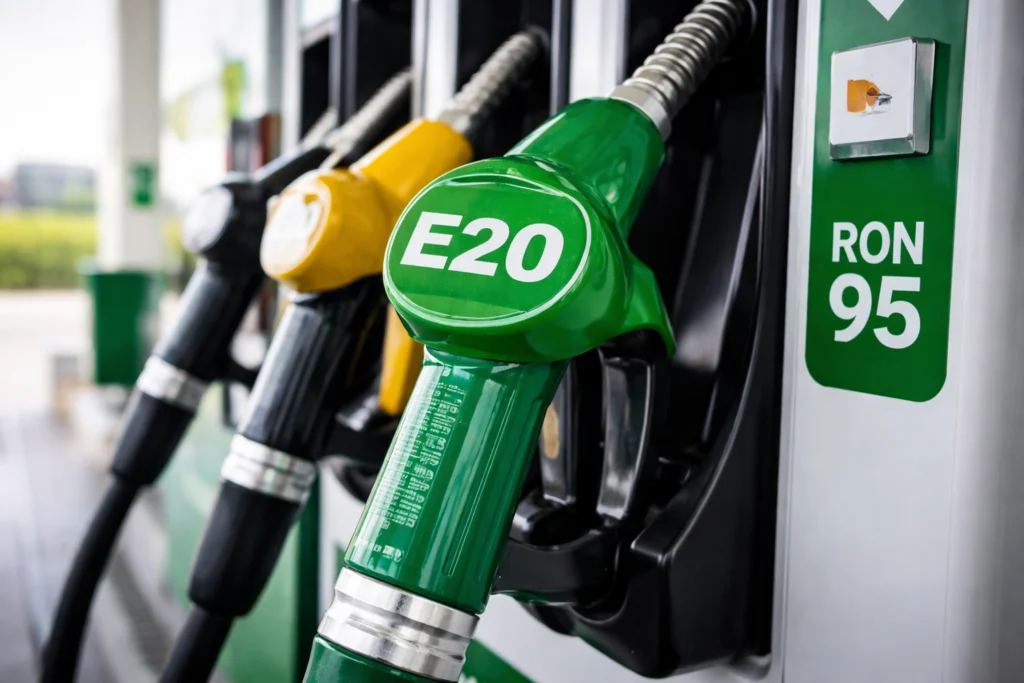
E20 petrol refers to fuel that contains 20% ethanol and 80% traditional petrol, now required to meet a minimum specification of RON 95 under the new nationwide mandate. Ethanol is an alcohol-based fuel produced domestically from agricultural feedstocks such as sugarcane, maize, and other grains. Because ethanol has a naturally high octane value, blending it with petrol helps achieve the required RON 95 standard while improving combustion quality.
The government’s push toward E20 fuel aligned with the RON 95 requirement is driven by several strategic goals:
- Reduce dependence on imported crude oil by replacing a portion of petrol with locally sourced ethanol while maintaining the performance benchmark of RON 95.
- Cut carbon and tailpipe emissions as higher-octane blends like RON 95 E20 petrol enable cleaner and more efficient engine combustion.
- Support farmers and rural income by increasing demand for ethanol feedstocks, ensuring that the transition to RON 95-compliant fuel benefits the domestic agricultural economy.
India achieved an earlier milestone of 10% ethanol blending (E10) ahead of schedule in 2022. Building on that progress, policymakers accelerated the 20% blending target to 2025-26. With the introduction of RON 95 as the minimum fuel standard, the shift ensures both environmental gains and improved engine performance across the country’s vehicle fleet.
Why Minimum RON 95 Matters
Research Octane Number (RON) measures a fuel’s ability to resist premature ignition (knocking) in the engine. A higher octane helps fuel burn smoothly under pressure, safeguarding engine performance and longevity.
Ethanol naturally has a high octane rating (approximately 108 RON), which enhances the anti-knock properties of blended fuel. The minimum RON 95 requirement ensures that the new E20 petrol formulation meets engine health and performance standards across vehicles on Indian roads.
What This Means for Vehicle Owners
Vehicle Compatibility
Automakers and industry experts indicate that most vehicles manufactured in India from 2023 to 2025 are already engineered to run on E20 fuel without major issues, easing the transition for newer cars.
However, older vehicles built before modern E20-ready engine standards may experience minor changes such as:
- Slight reduction in fuel efficiency (estimates range from 3% to 7%).
- Increased wear on certain rubber or plastic fuel system components not designed for higher ethanol content.
Industry officials suggest that these effects are manageable and unlikely to pose significant mechanical damage when vehicles are maintained properly.
Economic and Environmental Impact
Energy Security and Emissions
By increasing domestic ethanol blending, India aims to lower its crude oil import bill and reduce greenhouse gas emissions associated with transportation fuel. Ethanol burns cleaner than traditional petrol, contributing to improved air quality.
The substitution strategy has already helped India save over ₹1.40 lakh crore in foreign exchange since it began ethanol blending in 2014-15.
Agricultural Sector and Ethanol Demand
Ethanol production from sugarcane, maize, and grain creates stable demand for these agricultural commodities, offering new income opportunities for farmers.
However, rapid expansion of ethanol feedstock demand has raised concerns among some analysts about long-term food security, particularly if cereal crops are diverted from food to fuel production.
Government Flexibility and Exemptions
While the mandate applies nationwide, the government has reserved the ability to grant temporary exemptions under special circumstances. These may include logistical challenges in specific regions or during transitional periods.
Industry and Infrastructure Preparedness
Oil companies are preparing infrastructure upgrades and supply chain adjustments to deliver E20 petrol consistently across all retail outlets. Research by fuel industry bodies and testing agencies indicates that most modern vehicles are equipped to handle the new blend. Regular fuel stations will also phase out older low-ethanol grades as E20 becomes the standard.
What Comes Next?
With the new rule in place, regulators and automotive bodies are already looking ahead to future blending targets and biofuel innovations. Discussions are ongoing about higher blends such as E27 and potential biofuel options for diesel engines.
Economists and environmental advocates say that while implementation challenges remain, the transition to E20 petrol sets a foundation for India’s commitment to cleaner transport energy.
Get the Latest Updates from India News.
End Note
The mandatory sale of E20 petrol with minimum RON 95 from April 1, 2026, represents a major policy shift in India’s efforts to:
- Strengthen energy security
- Reduce emissions
- Promote domestic agriculture
- Modernize fuel standards
While minor vehicle adjustments may be necessary and farmers will need to balance feedstock supply, the broader implications position India on a more sustainable fuel trajectory.
🌐Stay Updated With Us
Informosio Official – General updates, current affairs, and informative content