
10 February 2026
A clear, thoughtful take on today’s global trends
Welcome to your daily edition of Daily Insights News Digest—a subscription newsletter crafted for readers who value perspective over noise. Today’s briefing highlights the deeper currents shaping technology, markets, policy, and international affairs. These are the themes that matter beyond momentary headlines.
Daily Insights News Digest: Global Trends Overview



1. Technology Integration Shifts Toward Usefulness
Artificial intelligence continues its quiet march into everyday tools that help with writing, data analysis, and workflow management. Rather than chasing novelty, technology providers are emphasizing reliability and seamless integration into daily routines. This reflects a broader shift toward practicality over experimentation. For related insight on AI jobs and tech trends, see Reuters Breakingviews analysis on AI job impacts.
Read more:
• Reuters Breakingviews — AI job angst is everywhere but the corner office
2. Digital Simplicity Gains Ground
Users are increasingly opting for streamlined digital experiences as fatigue sets in from overly complex platforms. Companies are redesigning interfaces with clarity in mind, emphasizing lower cognitive load and practical features. This trend favors products that respect user attention and long-term engagement. For technology sector news and developments, see ET Tech.
Read more:
• ET Tech — AI, Startups, IT Industry & Cybersecurity Updates
3. Corporate Strategy Favors Durable Growth
Global markets are navigating a period where expansion is measured, not rushed. Many companies prefer slow-and-steady growth backed by fundamentals rather than rapid scale-ups. While optimism in equities remains, businesses are cautious with capital allocation. For current market trends and global growth signals, see Reuters commentary on emerging global economic conditions.
Read more:
• Reuters — Roaring global growth train emerging from 2026 fog
4. Purpose-Driven Hiring Defines Workplaces
Hiring strategies are increasingly targeted toward roles that deliver clear operational value. Employers prioritize skills and agility over large-scale recruitment, reflecting the demands of a challenging employment landscape. This refinement in workforce planning signals strong alignment between business needs and employee impact.
5. Cost of Living Shapes Everyday Choices
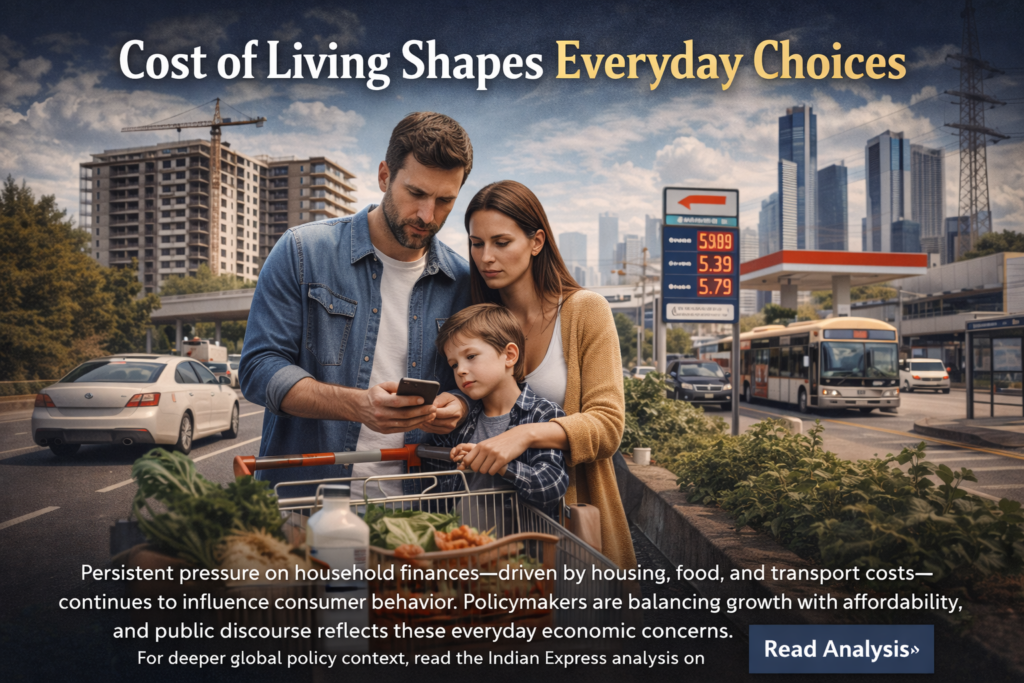
Persistent pressure on household finances—driven by housing, food, and transport costs—continues to influence consumer behavior. Policymakers are balancing growth with affordability, and public discourse reflects these everyday economic concerns. For deeper global policy context, read the Indian Express analysis on evolving trade and economic ties.
Read more:
• Indian Express — Trade deals with EU, US show are not surrender or triumph
6. Infrastructure Investment as a Strategic Priority
Transport networks, logistics systems, and digital connectivity remain critical areas of long-term investment. Governments around the world are prioritizing these foundational elements to support future productivity and economic stability. These efforts may not make daily headlines, but their impact will unfold over years.
7. Education Focuses on Employability
Education is shifting toward outcome-driven models that emphasize relevant skills and workforce readiness. Short-term certifications, online credentials, and industry-specific training are increasingly preferred alongside traditional paths. This realignment aims to bridge learning with job market demands.
8. Trade and Supply Chains Respond to Risk
Countries are diversifying supply chains and reducing exposure to single-source risks. Global trade continues, but with added emphasis on resilience and strategic partnerships. The landscape of commerce is increasingly interwoven with geopolitical strategy. For broader context on global trends and future issues, see the CIDOB report on key international matters shaping 2026.
Read more:
• CIDOB — Ten issues that will shape international agenda in 2026
9. Energy Policy Centers on Stability
Energy planning globally reflects a blend of traditional and renewable resource strategies aimed at ensuring steady supply. Rather than abrupt transformation, governments are balancing immediate needs with longer-term sustainability goals. Economics and policy continue to influence these decisions significantly.
10. Diplomacy Maintains Global Equilibrium
Amid geopolitical uncertainties, dialogue remains the primary tool for resolving tensions. Leaders recognize that conflict carries costs for economies and societies. Cooperation, even when cautious, helps maintain a measure of global stability. For related developments in big-picture global risks, see Reuters coverage of world growth forecasts.
Read more:
• Reuters — IMF sees steady global growth in 2026 as AI boom offsets trade headwinds
Why the Daily Insights News Digest Matters
This edition of Daily Insights News Digest highlights systematic shifts across technology, economy, and global affairs. These developments point to a world adjusting thoughtfully—favoring resilience and strategic planning. This Daily Insights News Digest focuses on long-term signals rather than short-term reactions, helping readers see beyond daily headlines. For readers, understanding these trends offers clarity, supports better decisions, and enriches conversations beyond the day’s headlines.
Thank you for reading today’s Daily Insights News Digest. We’ll return with another carefully curated edition tomorrow.