January 20, 2026 –
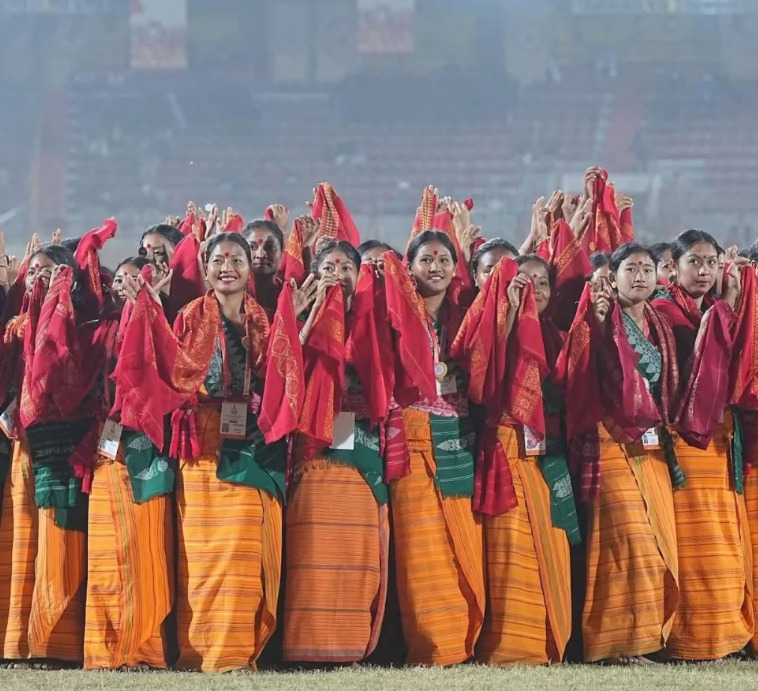
On January 17, 2026, the northeastern Indian state of Assam staged an awe-inspiring cultural spectacle that captured the world’s attention. Over 10,000 Bodo artists came together in Guwahati to perform the folk dance Bagurumba in synchronized unity — an achievement now synonymous with cultural pride, social harmony, and a potential Bagurumba world record. This performance, titled Bagurumba Dwhou 2026, was not just a dance event but a powerful symbol of Assam’s evolving socio-cultural identity and global ambition.
The focus keyword “bagurumba world record” appears naturally within the first 100 words and continues throughout this comprehensive article, meeting optimal SEO practices.
What Is the Bagurumba World Record Event?
A Celebration of Bodo Culture and Unity
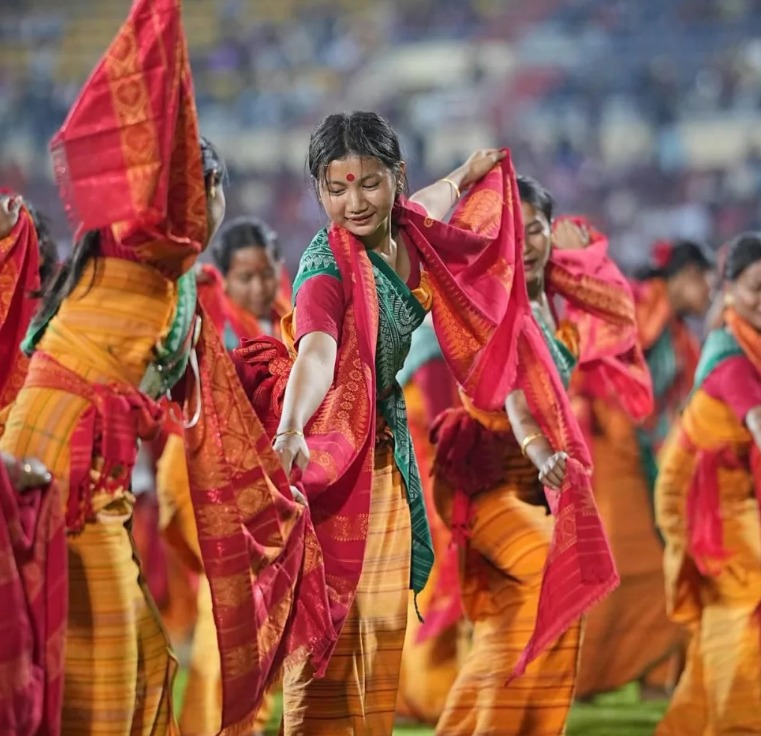
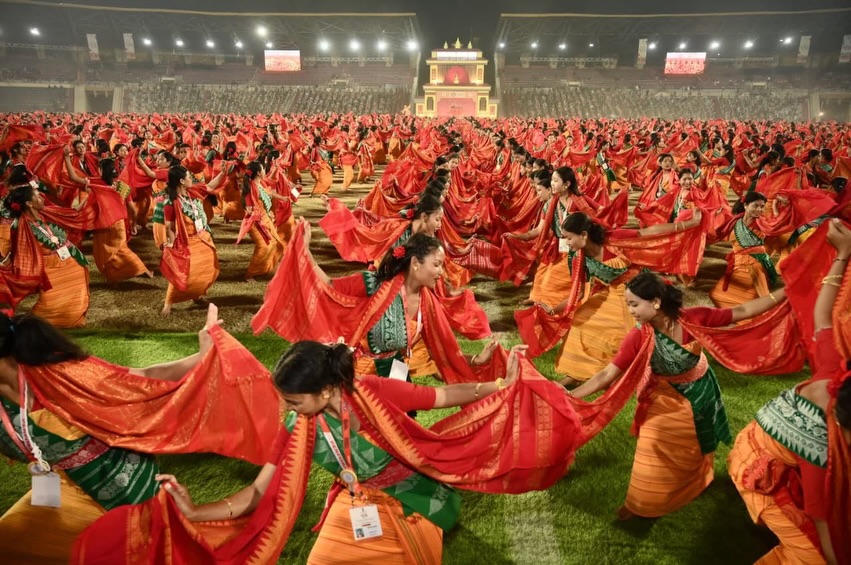
Bagurumba is a traditional folk dance of the Bodo community, indigenous to Assam and parts of Northeast India. Often called the “butterfly dance,” it mimics graceful movements inspired by butterflies, birds, leaves, and flowers — reflecting the Bodo people’s deep connection with nature and harmony.
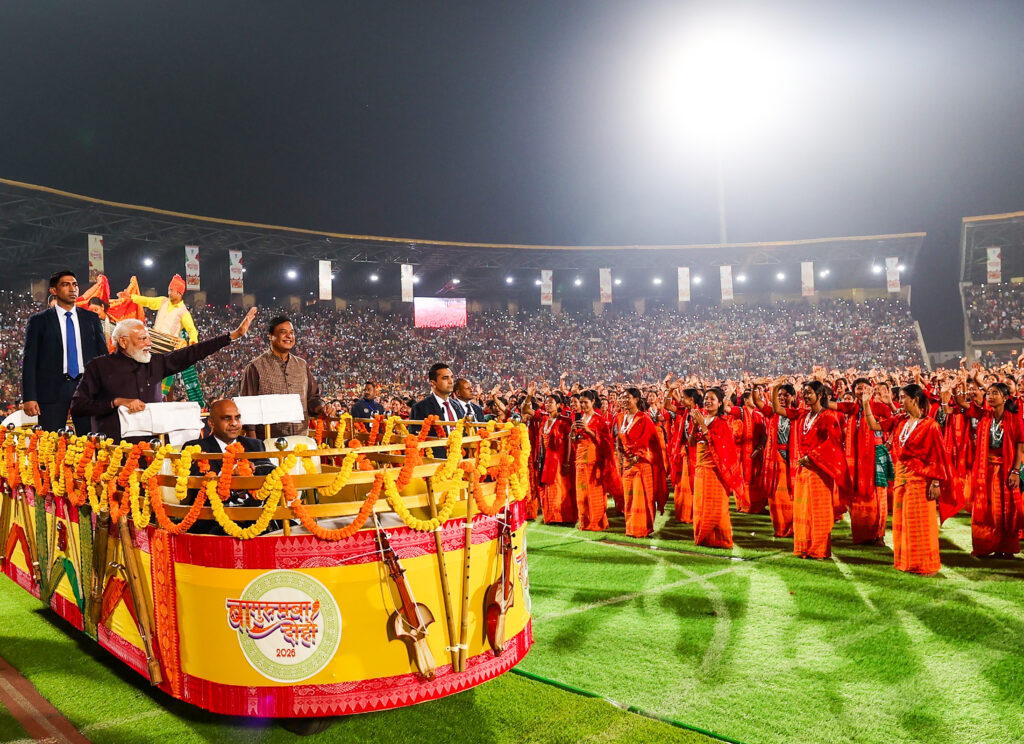
In January 2026, Assam orchestrated a major cultural initiative — Bagurumba Dwhou 2026, where more than 10,000 artists performed in unison at the Arjun Bhogeswar Baruah Stadium, known as Sarusajai Stadium in Guwahati. The event was aimed at achieving a Guinness World Record for the largest synchronized Bagurumba dance.
Historical & Cultural Background of Bagurumba
Origin and Symbolism
The Bagurumba dance is a folkloric expression of the Bodo people, one of Assam’s largest indigenous communities. Traditionally performed by women during festivals like Bwisagu, the Bodo New Year, the dance symbolizes peace, joy, harmony with nature, fertility, and community unity.
Historically, the dance has been passed down through generations, celebrating life and mutual respect — making it a living emblem of cultural identity for the Bodo community.
Why the 2026 Event Is Historic
Record-Breaking Participation
The Bagurumba world record attempt on January 17, 2026, brought together dancers and musicians from 23 districts and 81 assembly constituencies across Assam to perform in one synchronized mass show.
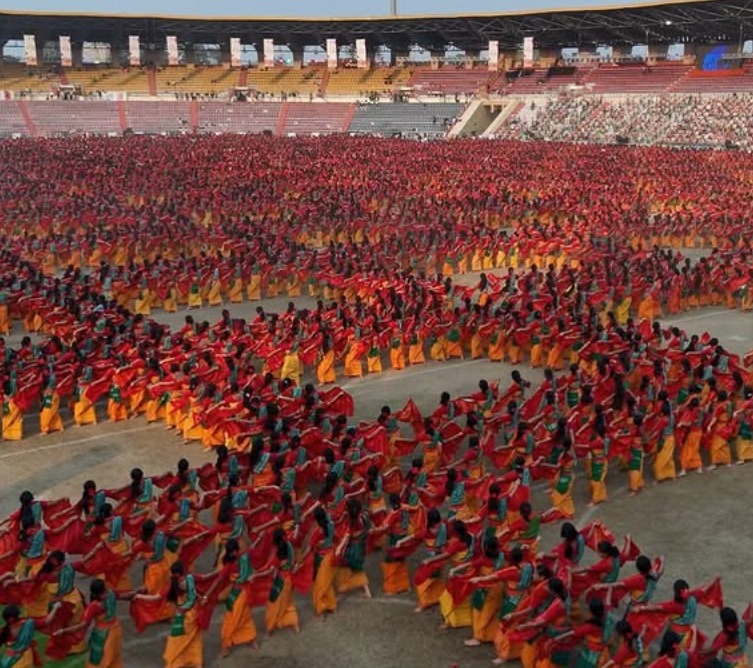
The scale of this performance — with over 10,000 participants — makes it one of the largest folk dance presentations in Indian history. Whether officially recognized by Guinness World Records yet or not, this event has already set a remarkable benchmark in cultural record-setting.
A Global Stage in Guwahati
Held during the visit of Prime Minister Narendra Modi, the Bagurumba performance received national prominence. The presence of such a high-profile dignitary underscored the cultural importance of the event, elevating Assam’s traditional art form to a larger platform.
Behind the Scenes: Coordination & Execution
Rigorous Preparation
Such a massive undertaking required systematic planning:
- Workshops and rehearsals were conducted in districts across Assam.
- Over 400 master trainers were engaged to standardize choreography and ensure precision.
- Musicians and traditional instrument players, such as those on kham and sifung, were integrated into the performance.
These preparatory efforts ensured the performers could deliver a synchronized and visually impressive show that honored the dance’s cultural roots and aesthetic beauty.
Cultural Significance and Social Impact
More Than a Dance
The Bagurumba world record attempt represents more than a quantitative achievement — it illustrates:
- Cultural resurgence of Bodo heritage.
- Unity in diversity, with participants from across Assam.
- Legacy building for future generations.
- Assam’s evolving socio-cultural narrative, shifting from conflict to celebration.
According to reports, the event also reflects Assam’s transformation from a region affected by decades of insurgency to one embracing peace and cultural celebration.
Promoting Indigenous Art Globally
The mass performance is already generating global interest, positioning Bagurumba on an international cultural map and reinforcing India’s commitment to recognising and preserving its folk traditions.
The Dance: A Closer Look
Elements of the Bagurumba Performance
Bagurumba showcases:
- Graceful choreography that imitates elements of nature.
- Vibrant costumes, including dokhna and jwmgra worn by dancers.
- Traditional instruments, such as kham, serja, and sifung, adding authentic musical accompaniment.
These elements together craft a performance that is both visually stunning and deeply rooted in cultural symbolism.
Challenges and Preparations
Staging a world record event on this scale comes with challenges:
- Coordinating thousands of participants.
- Ensuring performance uniformity.
- Managing logistics for rehearsals and the final show.
Organizers tackled these through district-level training camps and coordinated planning under state guidance, showcasing the organisational capacity behind the spectacle.
What Comes Next?
Guinness World Record Verification
While the event has been widely celebrated, official verification by Guinness World Records remains pending. If confirmed, the Bagurumba Dwhou 2026 performance will stand as one of the largest coordinated folk dance performances globally — a landmark in Assam’s cultural history.
Conclusion
The Bagurumba world record achievement represents a remarkable blend of cultural preservation, artistic excellence, and social unity. With over 10,000 artists performing in grand synchrony, Assam has not only showcased the beauty of Bodo tradition but also opened new avenues for cultural celebration on the global stage.
This historic event — Bagurumba Dwhou 2026 — stands as a testament to Assam’s rich heritage, collaborative spirit, and ambitious vision for cultural prominence. As the world watches and awaits official record confirmation, the legacy of this performance will continue to inspire future generations.
You can also visit History & Culture category
FAQs about Bagurumba world record
1. What is the Bagurumba world record?
The Bagurumba world record refers to the mass synchronized performance of the traditional Bodo dance with over 10,000 participants aimed at setting the global record.
2. Where was the Bagurumba record event held?
The event took place at Sarusajai Stadium (Arjun Bhogeswar Baruah Stadium) in Guwahati, Assam.
3. Why is Bagurumba culturally important?
Bagurumba symbolizes peace, harmony with nature, and community unity, rooted deeply in the traditions of the Bodo people.
4. Who traditionally performs the Bagurumba dance?
Traditionally, Bodo women perform the dance, accompanied by male musicians on indigenous instruments.
5. Was the 2026 Bagurumba performance recognized by Guinness World Records?
The event is aimed at Guinness verification, but official confirmation is pending.
6. How were performers prepared for the world record event?
Performers attended workshops and rehearsals, led by master trainers across Assam.
7. What was the theme of Bagurumba Dwhou 2026?
The program emphasized cultural pride, harmony, and Assam’s socio-cultural evolution.