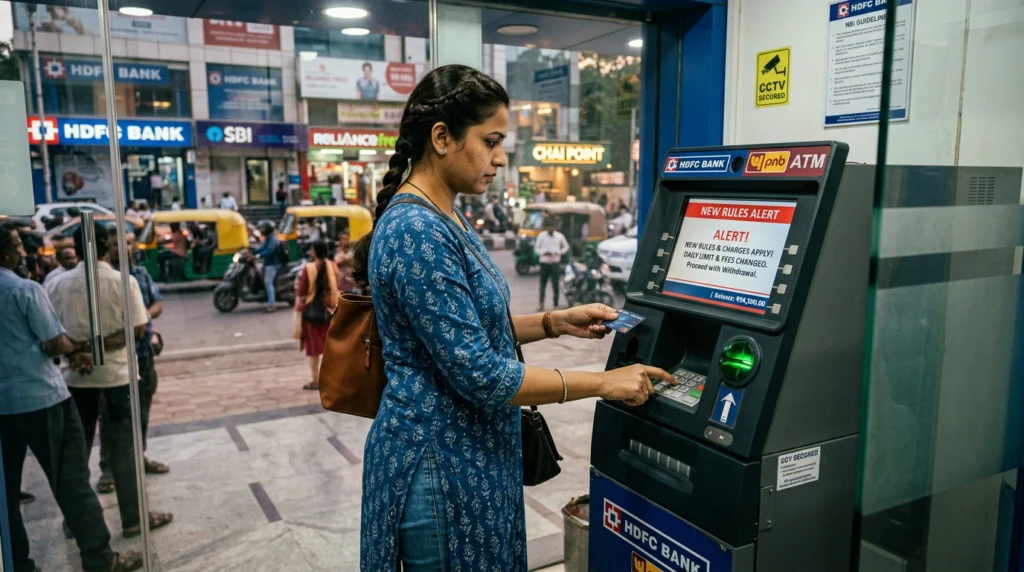
The latest ATM rules introduced from April 2026 are already creating buzz among bank customers across India. Whether you use ATMs occasionally or rely on them regularly, these changes can directly affect how much you withdraw, how often you do it, and even how much you pay in fees.
Banks like HDFC, PNB, and Bandhan Bank have updated their policies in response to operational costs and regulatory adjustments. While these updates may seem small at first glance, they can quietly impact your monthly expenses if you are not aware.
This article breaks down the most important updates in ATM rules in a simple and practical way so you can avoid unnecessary charges and plan your withdrawals better.
At Informosio, we simplify complex banking updates into clear, actionable insights so you can understand how changing ATM rules affect your money, avoid unnecessary charges, and make smarter financial decisions.
Why ATM Rules Were Changed in 2026
The revision in ATM rules did not happen randomly. Several factors pushed banks to make these updates.
Rising operational costs, including ATM maintenance, cash handling, and security expenses, have increased significantly over the past few years. At the same time, digital transactions are growing rapidly, reducing ATM usage but increasing per-transaction costs for banks.
To balance these costs, banks have slightly revised free transaction limits and charges. The goal is to encourage digital payments while still maintaining ATM services for essential use.
7 Big Changes in ATM Rules You Must Know
1. Reduced Free Transaction Limits
One of the most noticeable changes in ATM rules is the revision in free transaction limits. In metro cities, the number of free ATM transactions has been slightly reduced. In non-metro areas, the limit remains relatively higher but still subject to conditions based on your bank.
This means you need to be more careful about how often you use ATMs each month.
2. Higher Charges After Free Limit
Once you cross the free transaction limit, the updated ATM rules now impose slightly higher charges per transaction. Even balance inquiries and mini statements can count toward your limit in some banks. This is where many users unknowingly lose money.
3. Interbank ATM Usage Changes
Using another bank’s ATM has also become slightly more expensive under the new ATM rules. Earlier, customers relied heavily on any nearby ATM. Now, frequent interbank transactions can increase your monthly banking costs if not managed properly.
4. Revised Cash Withdrawal Limits
Some banks have adjusted daily withdrawal limits under the new ATM rules. While premium account holders may not notice much difference, regular savings account users could see changes depending on their bank and account type.
5. Charges for Failed Transactions
A lesser-known update in ATM rules involves charges related to failed transactions. If a transaction fails due to insufficient balance or incorrect PIN attempts, certain banks may count it toward your free transaction limit or even apply minor charges.
6. Urban vs Rural Differences
The updated ATM rules clearly differentiate between metro and non-metro users. Customers in smaller towns still enjoy slightly relaxed limits, while metro users face stricter caps due to higher operational costs.
7. Increased Focus on Digital Payments
Another indirect but important shift in ATM rules is the push toward digital banking. Banks are encouraging customers to use UPI, mobile banking, and net banking instead of relying heavily on ATMs. This trend is expected to grow stronger in the coming years.
How These ATM Rules Affect You
The new ATM rules may not seem drastic, but they can impact your daily financial habits. If you withdraw cash frequently in small amounts, you may end up exceeding your free transaction limit quickly. This can lead to avoidable charges every month.
On the other hand, if you plan your withdrawals smartly, you can easily stay within limits and avoid extra costs.
Smart Ways to Avoid Extra ATM Charges
Understanding ATM rules is only half the job. The real benefit comes when you use this knowledge to save money. Try withdrawing larger amounts fewer times instead of making multiple small withdrawals, as this helps you stay within the free limit. Use your own bank’s ATM whenever possible to avoid interbank charges, and avoid unnecessary balance checks since they may count as transactions. Switching to digital payments for daily expenses can also reduce your dependence on ATMs and help you avoid extra charges.
What Banks Are Not Telling You Clearly
One interesting aspect of the updated ATM rules is that many users are not fully aware of how charges are applied. Banks usually mention these updates in notifications or emails, but most customers ignore them. As a result, they only realize the changes when they see unexpected deductions in their accounts.
This lack of awareness is exactly why understanding these ATM rules is so important right now.
Future of ATM Usage in India
The future of ATM rules is closely linked with India’s digital payment growth. As UPI and digital wallets continue to dominate, ATM usage is expected to decline gradually. However, ATMs will still remain essential, especially in rural areas and for emergency cash needs.
Banks are likely to introduce more dynamic pricing and personalized limits in the future based on customer behavior.
Stay informed with Informosio in-depth coverage of Finance, Business News, Stock Market updates, IPO announcements and Company News.
Final Thoughts
The updated ATM rules in 2026 are not just minor banking changes. They reflect a larger shift in how financial services are evolving in India. While these changes may feel inconvenient at first, they are pushing users toward more efficient and cost-effective banking habits. If you stay informed and adjust your usage accordingly, these new ATM rules will not hurt your finances but instead help you manage your money more wisely.
End Note
The key takeaway is simple. Do not ignore these ATM rules. A little awareness can save you from unnecessary charges every month. Before your next ATM visit, take a moment to understand your bank’s latest policy because even small changes can make a bigger difference than you expect.
🌐Connect with us
Informosio Official – General updates, current affairs, and informative content