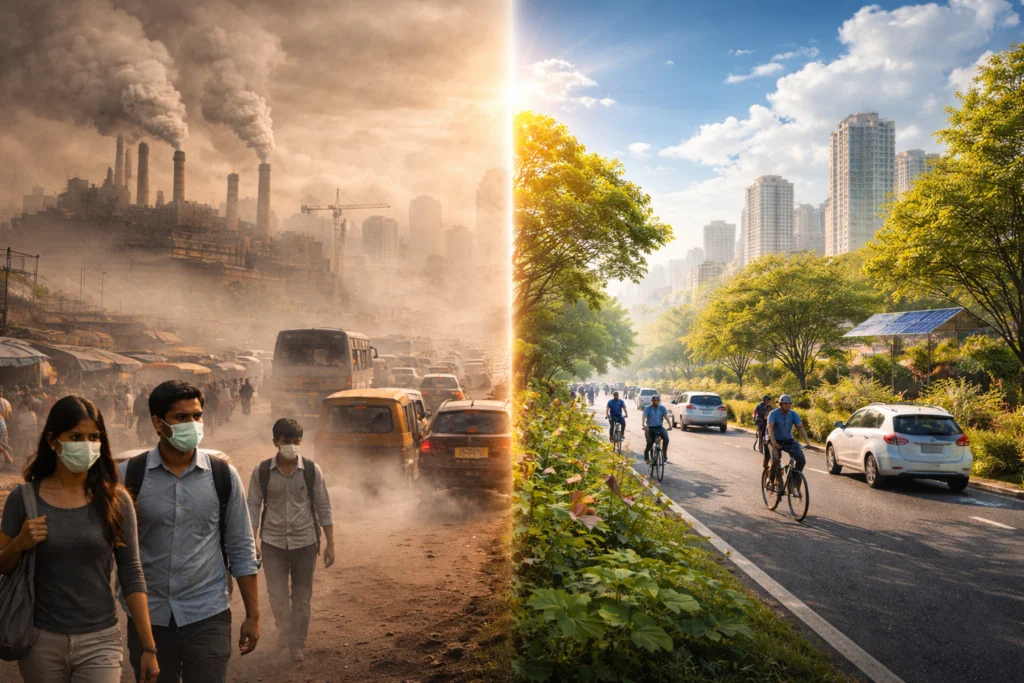
Air Pollution in India has become one of the most serious environmental and public health challenges of the 21st century. Rapid urbanization, industrial growth, and increasing vehicle usage have significantly worsened air quality across major cities and rural regions alike. According to global and national reports, India frequently ranks among countries with the highest levels of particulate matter pollution, affecting millions of lives daily.
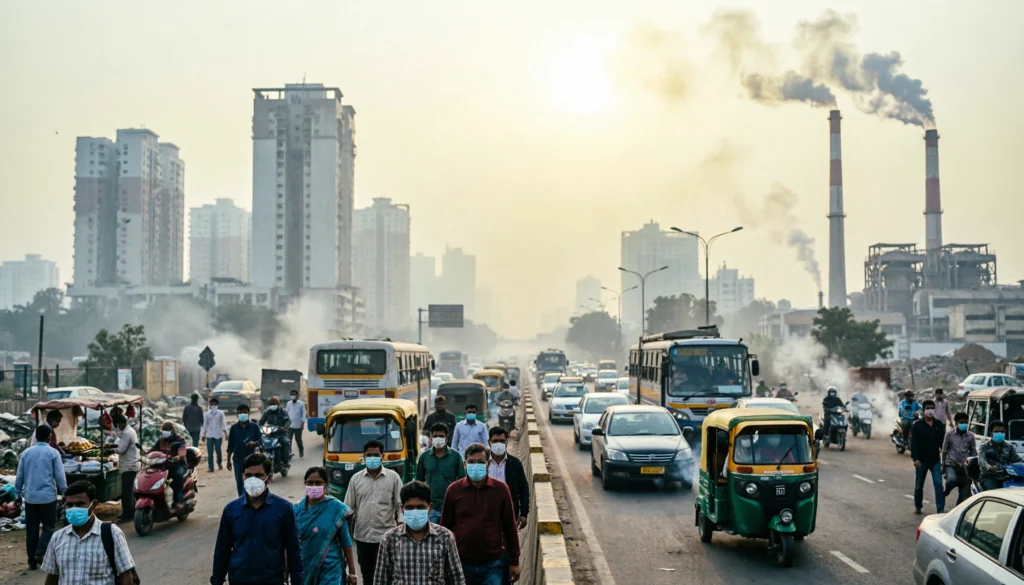
At Informosio, Understanding Air Pollution in India is crucial not only for policymakers but also for ordinary citizens. This issue directly impacts health, economy, and the environment. In this blog, we explore the causes, effects, and practical solutions that can help reduce pollution levels and create a healthier future.
Understanding Air Pollution in India
Air Pollution in India refers to the presence of harmful substances in the air, including particulate matter (PM2.5 and PM10), carbon monoxide, nitrogen oxides, sulfur dioxide, and ozone. These pollutants originate from both human activities and natural sources.
India’s air quality problem is complex because it varies across regions and seasons. Northern cities like Delhi often experience severe smog during winter due to temperature inversion and crop burning, while industrial zones face year-round emissions.
The Air Quality Index (AQI) is commonly used to measure pollution levels. In many Indian cities, AQI frequently reaches “poor” to “hazardous” categories, posing serious risks to public health.
Major Causes of Air Pollution in India
Industrial Emissions and Urban Growth
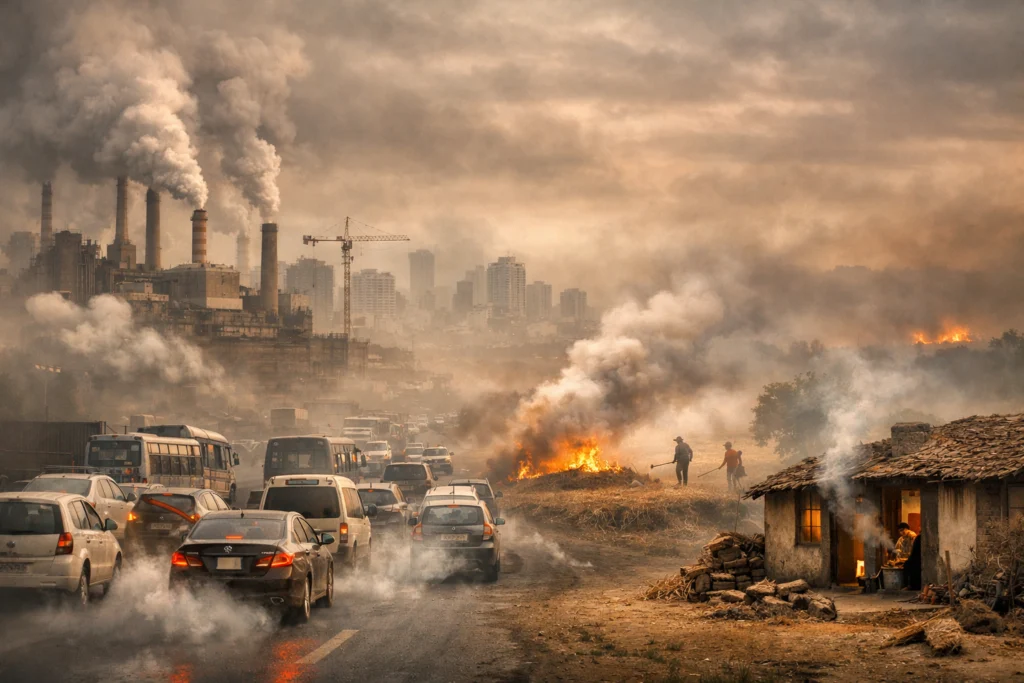
One of the primary causes of Air Pollution in India is rapid industrialization. Factories release large amounts of toxic gases and particulate matter into the atmosphere. Inadequate environmental regulations and poor enforcement further worsen the situation.
Urban expansion also contributes significantly. Construction activities generate dust particles, while unplanned development increases congestion and pollution levels.
Vehicular Pollution
The increasing number of vehicles on Indian roads is a major contributor to Air Pollution in India. Diesel engines, in particular, emit high levels of nitrogen oxides and particulate matter.
Traffic congestion in cities leads to prolonged idling, which increases emissions. Older vehicles without proper emission controls further add to the problem.
Agricultural Practices and Crop Burning
Seasonal crop burning, especially in northern India, is a major cause of air pollution spikes. Farmers burn crop residues to clear fields quickly, releasing massive amounts of smoke and pollutants into the air.
This practice significantly impacts air quality in nearby cities, creating dense smog during certain months.
Household and Biomass Burning
In rural areas, many households still rely on traditional fuels such as wood, coal, and dung for cooking and heating. These fuels produce harmful smoke, contributing to indoor and outdoor air pollution.
This form of pollution disproportionately affects women and children, who are more exposed to indoor air contaminants.
Natural Factors
Dust storms, forest fires, and geographical conditions also contribute to Air Pollution in India. For example, desert dust from nearby regions can increase particulate matter levels.
Seasonal weather patterns, such as low wind speeds and temperature inversions, trap pollutants close to the ground.
Effects of Air Pollution in India
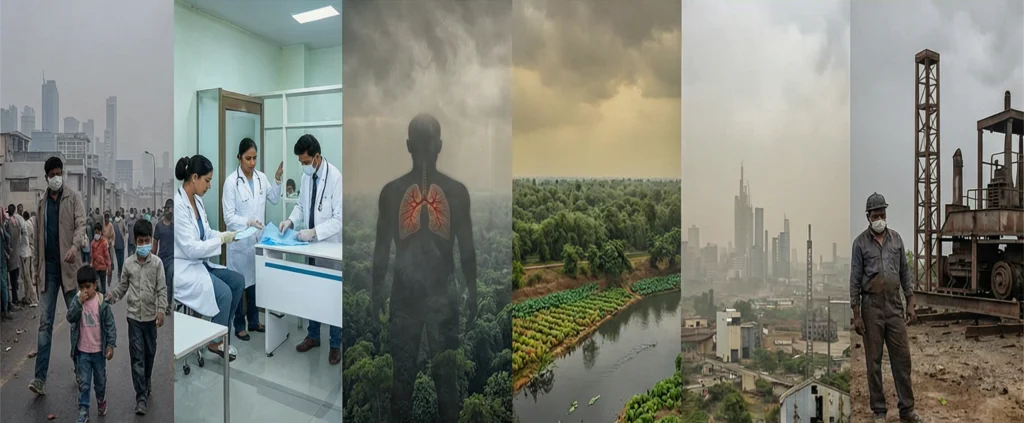
Health Impacts
Air Pollution in India has severe health consequences. Exposure to polluted air can cause respiratory diseases such as asthma, bronchitis, and chronic obstructive pulmonary disease (COPD).
Long-term exposure is linked to heart disease, stroke, and even lung cancer. According to global health organizations, air pollution is one of the leading causes of premature deaths in India.
Children are especially vulnerable, as polluted air affects lung development and cognitive growth.
Environmental Damage
Air pollution harms ecosystems by damaging crops, forests, and water bodies. Acid rain, caused by sulfur dioxide and nitrogen oxides, affects soil fertility and aquatic life.
Pollutants also reduce visibility, impacting tourism and daily life.
Economic Consequences
The economic cost of Air Pollution in India is significant. Healthcare expenses increase due to pollution-related illnesses, while productivity decreases as people fall sick.
Industries and businesses also suffer losses due to reduced workforce efficiency and environmental damage.
Key Pollutants and Their Sources
| Pollutant | Main Sources | Impact |
|---|---|---|
| PM2.5 & PM10 | Vehicles, industries, dust | Lung and heart diseases |
| Carbon Monoxide | Vehicle emissions | Reduced oxygen in blood |
| Nitrogen Oxides | Vehicles, power plants | Respiratory issues |
| Sulfur Dioxide | Coal burning, industries | Acid rain, lung irritation |
| Ozone | Chemical reactions in sunlight | Breathing problems |
This table highlights how different pollutants contribute to Air Pollution in India and their harmful effects.
Smart Solutions to Reduce Air Pollution in India
Strengthening Government Policies
Effective policies are essential to control Air Pollution in India. Programs like the National Clean Air Programme (NCAP) aim to reduce pollution levels through monitoring and regulation. Strict enforcement of emission standards for industries and vehicles can significantly improve air quality.
Promoting Clean Energy
Transitioning to renewable energy sources such as solar and wind can reduce dependence on fossil fuels. Clean cooking fuels like LPG and electric stoves can replace traditional biomass. These changes not only reduce pollution but also improve overall quality of life.
Sustainable Transportation
Encouraging public transport, carpooling, and electric vehicles can reduce vehicular emissions. Expanding metro networks and improving public transport infrastructure are key steps. Cycling and walking should also be promoted in urban planning.
Controlling Agricultural Burning
Providing farmers with alternatives to crop burning, such as machinery for residue management, can help reduce seasonal pollution spikes. Government incentives and awareness programs play a crucial role in changing farming practices.
Public Awareness and Individual Action
Citizens play an important role in addressing Air Pollution in India. Simple actions like reducing vehicle use, conserving energy, and avoiding waste burning can make a difference.
Awareness campaigns can educate people about the impact of pollution and encourage responsible behavior.
Future Outlook of Air Pollution in India
The future of Air Pollution in India depends on collective action from governments, industries, and individuals. While challenges remain, technological advancements and policy reforms offer hope.
Real-time air quality monitoring, smart city initiatives, and green infrastructure can help create cleaner environments. However, sustained efforts and long-term commitment are essential to achieve meaningful results.
Conclusion
Air Pollution in India is a critical issue that affects health, environment, and economic growth. While the causes are complex and widespread, effective solutions exist. By combining strong policies, technological innovation, and individual responsibility, India can move toward cleaner air.
Addressing Air Pollution in India is not just an environmental necessity but a social and economic priority. The path forward requires awareness, action, and sustained commitment from every level of society.
You can also visit our Environment Category.
Frequently Asked Questions (FAQs)
What is the main cause of Air Pollution in India?
The main causes include vehicle emissions, industrial pollution, crop burning, and household fuel use.
Why is air pollution worse in winter in India?
Cold weather traps pollutants near the ground due to temperature inversion, increasing smog levels.
How does air pollution affect human health?
It causes respiratory diseases, heart problems, and can lead to premature death.
Which cities in India are most affected by air pollution?
Major cities like Delhi, Mumbai, Kolkata, and Kanpur often experience high pollution levels.
What can individuals do to reduce air pollution?
Using public transport, saving energy, and avoiding burning waste can help reduce pollution.
What is PM2.5 and why is it dangerous?
PM2.5 refers to tiny particles that can enter the lungs and bloodstream, causing serious health issues.
Are government initiatives helping reduce pollution?
Yes, programs like NCAP and stricter emission norms are improving air quality gradually.
🌐 Connect With Us
👉 Informosio Official – General updates, current affairs, and informative content