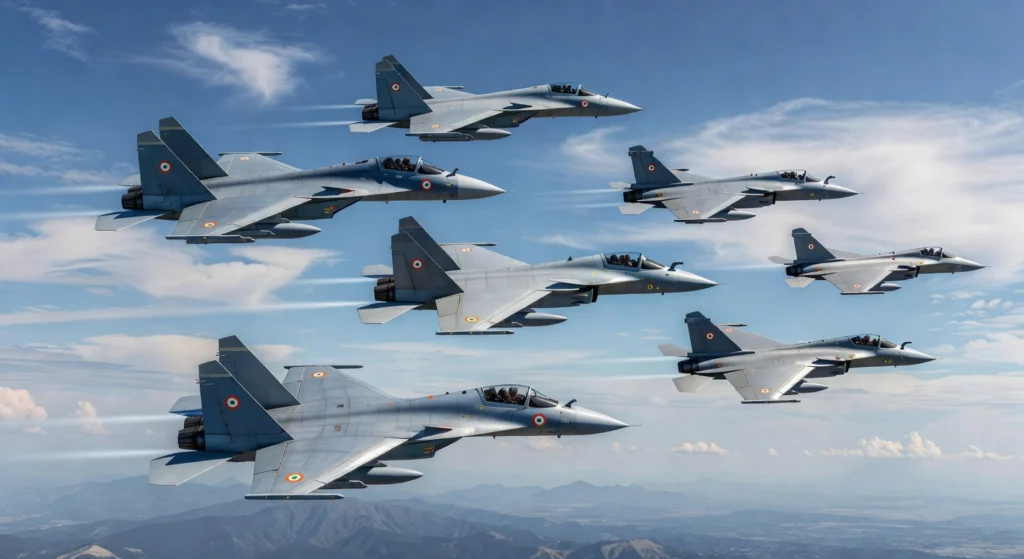
The Indian Air Force is one of the most critical pillars of India’s defense system, responsible for safeguarding the nation’s airspace and supporting military operations on land and sea. Established in 1932, it has evolved into a technologically advanced force that plays a decisive role in both war and peace.
At Informosio, In today’s rapidly changing security environment, the IAF India stands as a symbol of strength, precision, and strategic capability. This blog provides a clear and professional overview of its structure, history, assets, and future direction.
Evolution of the Indian Air Force
The journey of the indian air force began under British rule as the Royal IAF India. After India gained independence in 1947, it was renamed and reorganized to serve the newly sovereign nation. Over the decades, it has participated in major conflicts including the wars of 1947, 1965, 1971, and the Kargil conflict in 1999.
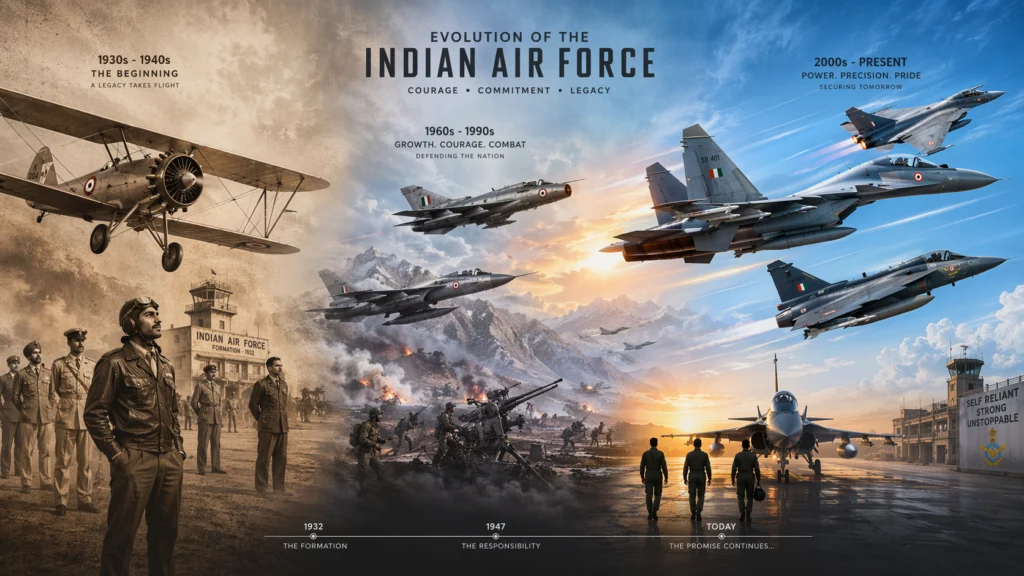
Its transformation from a small auxiliary force to a modern air power reflects India’s broader military growth. Continuous upgrades in aircraft, training, and strategy have ensured that it remains capable of handling diverse threats.
Structure and Command System
The indian air force operates under a well-defined command structure to ensure efficiency and rapid response. It is headed by the Chief of Air Staff, who oversees multiple operational and functional commands.
These commands are geographically and functionally divided to handle air defense, training, maintenance, and logistics. This structured approach allows the force to maintain readiness across the country, from high-altitude regions to coastal zones.
Aircraft Fleet and Capabilities
One of the most important strengths of the indian air force is its diverse and advanced fleet of aircraft. These include fighter jets, transport aircraft, helicopters, and surveillance systems.
Fighter aircraft such as Su-30MKI, Rafale, and Tejas form the backbone of combat operations. Transport aircraft like C-17 Globemaster and C-130J Super Hercules enable rapid deployment of troops and supplies. Helicopters play a crucial role in rescue missions, logistics, and battlefield support.
This combination ensures operational flexibility and strategic reach, allowing the force to respond effectively to both conventional and unconventional threats.
Key Roles in National Security
The indian air force performs multiple roles beyond traditional warfare. Its responsibilities extend to disaster relief, humanitarian missions, and surveillance operations.
In times of natural disasters such as floods or earthquakes, it provides rapid assistance by delivering relief materials and evacuating civilians. It also plays a vital role in monitoring borders and maintaining airspace security.
Additionally, the force contributes to joint operations with the Army and Navy, ensuring coordinated defense strategies. This integrated approach enhances India’s overall military effectiveness.
Technological Advancements and Modernization
Modern warfare demands cutting-edge technology, and the indian air force has been actively upgrading its capabilities. It has invested in advanced radar systems, missile technology, and network-centric warfare systems.
Indigenous development has also gained momentum, with projects like the Light Combat Aircraft (Tejas) showcasing India’s growing defense manufacturing capabilities. These advancements reduce dependence on foreign suppliers and strengthen national security.
The integration of artificial intelligence, drones, and cyber capabilities is expected to further enhance operational efficiency in the coming years.
Training and Human Resource Excellence
Behind every successful mission of the indian air force is a highly trained and disciplined workforce. Pilots, engineers, and ground staff undergo rigorous training to maintain the highest standards of professionalism.
Training institutions focus on both technical skills and leadership development. This ensures that personnel are prepared to handle complex missions under challenging conditions.
The emphasis on continuous learning and adaptation has been a key factor in maintaining the force’s operational readiness.
Strategic Importance in Regional and Global Context
India’s geographical location and strategic interests make air power extremely important. The indian air force plays a crucial role in maintaining balance in the region, especially in the context of evolving geopolitical dynamics.
It participates in international exercises and collaborations, strengthening ties with other nations. These engagements improve interoperability and provide exposure to global best practices.
As regional challenges grow, the importance of a strong and capable air force becomes even more evident.
Challenges and Future Outlook
Despite its strengths, the indian air force faces challenges such as aging aircraft, budget constraints, and the need for rapid modernization. Addressing these issues requires strategic planning and sustained investment.
The future of the force lies in modernization, indigenous production, and technological integration. With ongoing reforms and acquisitions, it is expected to become even more powerful and efficient.
The focus will remain on enhancing combat readiness while adapting to new forms of warfare.
Key Facts Table
| Aspect | Details |
|---|---|
| Established | 1932 |
| Headquarters | New Delhi |
| Chief | Chief of Air Staff |
| Primary Role | Air defense and support |
| Major Aircraft | Rafale, Su-30MKI, Tejas |
| Motto | Touch the Sky with Glory |
Closing Insights
The indian air force remains a cornerstone of India’s defense strategy, combining advanced technology, skilled personnel, and strategic vision. From safeguarding airspace to supporting humanitarian missions, its role continues to expand in importance. As modernization efforts progress, the IAF India is set to become even more capable, ensuring that India remains secure in an increasingly complex global environment.
You can also visit Defence category.
Frequently Asked Questions
What is the primary role of the indian air force?
The primary role is to secure Indian airspace and support military operations through air power.
When was the indian air force established?
It was established in 1932 and later became a key defense force after independence.
Which aircraft are used by the indian air force?
It operates a range of aircraft including Rafale, Su-30MKI, Tejas, and transport aircraft like C-17.
Does the indian air force help in disasters?
Yes, it plays a major role in rescue and relief operations during natural disasters.
What is the future of the indian air force?
The future focuses on modernization, indigenous production, and advanced technology integration.
Who leads the indian air force?
The Chief of Air Staff is the head of the force.
Why is the indian air force important?
It ensures national security, supports military operations, and responds to emergencies.
🌐 Connect With Us
👉 Informosio Official – General updates, current affairs, and informative content