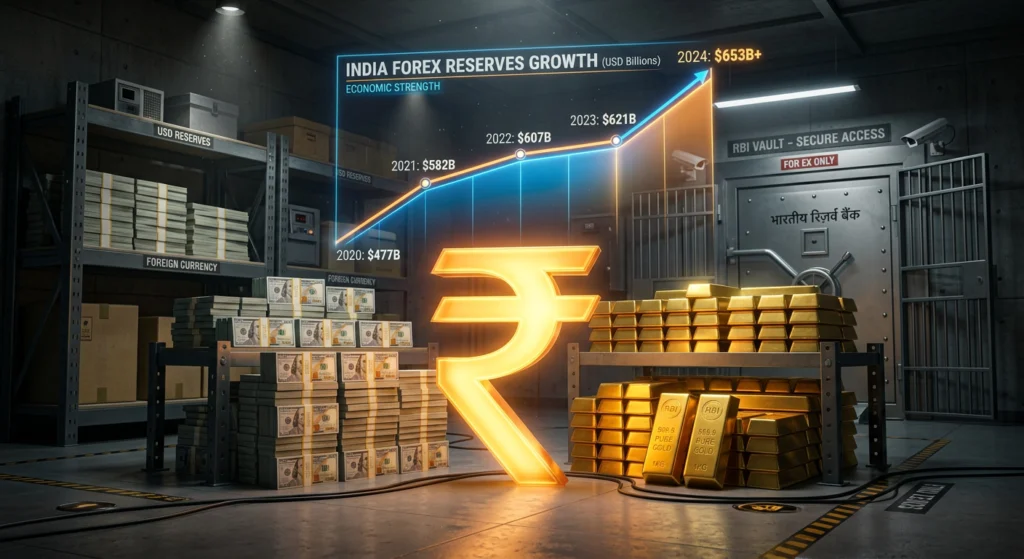
India forex reserves have surged sharply, crossing a massive $697 billion mark, marking one of the strongest weekly gains in recent years. The rise, driven largely by a significant increase in gold holdings and foreign currency assets, signals renewed strength in India’s macroeconomic position at a time when global markets remain uncertain.
This sudden jump in India forex reserves is not just a number. It reflects deeper economic stability, stronger investor confidence, and improved resilience against global shocks. For a country like India, which depends heavily on imports for energy and commodities, rising reserves act as a financial shield.
At Informosio, we simplify complex financial updates like India forex reserves into clear, actionable insights so you can understand what’s driving the rupee’s strength, what signals matter for investors, and what could impact the economy next.
Why India Forex Reserves Are Rising Fast
The recent surge in India forex reserves is being attributed to multiple factors working together. Strong capital inflows, stability in foreign investments, and a notable rise in gold prices have significantly boosted the reserve position.
Gold holdings alone have seen a remarkable increase, contributing billions to the total reserves. As global investors shift toward safer assets amid geopolitical uncertainty, gold prices have strengthened, indirectly benefiting India forex reserves.
Additionally, the Reserve Bank of India has actively managed currency reserves, ensuring adequate liquidity and maintaining balance in foreign exchange markets. This strategic accumulation has helped India forex reserves reach near-record levels.
5 Big Signals from the Forex Reserve Surge
The rise in India forex reserves sends several important signals that go beyond headline numbers.
First, it indicates strong economic fundamentals. When reserves grow, it shows that the country has enough foreign currency to handle external shocks, imports, and debt obligations comfortably.
Second, it strengthens the Indian rupee. Higher India forex reserves provide stability to the currency, reducing volatility and protecting it from sharp depreciation.
Third, it boosts investor confidence. Global investors closely watch reserve levels before investing. A surge in India forex reserves signals safety and stability, encouraging more inflows.
Fourth, it helps control inflation. A stable currency supported by strong reserves can reduce imported inflation, especially in oil and essential commodities.
Fifth, it enhances global credibility. Countries with higher reserves are seen as financially stronger, improving their position in global trade and negotiations.
Impact on the Indian Rupee
India forex reserves play a crucial role in determining the strength of the rupee. When reserves are high, the central bank can intervene in currency markets to prevent excessive volatility.
This means that during periods of global uncertainty or capital outflows, India forex reserves act as a buffer. The Reserve Bank of India can sell dollars to support the rupee, ensuring stability.
A stable rupee is beneficial for businesses, investors, and consumers. It keeps import costs predictable and protects the economy from sudden shocks.
Role of Gold in the Reserve Growth
One of the most interesting aspects of the recent surge in India forex reserves is the sharp rise in gold holdings. Gold has always been considered a safe-haven asset, especially during times of global uncertainty.
As gold prices increased globally, the value of India’s gold reserves also rose significantly. This has added substantial value to India forex reserves without requiring additional purchases.
The increasing share of gold also diversifies reserves, reducing dependence on foreign currencies like the US dollar.
What This Means for Investors
For investors, the rise in India forex reserves is a positive signal. It indicates macroeconomic stability and reduces the risk of currency-related shocks.
Stock markets often respond positively to strong reserve data because it reflects economic strength. Sectors like banking, infrastructure, and exports tend to benefit from a stable currency environment.
For traders, India forex reserves provide insight into future currency movements. A strong reserve position often supports a stable or appreciating rupee in the medium term.
Challenges Still Remain
Despite the strong surge, India forex reserves are not immune to global risks. Factors such as rising oil prices, geopolitical tensions, and global interest rate changes can impact reserves.
If crude oil prices rise sharply, India may need to use its reserves to manage import bills, which could reduce overall levels.
Similarly, sudden capital outflows due to global economic shifts can put pressure on India forex reserves. This is why maintaining a healthy reserve level is crucial.
India’s Position Compared to the World
India is now among the top countries globally in terms of forex reserves. This places it in a strong position compared to many emerging economies that struggle with currency volatility.
High India forex reserves give the country a strategic advantage in global markets, allowing it to manage crises more effectively than peers.
Stay informed with Informosio in-depth coverage of Finance, Business News, Stock Market updates, IPO announcements and Company News.
What Lies Ahead
Looking forward, India forex reserves are expected to remain strong if current trends continue. Stable capital inflows, controlled inflation, and strong economic growth can further support reserve accumulation.
However, global uncertainties will continue to play a role. The ability of policymakers to manage reserves efficiently will determine how well India navigates future challenges.
🌐Connect with us
Informosio Finance – Finance news, business insights, startups, and market trends