India’s clean energy ambitions have taken a decisive leap forward with Reliance Industries signing a landmark agreement with Samsung C&T. This $3 billion green ammonia deal is not just another corporate announcement; it reflects a deeper shift in how global energy markets are evolving. As nations scramble to meet climate goals, this partnership positions India at the center of the next big energy revolution.
At Informosio, we break down complex energy transitions into clear, actionable insights so you can understand what’s driving the green ammonia deal, how Reliance is reshaping India’s clean energy future, and why global investors are closely watching this shift.
Why This Deal Matters More Than It Looks
At first glance, the green ammonia deal appears to be a large supply contract. But beneath the surface, it signals a strategic alignment between industrial giants aiming to dominate the future fuel ecosystem. Green ammonia, produced using renewable energy, is emerging as a key solution for decarbonizing sectors like shipping, fertilizers, and heavy industry.
Reliance’s aggressive push into renewable energy aligns with its broader vision to transition from fossil fuels to sustainable alternatives. By securing a long-term buyer like Samsung, the company is reducing demand uncertainty while strengthening its global footprint. This green ammonia deal could act as a blueprint for similar cross-border energy partnerships in the coming years.
What Exactly Is Green Ammonia
Green ammonia is produced using hydrogen generated from renewable sources such as solar and wind power, combined with nitrogen from the air. Unlike conventional ammonia production, which relies heavily on fossil fuels, this method significantly reduces carbon emissions.
This makes the green ammonia deal particularly important at a time when industries are under pressure to cut emissions without compromising productivity. Countries like Japan and South Korea are already investing heavily in ammonia-based energy solutions, making this agreement strategically timed.
Reliance’s Bigger Energy Game
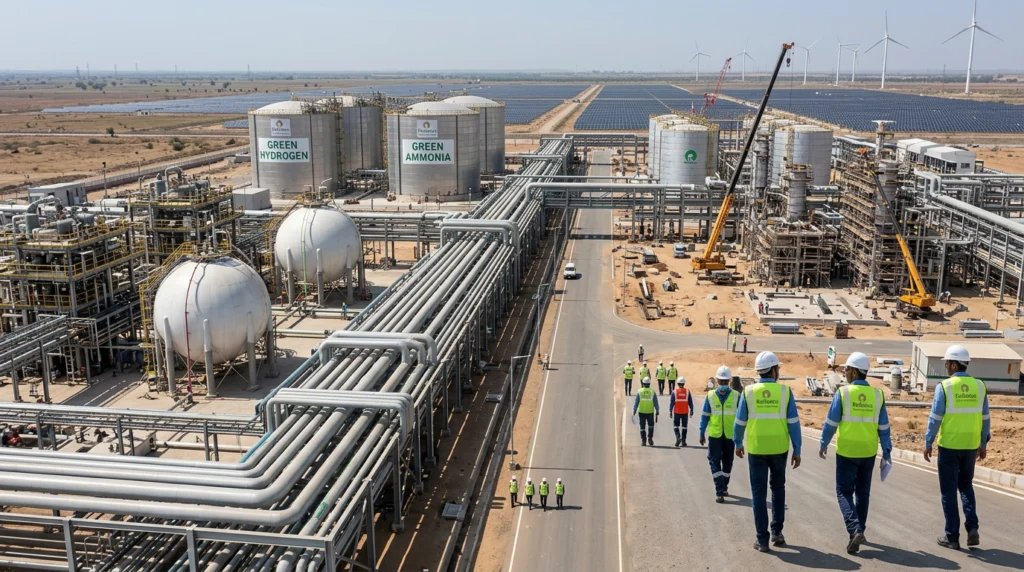
This green ammonia deal is just one piece of a much larger puzzle. Reliance has been investing billions into building an integrated renewable energy ecosystem, including solar manufacturing, hydrogen production, and energy storage.
The company’s Jamnagar facility is expected to become a global hub for green energy production. By tying up with Samsung, Reliance is ensuring that its output has a steady international market. This reduces financial risk while accelerating scale, a critical factor in making green fuels commercially viable.
Samsung’s Strategic Bet on Clean Energy
For Samsung, this green ammonia deal is more than a supply agreement. It is part of a broader strategy to secure stable, long-term access to clean energy inputs. South Korea, with limited natural resources, depends heavily on imports for energy security.
By partnering with Reliance, Samsung is not only diversifying its supply chain but also aligning with global sustainability goals. This move could give the company a competitive edge as environmental regulations tighten worldwide.
Market Impact and Investor Sentiment
The announcement of this green ammonia deal has already started influencing market sentiment. Investors are increasingly favoring companies that demonstrate a clear path toward sustainability. Deals of this scale send a strong signal that green energy is no longer a distant vision but an immediate priority.
For the Indian market, this reinforces confidence in the country’s renewable energy sector. It also opens doors for more foreign investments, as global players look for reliable partners in the clean energy transition.
The Global Race for Green Fuels
This green ammonia deal comes at a time when countries are competing to become leaders in alternative fuels. Hydrogen and ammonia are seen as the next frontier, with massive investments flowing into research and infrastructure.
India’s advantage lies in its abundant renewable energy resources and cost competitiveness. If executed effectively, deals like this could position the country as a major exporter of green fuels, similar to how oil-rich nations dominated the last century.
Challenges That Cannot Be Ignored
Despite its promise, the green ammonia deal also faces several challenges. Scaling production, reducing costs, and building export infrastructure remain critical hurdles. Additionally, global demand for green ammonia is still evolving, and long-term price stability is uncertain.
However, partnerships like this help mitigate some of these risks by ensuring demand visibility and encouraging technological advancements.
What This Means for India’s Future
This green ammonia deal is more than a business transaction; it represents a shift in India’s economic and environmental trajectory. By moving early in the green fuel space, India has the opportunity to redefine its role in the global energy landscape.
If more companies follow Reliance’s lead, the country could become a hub for sustainable energy exports, creating jobs, boosting GDP, and reducing carbon emissions simultaneously.
Stay informed with Informosio in-depth coverage of Finance, Business News, Stock Market updates, IPO announcements and Company News.
Final Thoughts
The $3 billion green ammonia deal between Reliance and Samsung is a powerful signal that the energy transition is accelerating faster than expected. It combines ambition, strategy, and global collaboration in a way that could reshape industries for decades.
For investors, policymakers, and businesses, one thing is clear: the future of energy is being built today, and those who move early will define the rules of the game.
Source: The Economic Times
🌐Connect with us
Informosio Official – General updates, current affairs, and informative content