Understanding How Cells Generate Energy
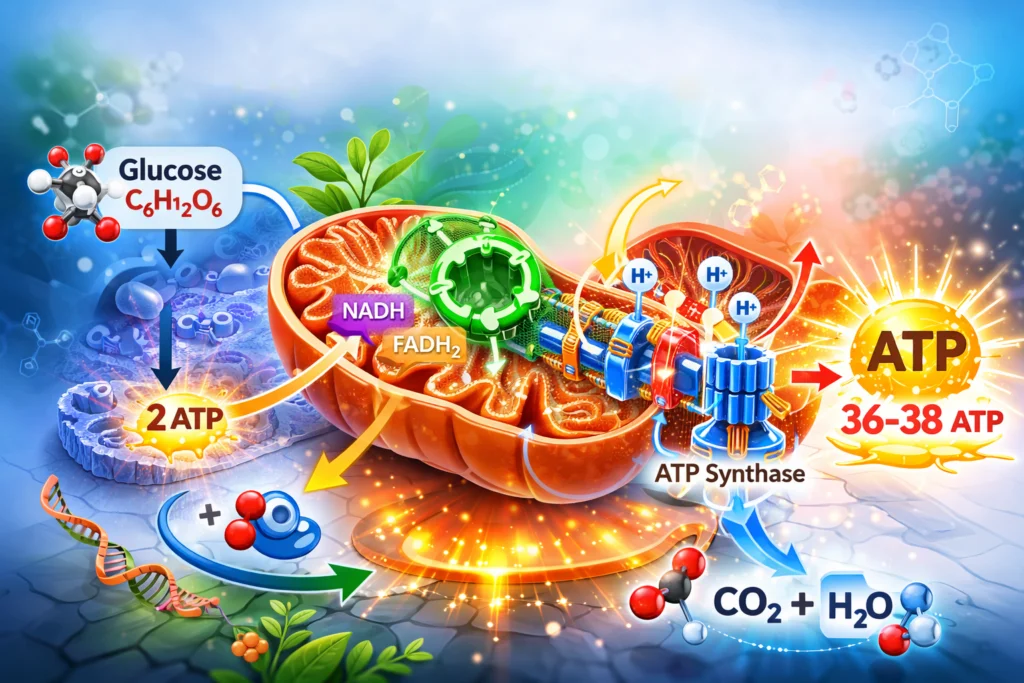
The question how do cells generate energy is one of the most fundamental topics in biology. Every living organism, from a single-celled bacterium to a complex human body, depends on energy to survive, grow, and perform essential functions. Cells cannot use food directly as energy. Instead, they convert nutrients into a usable form of energy called ATP (adenosine triphosphate).
Energy generation in cells is a carefully controlled biochemical process. It involves breaking down molecules like glucose and transforming their stored chemical energy into ATP. This process is mainly carried out through cellular respiration, which occurs in multiple stages inside different parts of the cell.
At Informosio, Understanding this concept is essential for students because it connects to metabolism, physiology, and even diseases.
What Is Cellular Energy and Why Is It Important?
Cellular energy refers to the usable energy present inside a cell that powers all biological activities. To understand this clearly, we must first ask: how do cells generate energy? Cells do not directly use food as energy. Instead, they convert nutrients such as glucose into ATP (adenosine triphosphate), which acts as the immediate energy source.
When studying cellular processes, it becomes clear that ATP stores energy in its phosphate bonds. When these bonds break, energy is released and used by the cell. This explains why cellular energy is essential for understanding how life functions at the molecular level.
The importance of cellular energy lies in its role in maintaining life. Every activity in the body, from muscle contraction to nerve impulse transmission, depends on ATP. Without energy production, cells cannot perform basic functions like growth, repair, or reproduction.
Another key point is that energy is not stored in large amounts inside the cell. Instead, cells continuously produce and use ATP. This ongoing cycle highlights energy production as a dynamic and continuous process.
In summary, cellular energy fuels all biological processes by converting nutrients into ATP through biochemical pathways. This concept forms the foundation for understanding metabolism and advanced biological functions.
ATP: The Energy Currency of the Cell
ATP (adenosine triphosphate) is known as the energy currency of the cell because it stores and provides energy for all cellular activities. It consists of adenine, ribose sugar, and three phosphate groups, where energy is stored in the bonds between the phosphate groups.
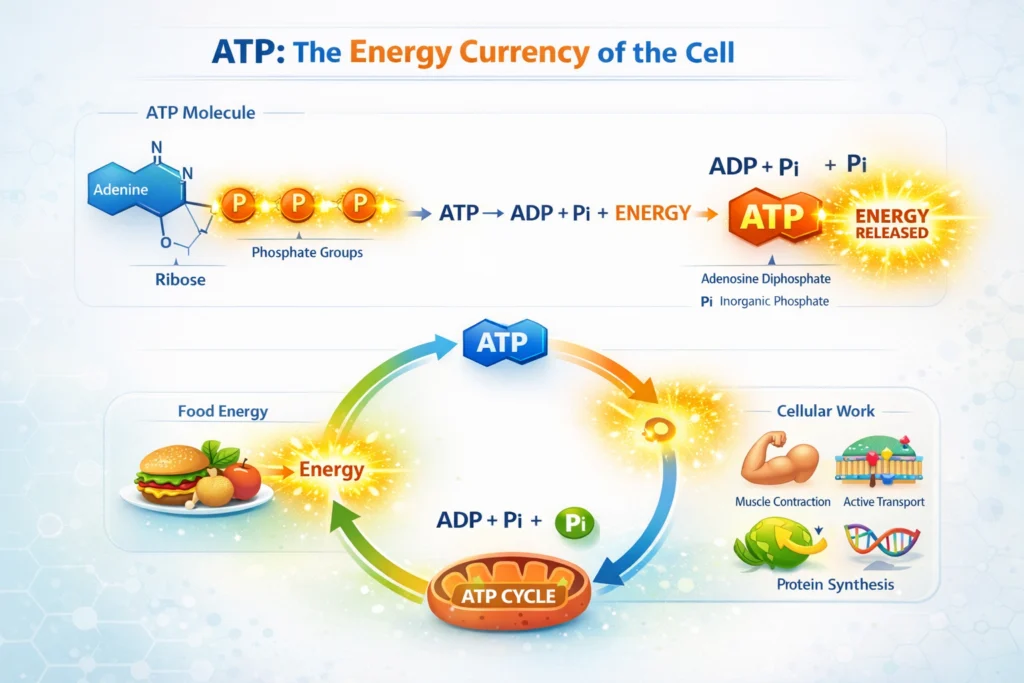
When ATP breaks down into ADP (adenosine diphosphate) and inorganic phosphate, energy is released for processes like movement, transport, and synthesis. Thus, ATP acts as an immediate and reusable source of energy in living cells. Cells continuously recycle ADP back into ATP using energy obtained from food molecules. This cycle ensures that cells maintain a constant supply of usable energy.
The chemical equation for ATP breakdown is:
ATP → ADP + Pi + Energy
Main Process: Cellular Respiration
Cellular respiration is the process by which cells break down glucose in the presence of oxygen to release energy in the form of ATP. It is the main method that explains how cells obtain usable energy for all life processes.
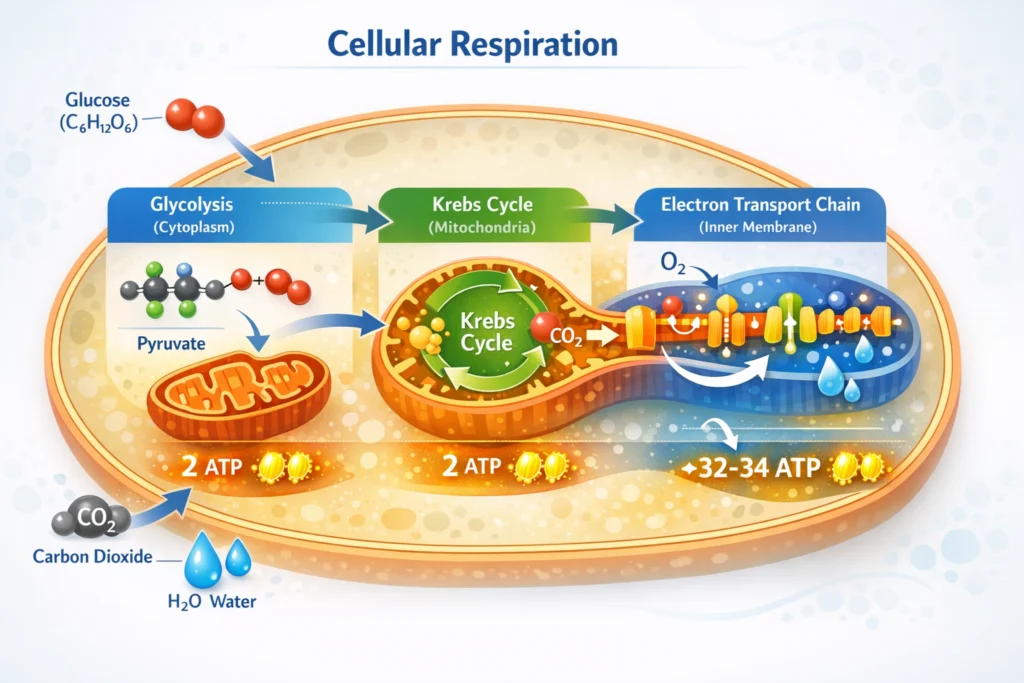
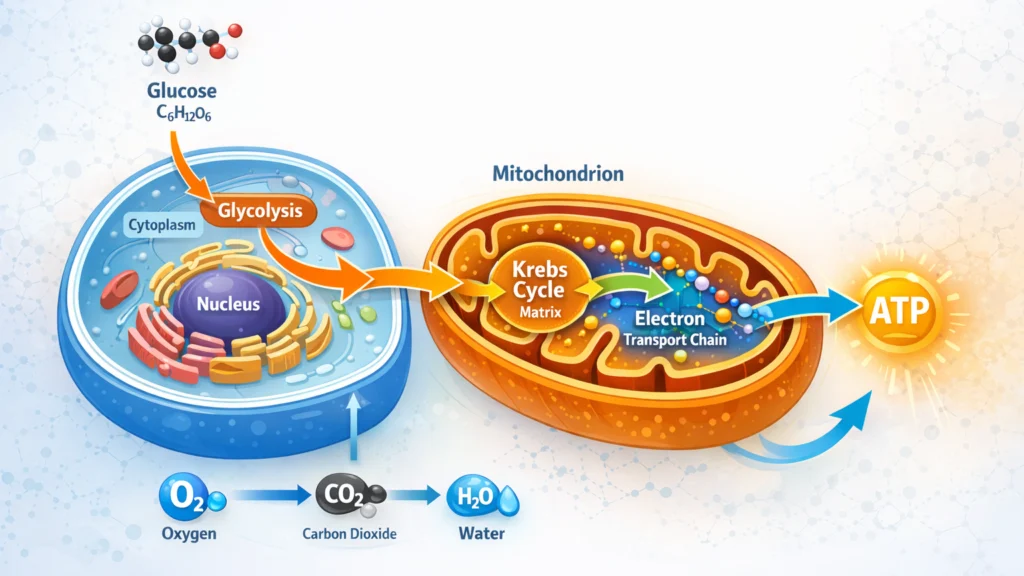
This process occurs in three stages: glycolysis (in the cytoplasm), the Krebs cycle, and the electron transport chain (in the mitochondria). Each stage helps in gradually releasing energy from glucose.
Overall, cellular respiration produces carbon dioxide, water, and a large amount of ATP, making it essential for cell survival and function.
The overall equation of cellular respiration is:
C₆H₁₂O₆ + 6O₂ → 6CO₂ + 6H₂O + Energy (ATP)
This process occurs in three main stages: glycolysis, the Krebs cycle, and the electron transport chain.
Glycolysis: The First Step of Energy Production
Glycolysis is the first stage of cellular respiration in which one molecule of glucose is broken down into two molecules of pyruvate. It occurs in the cytoplasm of the cell and does not require oxygen, making it an anaerobic process.
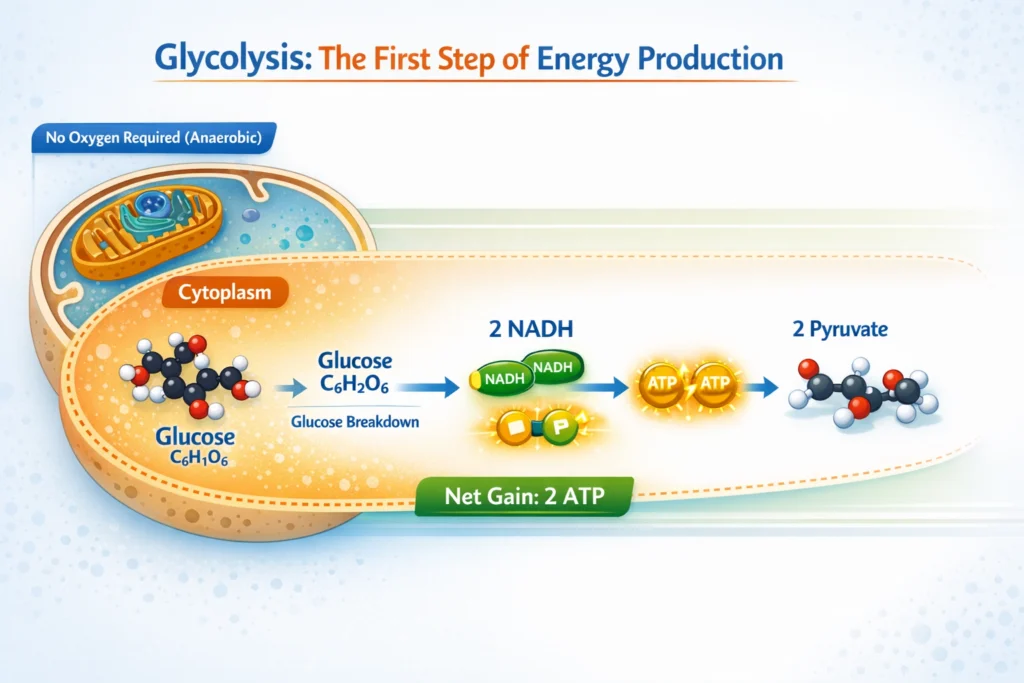
During glycolysis, a small amount of energy is released and captured in the form of 2 ATP molecules and NADH. Although the energy yield is low, glycolysis is essential because it provides intermediate molecules for further stages of respiration.
Thus, glycolysis is a fundamental step in energy production as it initiates the breakdown of glucose and supports both aerobic and anaerobic respiration.
Krebs Cycle: Energy Extraction in the Mitochondria
The Krebs cycle, also known as the citric acid cycle, is the second stage of cellular respiration that occurs in the mitochondrial matrix. It begins when pyruvate is converted into acetyl-CoA, which enters the cycle.
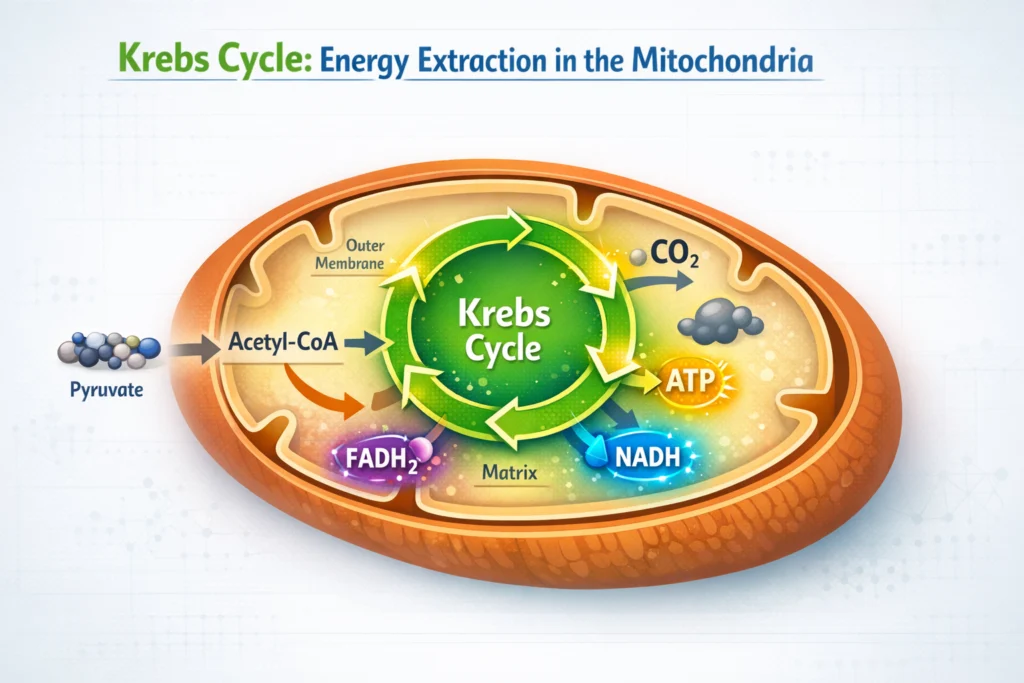
During the Krebs cycle, carbon dioxide is released and energy is captured in the form of ATP, NADH, and FADH₂. These high-energy molecules carry electrons to the next stage of respiration.
Although only a small amount of ATP is produced directly, the Krebs cycle is important because it generates electron carriers needed for large-scale ATP production in the electron transport chain.
Electron Transport Chain: Maximum ATP Production
The electron transport chain (ETC) is the final stage of cellular respiration and occurs in the inner mitochondrial membrane. It uses high-energy electrons carried by NADH and FADH₂ from previous stages.
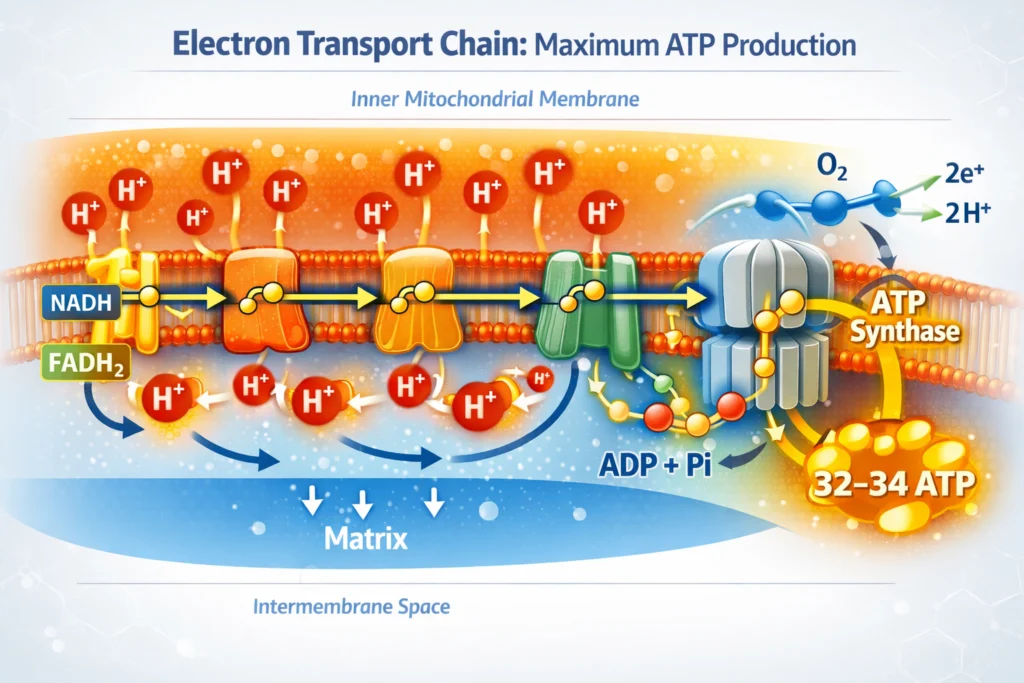
As electrons pass through a series of protein complexes, energy is released and used to pump protons across the membrane, creating a proton gradient. This gradient drives ATP synthase to produce ATP through oxidative phosphorylation.
This stage produces the maximum amount of ATP (about 32–34 molecules), making it the most important step in energy generation. Oxygen acts as the final electron acceptor, forming water.
Aerobic vs Anaerobic Respiration
Aerobic respiration is the process of breaking down glucose in the presence of oxygen to produce a large amount of energy in the form of ATP. It occurs mainly in the mitochondria and produces carbon dioxide and water as by-products.
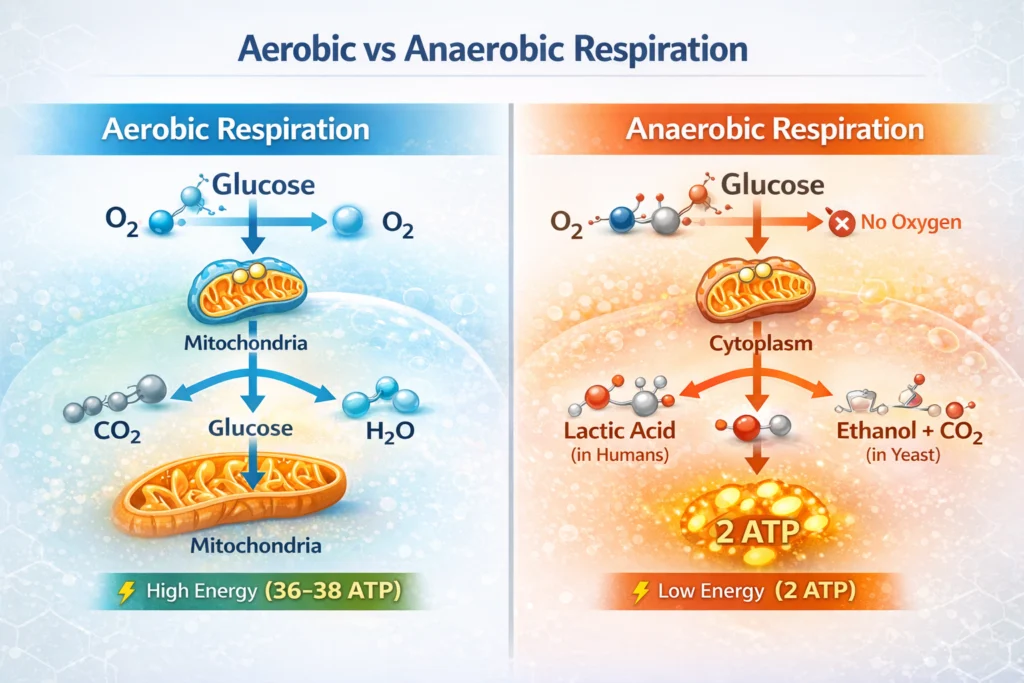
Anaerobic respiration occurs in the absence of oxygen and takes place in the cytoplasm. It produces a small amount of energy (2 ATP) and forms lactic acid in humans or ethanol and carbon dioxide in yeast.
Thus, aerobic respiration is more efficient than anaerobic respiration because it releases much more energy from glucose.
Photosynthesis and Energy Generation in Plants
Photosynthesis is the process by which green plants use sunlight to convert carbon dioxide and water into glucose and oxygen. It takes place in the chloroplasts and requires chlorophyll to capture light energy.
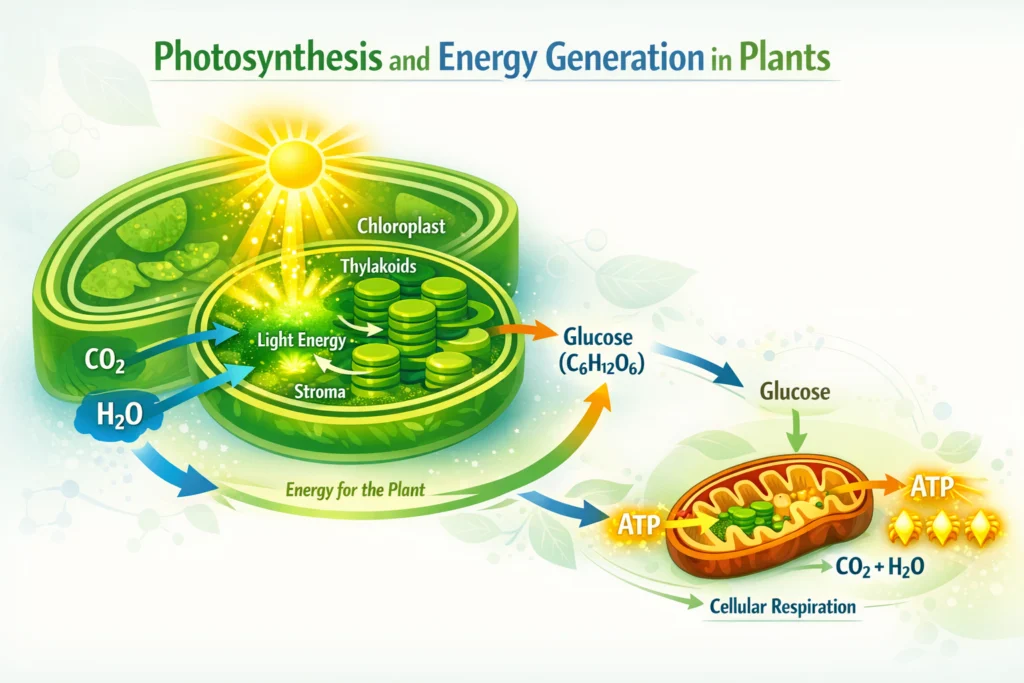
The glucose produced stores chemical energy, which is later used by plant cells during cellular respiration to produce ATP. Thus, photosynthesis provides the raw material for energy generation.
Therefore, photosynthesis and cellular respiration are interconnected processes, as one produces glucose and the other releases energy from it.
Photosynthesis occurs in chloroplasts and follows the equation:
6CO₂ + 6H₂O + Light → C₆H₁₂O₆ + 6O₂
The glucose produced is later used in cellular respiration to generate ATP. Thus, plants both produce and use energy within their cells.
Role of Mitochondria in Energy Production
Mitochondria are known as “the powerhouse of the cell” because they are the main site of ATP production. They are double-membraned organelles found in eukaryotic cells.
The Krebs cycle occurs in the mitochondrial matrix, while the electron transport chain takes place on the inner membrane (cristae). These processes generate a large amount of ATP from glucose.
Thus, mitochondria play a vital role in energy production by carrying out the key stages of cellular respiration efficiently.
Worked Example: Energy Yield from One Glucose Molecule
To understand how do cells generate energy, consider the breakdown of one glucose molecule:
The energy yield from one molecule of glucose during cellular respiration is calculated based on different stages of the process. Glycolysis produces 2 ATP molecules, while the Krebs cycle produces another 2 ATP molecules.
The electron transport chain generates the majority of energy, producing about 32–34 ATP molecules through oxidative phosphorylation.
Thus, the total energy yield from one glucose molecule is approximately 36–38 ATP molecules in aerobic respiration. This high yield makes cellular respiration an efficient process for energy production in cells.
Real-Life Applications of Cellular Energy
Understanding How do Cells Generate Energy is not just important in theory but also has many real-life applications. In medicine, the concept of How do Cells Generate Energy helps doctors understand diseases like diabetes, where energy production and usage are affected. It also helps in studying mitochondrial disorders, which directly impact how efficiently cells produce ATP.
In sports science, knowledge of How do Cells Generate Energy helps athletes improve performance. For example, aerobic respiration provides long-term energy for endurance activities, while anaerobic respiration supports short bursts of intense activity. This shows how understanding How do Cells Generate Energy can improve training methods and physical fitness.
In biotechnology and industry, the idea of How do Cells Generate Energy is applied in fermentation processes. Microorganisms use anaerobic respiration to produce products like alcohol, bread, and antibiotics. This clearly demonstrates the practical importance of How do Cells Generate Energy in everyday life.
Thus, studying How do Cells Generate Energy helps us understand health, improve performance, and develop useful products, making it highly valuable in real-world applications.
Common Mistakes Students Make
Many students make common errors while studying cellular energy and respiration. One major mistake is assuming that ATP is stored in large amounts in the cell, whereas in reality it is produced and used continuously. Another frequent error is thinking that glycolysis requires oxygen, even though it is an anaerobic process that occurs in the cytoplasm.
Students also often confuse the locations of different stages, such as placing the Krebs cycle in the cytoplasm instead of the mitochondria. Some learners misunderstand the role of oxygen, not realizing that it acts as the final electron acceptor in the electron transport chain.
Additionally, students may memorize processes without understanding them, leading to confusion in exams. Avoiding these mistakes requires clear conceptual understanding, proper revision, and practice of diagrams and equations.
Exam-Oriented Tips
To score well in exams, it is important to clearly understand the concept of How do Cells Generate Energy rather than just memorizing definitions. Focus on the stages of cellular respiration—glycolysis, Krebs cycle, and electron transport chain—and remember their locations inside the cell.
Practice writing the overall equation of respiration and understand the role of ATP in energy transfer. Diagrams of mitochondria and pathways are commonly asked, so learn how to explain them clearly in words.
While revising, keep linking each step back to How do Cells Generate Energy, as this helps build a strong conceptual flow. Regular practice of short answers and previous questions will improve accuracy and confidence in exams.
Practice Questions with Answers
What is the main energy currency of the cell?
Answer: The main energy currency is ATP.
Where does glycolysis occur?
Answer: Glycolysis occurs in the cytoplasm.
How many ATP molecules are produced in glycolysis?
Answer: Two ATP molecules are produced.
What is the role of oxygen in respiration?
Answer: Oxygen acts as the final electron acceptor in the electron transport chain.
What is the function of mitochondria?
Answer: Mitochondria are responsible for producing ATP through cellular respiration.
Important Concepts Recap
The topic how do cells generate energy explains how life is sustained at the cellular level. Cells convert glucose into ATP through cellular respiration, which includes glycolysis, the Krebs cycle, and the electron transport chain. Mitochondria play a crucial role in this process, ensuring efficient energy production.
Aerobic respiration produces a large amount of ATP, while anaerobic respiration provides a backup in the absence of oxygen. ATP acts as the immediate source of energy for all cellular activities.
For revision, remember that energy generation involves breaking down glucose, producing ATP, and using oxygen as the final electron acceptor. Understanding each stage and its location is essential for exams.
Mastering this concept builds a strong foundation for advanced topics in biology and helps in both academic and practical applications.
You may also visit the Biology section.
FAQs
What is cellular respiration in simple terms?
Answer: Cellular respiration is the process by which cells break down glucose to produce energy in the form of ATP.
Why is ATP important for cells?
Answer: ATP provides energy for all cellular activities, including movement, growth, and synthesis.
Can cells survive without oxygen?
Answer: Yes, but they rely on anaerobic respiration, which produces much less energy.
Where is most ATP produced?
Answer: Most ATP is produced in the electron transport chain inside the mitochondria.
Do all cells have mitochondria?
Answer: Most eukaryotic cells have mitochondria, but some cells like red blood cells do not.
What happens if ATP is not produced?
Answer: Cells will not be able to function and will eventually die.
🌐 Connect With Us
👉 Informosio Tech – Science & Technology news, AI trends, gadgets, and innovations