
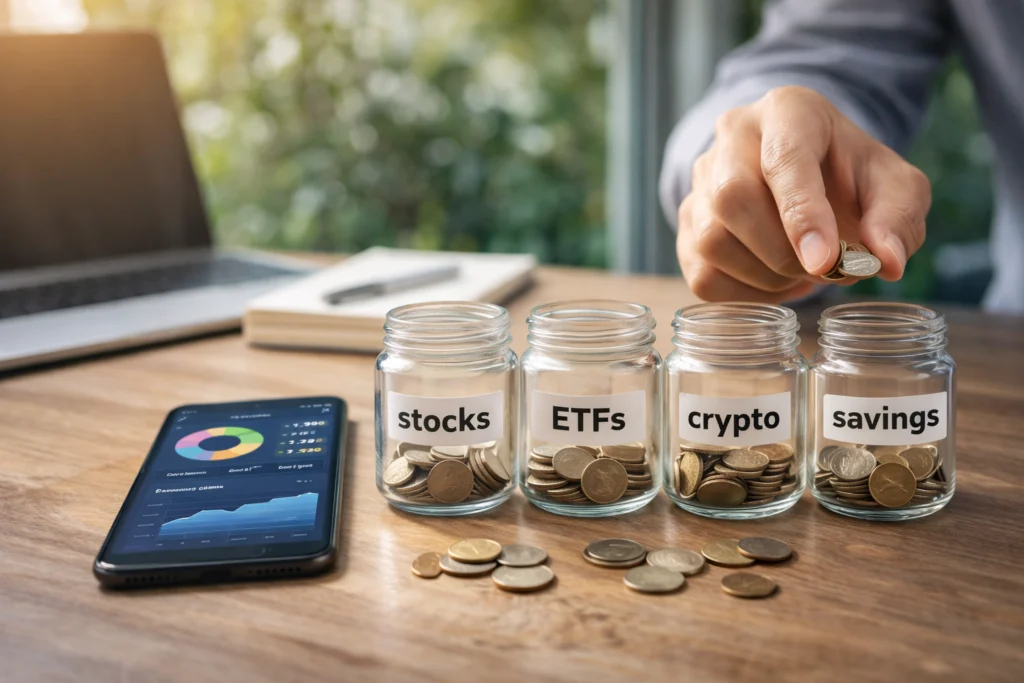
Many people believe investing requires thousands of dollars. That belief stops countless beginners from even trying. In reality, learning how to invest small amounts can be one of the smartest financial decisions you make.
Today, technology has made investing more accessible than ever. You can begin with just a few dollars, develop consistent habits, and gradually build long-term wealth.
If you have ever wondered whether small investments actually matter, the answer is simple: consistency matters more than the starting amount. Small investments made regularly can grow significantly over time.
This guide explains practical strategies anyone can use to start investing even with limited money.
Why Small Investments Matter More Than You Think
Before exploring methods, it helps to understand why starting small still works.
First, compound growth rewards time in the market. Even small contributions can multiply when they are invested consistently.
Second, investing small amounts helps you build discipline. You learn market behavior without risking large sums.
Third, starting early is often more powerful than starting big later. Someone who invests small amounts regularly for years can outperform someone who waits to invest larger sums.
Understanding how to invest small amounts is therefore less about the amount and more about building the habit.
1. Start With Micro-Investing Apps
Micro-investing apps are designed specifically for beginners who want to invest with minimal money.
Many apps allow you to start with as little as five dollars. Some automatically invest spare change from everyday purchases.
For example, if you buy coffee for $3.50, the app rounds up the purchase and invests the extra change.
This simple system makes learning how to invest small amounts almost effortless because investments happen automatically.
Popular micro-investing platforms usually offer diversified portfolios, which means your small contributions are spread across multiple assets.
2. Invest in Fractional Shares
Traditionally, buying stocks required purchasing full shares. Some stocks cost hundreds or even thousands of dollars.
Fractional shares solve this problem.
They allow you to buy a portion of a stock rather than the entire share. For example, instead of paying $500 for one share, you can invest $20.
This approach is one of the easiest ways to understand how to invest small amounts while still gaining exposure to major companies.
Many modern brokerage platforms now support fractional investing.
3. Use Exchange-Traded Funds (ETFs)
Exchange-Traded Funds are collections of stocks bundled together into a single investment.
Instead of picking individual companies, you can invest in an entire market sector through one ETF.
For beginners exploring how to invest small amounts, ETFs offer several advantages:
- Instant diversification
- Lower risk compared to single stocks
- Lower management fees
Because ETFs track indexes or sectors, they provide a simple and efficient way to grow money gradually.
4. Automate Your Investments
Automation removes one of the biggest barriers to investing: inconsistency.
You can schedule automatic transfers from your bank account into an investment platform every week or month.
Even $10 or $20 invested regularly adds up over time.
Automation is often recommended when learning how to invest small amounts because it removes emotional decision-making and creates a steady investing habit.
5. Invest Through Retirement Accounts
Retirement accounts are one of the most tax-efficient ways to invest.
Depending on your country, accounts such as IRAs, pension plans, or retirement savings accounts offer tax advantages that help investments grow faster.
Even small monthly contributions can accumulate significantly over decades.
For anyone researching how to invest small amounts, retirement accounts should always be considered part of a long-term strategy.
6. Explore Dividend Stocks
Dividend stocks pay investors a portion of company profits regularly.
Although dividends may seem small at first, they can become powerful when reinvested.
Reinvesting dividends means using those payments to purchase additional shares, which then generate even more dividends.
When combined with small but consistent contributions, dividend investing becomes a practical approach for those learning how to invest small amounts over time.
7. Try Robo-Advisors
Robo-advisors are automated investment platforms that manage portfolios using algorithms.
After answering a few questions about your financial goals and risk tolerance, the platform builds a diversified investment portfolio for you.
Robo-advisors are especially helpful if you are unsure how to invest small amounts or do not want to spend time managing investments yourself.
They typically require low starting balances and handle rebalancing automatically.
8. Consider Index Funds
Index funds track major market indexes such as the S&P 500.
Instead of trying to beat the market, index funds aim to match overall market performance.
They are widely recommended for beginners because they offer:
- Broad diversification
- Low management fees
- Long-term growth potential
Learning how to invest small amounts through index funds is often considered one of the safest strategies for new investors.
9. Invest Spare Income or Windfalls
Small investments do not always have to come from regular income.
Extra money from tax refunds, side hustles, or bonuses can also be invested.
Instead of spending these windfalls, allocating a portion to investments can accelerate wealth building.
This strategy supports the mindset behind how to invest small amounts, which focuses on using every opportunity to grow money.
10. Start a Simple Dollar-Cost Averaging Strategy
Dollar-cost averaging means investing a fixed amount at regular intervals regardless of market conditions.
For example, you might invest $25 every week.
When prices are high, you buy fewer shares. When prices are low, you buy more.
Over time, this approach smooths market volatility and reduces emotional investing decisions.
Many investors adopt dollar-cost averaging when learning how to invest small amounts because it keeps the process simple and consistent.
11. Avoid High Fees
One of the biggest threats to small investments is excessive fees.
Management fees, transaction costs, and account charges can eat into returns.
When your investment amounts are small, these costs become even more noticeable.
Choosing low-cost funds and platforms ensures that most of your money remains invested and continues to grow.
Anyone serious about understanding how to invest small amounts should always review the fee structure before investing.
12. Focus on Long-Term Growth
Small investments rarely produce immediate results. The real value appears over time.
Consistent contributions combined with compound growth can transform modest amounts into significant savings.
Many successful investors started with very little money but maintained discipline for years.
That is why mastering how to invest small amounts is less about short-term gains and more about building long-term financial habits.
Common Mistakes Beginners Should Avoid
When starting with small investments, several common mistakes can slow progress.
One mistake is trying to get rich quickly. High-risk strategies often lead to losses rather than growth.
Another mistake is constantly switching investments. Frequent changes can increase fees and reduce returns.
Finally, some beginners stop investing when markets fluctuate. Market volatility is normal, and long-term investors typically stay consistent.
Understanding these pitfalls helps reinforce the principles behind how to invest small amounts effectively.
How Small Investments Grow Over Time
Consider a simple example.
If you invest $50 every month with an average annual return of 8%, your investment could grow significantly over 20 years.
The total contributions may seem modest, but compound growth steadily increases the portfolio value.
This example highlights an important truth: the habit of investing regularly matters more than the size of each investment.
Stay informed with Informosio in-depth coverage of Finance, Business News, Stock Market updates, IPO announcements and Company News.
Final Thoughts
You do not need thousands of dollars to begin investing. What you truly need is consistency, patience, and the willingness to start.
The sooner you begin, the more time your investments have to grow.
Learning how to invest small amounts allows anyone to enter the world of investing without financial pressure. Whether through micro-investing apps, ETFs, fractional shares, or automated strategies, there are many accessible paths available.
Start with what you can afford, invest regularly, and focus on long-term growth. Over time, those small investments can develop into meaningful financial progress.
🌐Connect with us
Informosio Official – General updates, current affairs, and informative content