The Story Behind the ₹590 Crore Transaction Scandal
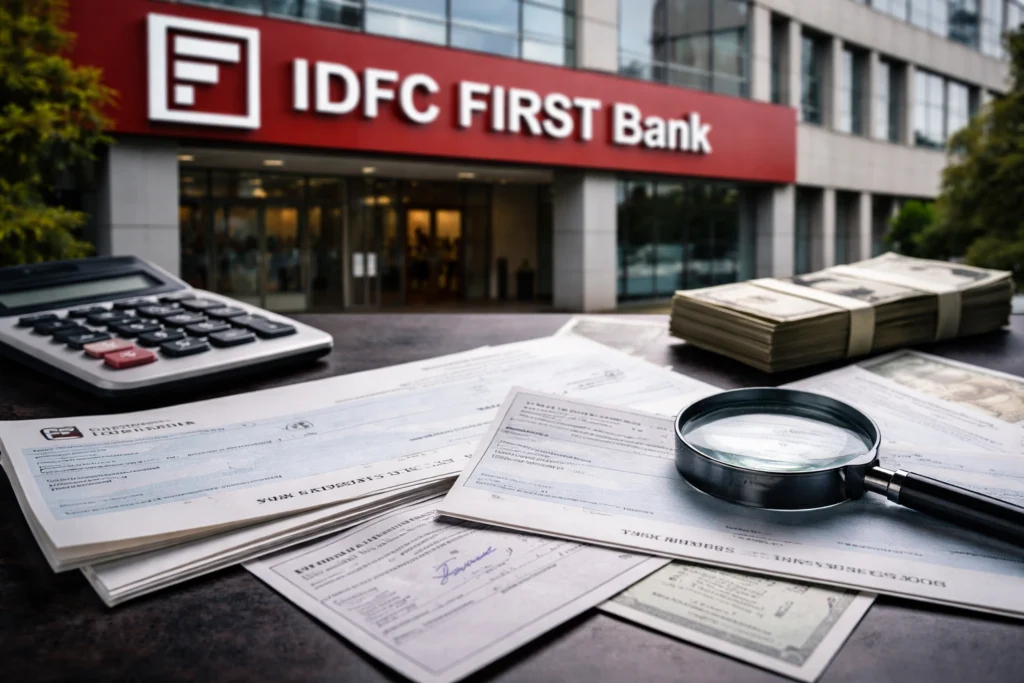
The IDFC First Bank Rs 590 crore fraud has emerged as one of the most significant banking controversies in recent months, drawing attention from regulators, investors, and government authorities alike. What began as suspicious cheque transactions linked to government accounts soon developed into a full-scale investigation involving alleged internal lapses, arrests, and partial recovery of funds.
This case has not only raised serious concerns about internal banking controls but also reignited debates about how public money is safeguarded within private financial institutions.
What Triggered the Investigation?
The controversy surfaced after irregularities were detected in transactions linked to government accounts in Haryana. Large sums of money were reportedly siphoned off through cheque-based transfers over a period of time. Once discrepancies were flagged, internal reviews and law enforcement agencies began piecing together what appeared to be a coordinated misuse of banking systems.
At the center of the issue is the IDFC First Bank Rs 590 crore fraud, where insiders allegedly manipulated processes to move funds out of designated government accounts. Initial findings suggested that established safeguards meant to prevent unauthorized transfers had been bypassed.
The detection triggered immediate action, including freezing suspect accounts and launching a forensic audit to trace the money trail.
The Alleged Modus Operandi
Investigators believe the fraud relied on exploiting weaknesses in operational checks. In most banks, large transactions must pass through a “maker-checker” system, where one official initiates a transaction and another verifies it. In this case, that layer of oversight was allegedly compromised, forming a crucial aspect of the IDFC First Bank Rs 590 crore fraud investigation.
Reports indicate that individuals with system access may have colluded to approve and process fraudulent cheque transactions. By manipulating authorization workflows and masking irregularities within routine processes, the accused were able to divert funds over time without immediate detection.
The IDFC First Bank Rs 590 crore fraud case highlights how even structured compliance systems can fail if internal controls are not rigorously enforced or if multiple actors work together to bypass them.
Arrests and Investigation Progress
Law enforcement agencies have arrested key accused individuals connected to the transactions. Authorities have stated that a significant portion of the siphoned funds has been traced and steps are underway to recover the remaining amount.
According to investigators, digital trails, banking logs, and internal communications played a critical role in identifying those allegedly responsible. The arrests mark an important development in the IDFC First Bank Rs 590 crore fraud, signaling that accountability mechanisms are actively being pursued.
Officials have also indicated that asset attachments and property seizures may form part of the recovery process if required. The case remains under active investigation, with more disclosures expected as forensic audits continue.
Impact on the Bank’s Reputation and Stock Performance
Financial markets reacted swiftly when news of the irregularities broke. Shares of the lender experienced volatility as investors assessed the potential financial and reputational damage. However, in subsequent trading sessions, the stock showed signs of recovery amid reassurances from the bank’s management and clarity on the limited financial exposure.
The bank maintained that the issue was operational rather than systemic and emphasized that the financial impact would be contained. Even so, the IDFC First Bank Rs 590 crore fraud has placed the institution under heightened scrutiny from regulators and shareholders.
Investor confidence in banking institutions is closely tied to governance standards. While fraud incidents are not unprecedented in the sector, each new case reinforces the importance of transparency and timely disclosure.
Government Funds and Systemic Concerns
One of the most troubling aspects of the case is that the diverted money reportedly belonged to government-linked accounts. Public funds are expected to be subject to the highest levels of oversight, making the breach particularly sensitive.
The IDFC First Bank Rs 590 crore fraud has raised broader questions about how government departments monitor their banking relationships. Experts suggest that reconciliation mechanisms, periodic audits, and real-time transaction alerts must be strengthened to ensure that large transfers do not go unnoticed.
This incident may prompt state governments and public institutions to re-evaluate how they manage operational accounts with private banks, including stricter cross-verification procedures.
Regulatory Oversight and Compliance Gaps
India’s banking sector operates under stringent regulatory frameworks, with the Reserve Bank of India (RBI) mandating robust internal controls. However, fraud cases often reveal gaps between policy and implementation.
In the wake of the IDFC First Bank Rs 590 crore fraud, regulators are expected to examine whether existing compliance standards were properly followed and whether supervisory mechanisms need tightening. This could include reviewing how maker-checker processes are monitored, how exceptions are flagged, and how unusual transaction patterns are escalated.
Banking analysts argue that technology-driven oversight, including AI-based anomaly detection, can significantly reduce the likelihood of similar cases in the future.
Recovery Efforts and Financial Exposure
Authorities have stated that a portion of the siphoned funds has already been recovered. The bank has also indicated that its net financial exposure may be lower than the headline amount suggests, depending on insurance coverage and recovery outcomes.
Even so, the reputational cost of the IDFC First Bank Rs 590 crore fraud could outweigh the immediate financial hit. Trust is central to banking, and restoring confidence requires visible corrective action.
The bank has reportedly initiated internal reviews, strengthened transaction monitoring, and reassessed staff roles in sensitive operational areas. These steps aim to reassure stakeholders that vulnerabilities are being addressed.
Lessons for the Banking Sector
The case serves as a reminder that fraud prevention depends not just on policies but also on culture and accountability. Strong documentation, segregation of duties, and continuous audits are critical components of a resilient financial system.
The IDFC First Bank Rs 590 crore fraud also underscores the importance of whistleblower mechanisms and internal reporting channels. Early detection often hinges on individuals raising red flags before irregularities escalate.
For other banks, this episode is likely to trigger internal audits of government-linked accounts and cheque processing systems. It may also lead to renewed training programs focused on compliance ethics and operational vigilance.
Market Reactions and Broader Implications
While the bank’s shares saw initial pressure, subsequent market activity suggested that investors were differentiating between operational fraud and structural instability. Analysts note that prompt disclosure and cooperation with authorities can mitigate long-term damage.
Nonetheless, the IDFC First Bank Rs 590 crore fraud has added to a series of high-profile financial irregularities in India’s banking history, reinforcing the need for constant vigilance.
For customers, the episode is a reminder to monitor account activity and ensure proper documentation for large transactions. For governments, it highlights the need for independent verification of public fund movements.
What Happens Next?
As investigations continue, more details are expected to emerge regarding the exact chain of events and the individuals involved. Additional arrests or legal proceedings may follow if evidence supports further action.
The final financial impact of the IDFC First Bank Rs 590 crore fraud will depend on the pace of recovery and judicial outcomes. However, the case has already influenced conversations around compliance standards, digital tracking systems, and regulatory audits.
In the coming months, regulatory findings and court proceedings will determine the long-term consequences for those accused. Meanwhile, the banking sector as a whole is likely to adopt more stringent safeguards to prevent a recurrence of such incidents.
Never Miss an India News Update
Conclusion
The unfolding developments in the IDFC First Bank Rs 590 crore fraud reveal how internal lapses, if left unchecked, can escalate into large-scale financial controversies. While arrests and partial recoveries mark progress, the case serves as a broader cautionary tale for India’s financial ecosystem.
As authorities push forward with investigations and recovery efforts, the focus remains on restoring trust, tightening controls, and ensuring that public funds are protected with uncompromising diligence.
🌐Connect with us
Informosio Official – General updates, current affairs, and informative content