
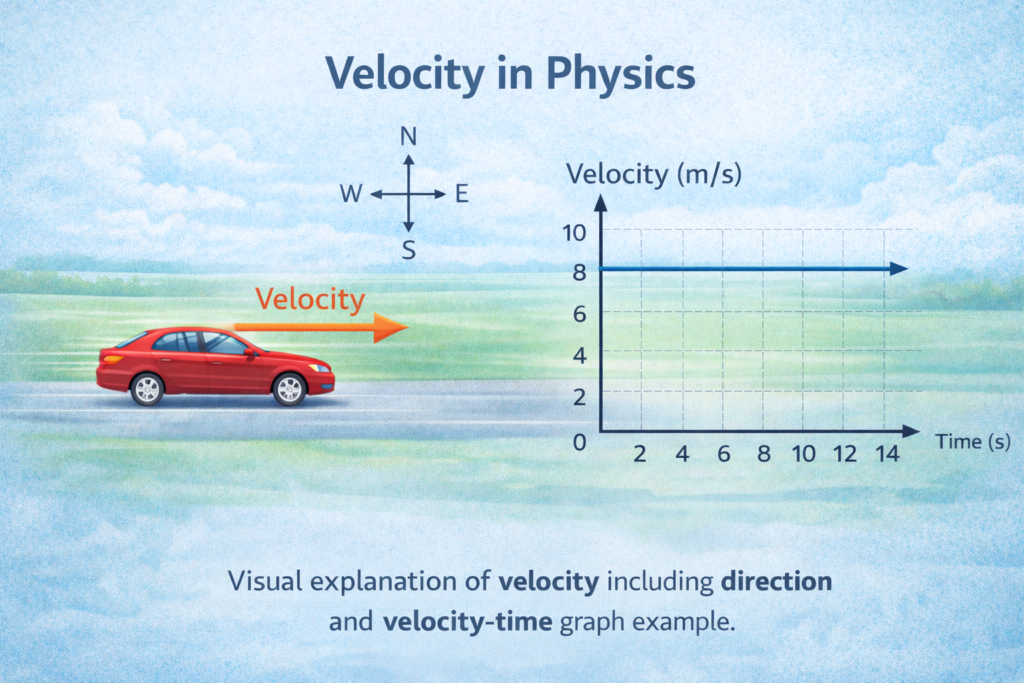
Velocity in physics combines speed with direction to describe how objects move through space. In this lesson, students will explore formulas, vector concepts, and motion graphs designed for easy learning.
What is Velocity in Physics?
Velocity in physics describes how fast an object changes its position in a specific direction over time. Unlike speed, which only measures how fast something moves, velocity includes both magnitude and direction. Because of this directional component, velocity is considered a vector quantity.
For example, a car moving at 60 km/h toward the east has a different velocity than a car moving at the same speed toward the west. Understanding velocity in physics helps students analyse motion more accurately and understand how direction influences movement.
👉 Back to: Complete Guide to Motion in Physics
Velocity and Its Role in Motion
Velocity plays a crucial role in describing how objects move through space. Scientists use velocity to study changing positions, predict future movement, and understand how forces affect objects.
In everyday life, velocity helps explain:
- Navigation using GPS systems
- Airplane direction during flight
- Movement of vehicles on roads
By learning velocity in physics, students gain deeper insight into motion and prepare for advanced topics such as acceleration.
Formula for Velocity
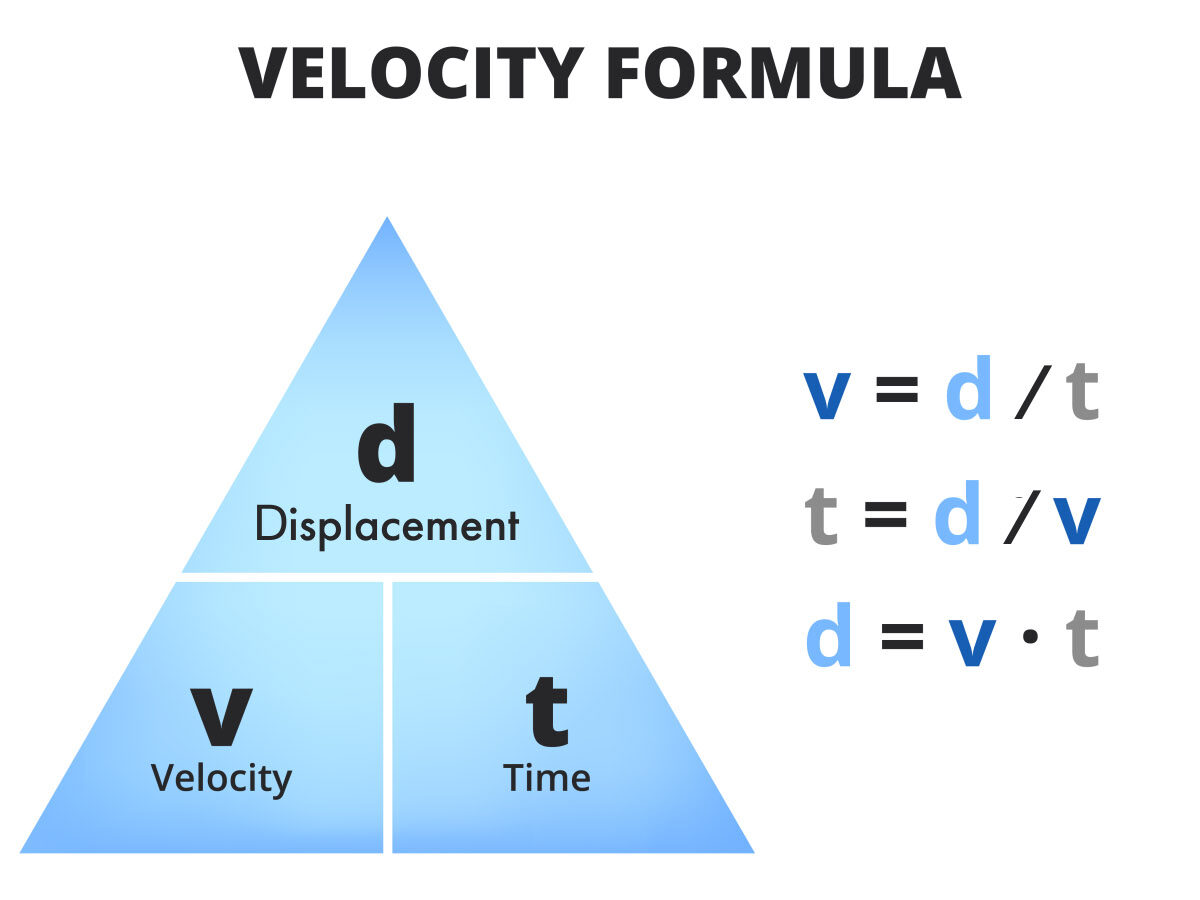
The basic formula used to calculate velocity is:
Velocity = Displacement ÷ Time
This formula shows that velocity depends on both the change in position and the time taken. Because displacement includes direction, velocity also has direction.
For example, if a runner moves 100 meters north in 10 seconds, the velocity equals 10 m/s north.
Velocity vs Speed
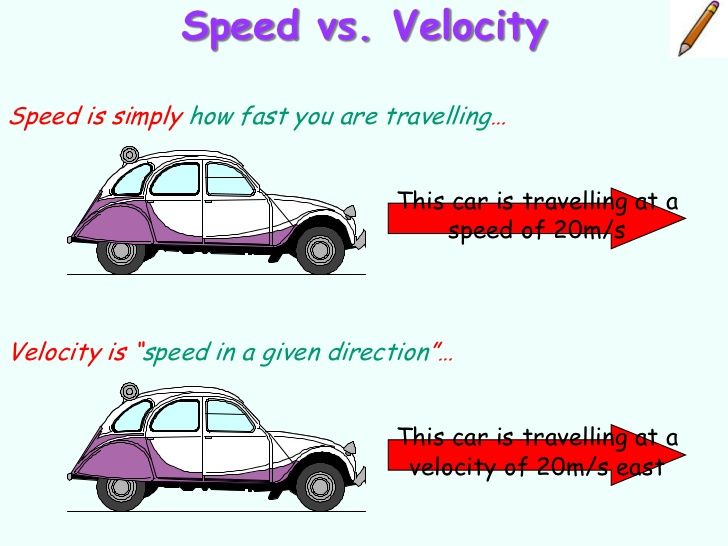
Many students confuse velocity with speed, but there is an important difference:
- Speed measures how fast an object moves.
- Velocity measures how fast and in which direction the object moves.
Two objects can have the same speed but different velocities if their directions differ. Understanding this difference helps students interpret graphs and solve physics problems more effectively.
Types of Velocity
Velocity can appear in different forms depending on the nature of motion:
Uniform Velocity
Uniform velocity occurs when an object moves with constant speed in a constant direction. For example, a train travelling straight at a steady rate demonstrates uniform velocity.
Non-Uniform Velocity
Non-uniform velocity occurs when either speed or direction changes. A car turning at a corner or slowing down near traffic lights is an example of non-uniform velocity.
Learning these types helps students connect theoretical ideas with real-life situations.
SI Unit of Velocity
The SI unit of velocity is meter per second (m/s). Direction is often represented using compass directions such as north, south, east, or west. Including units and direction ensures accurate descriptions of motion.
Understanding units is essential for solving numerical problems and comparing different scenarios.
Graphical Representation of Velocity
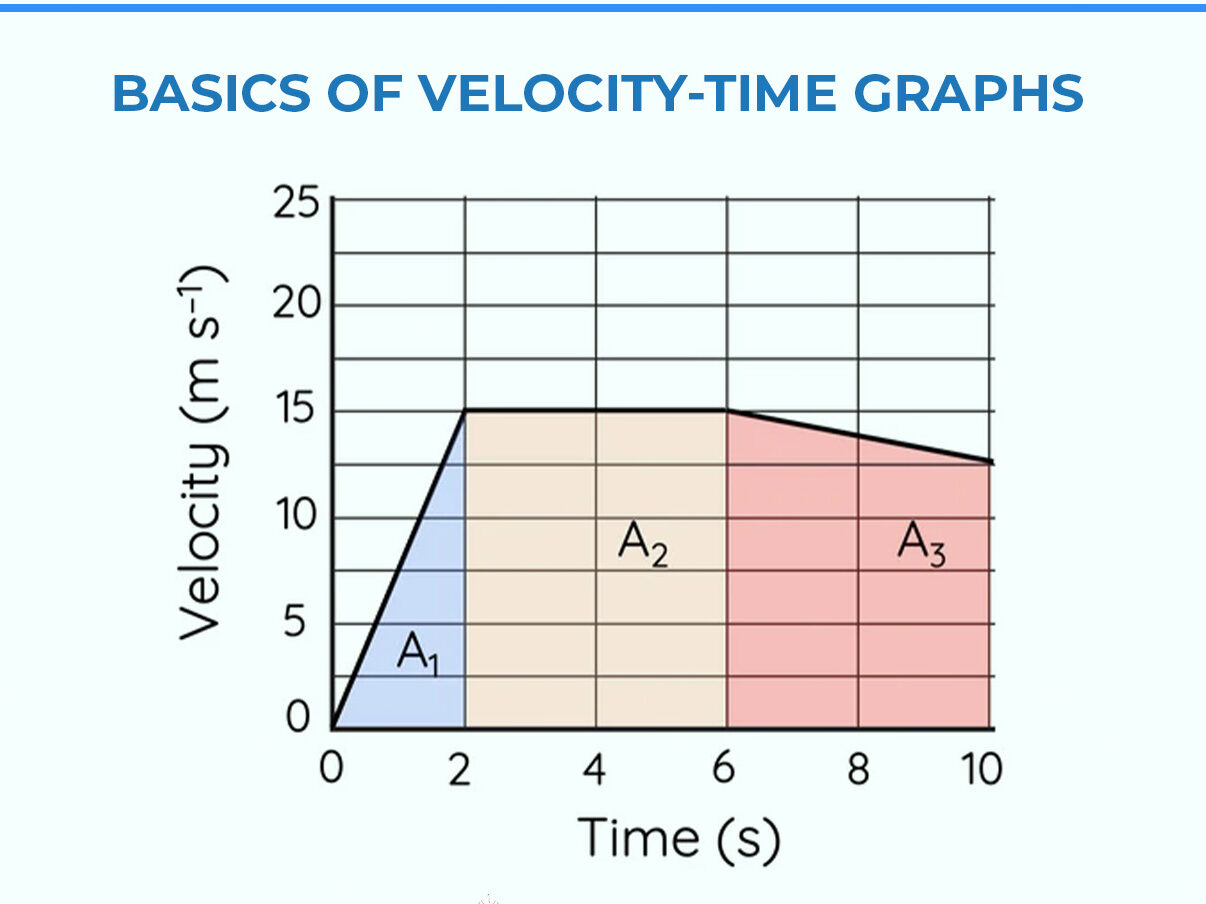
Velocity can be represented using velocity-time graphs. These graphs help students understand how velocity changes over time:
- A straight horizontal line indicates constant velocity.
- A sloped line shows changing velocity.
- The area under the graph represents displacement.
Graphs make it easier to visualise motion without complicated calculations.
Real-Life Examples of Velocity
Velocity is visible in many real-life situations:
- A cyclist moving north along a road
- A plane flying west across the sky
- A river flowing toward the sea
These examples help learners understand why direction matters when analysing movement.
Common Mistakes Students Make
While learning velocity, beginners often:
- Ignore direction while writing answers
- Confuse velocity with speed
- Forget to include units
Avoiding these mistakes improves understanding and helps students solve problems more accurately.
Conclusion
Velocity in physics is a key concept that describes how fast and in which direction an object moves. By learning formulas, units, and graphical representations, students build a strong foundation for studying acceleration and advanced motion topics.
FAQs About Velocity in Physics
1. What is velocity in physics?
Velocity describes how fast an object moves in a specific direction.
2. Is velocity a scalar or vector quantity?
Velocity is a vector quantity because it includes direction.
3. What is the SI unit of velocity?
The SI unit of velocity is meter per second (m/s).
4. Why is velocity important in motion?
It helps explain directional movement and prepares students for understanding acceleration.
🌐 Connect With Us
👉 Informosio Official – General updates, current affairs, and informative content
👉 Continue your physics journey with our expert guides — visit our official website to explore more motion topics and student-friendly lessons.