
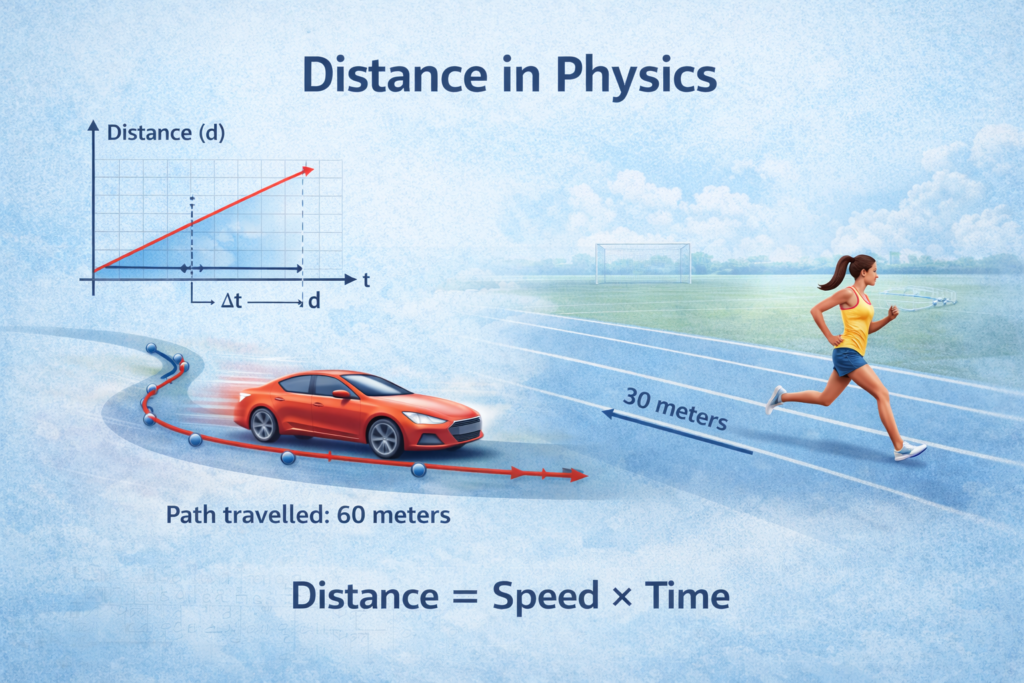
Distance in physics helps students understand how far an object travels during motion without considering direction. In this guide, you will learn simple definitions, formulas, graphs, and real-life examples that make the concept easy to understand.
What is Distance in Physics?
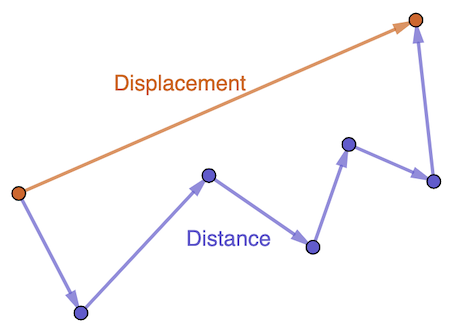
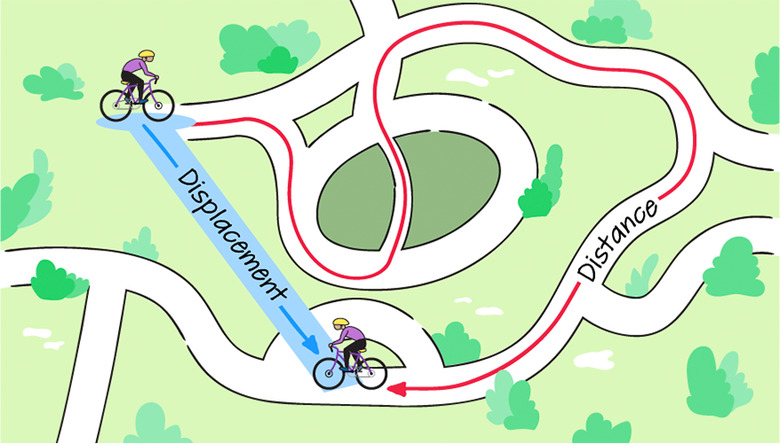
Distance in physics refers to the total length of the path travelled by an object during movement. It is one of the most basic concepts students learn when studying motion because it helps describe how far an object has travelled regardless of direction. Unlike some other physical quantities, distance is a scalar quantity, which means it has only magnitude and no direction.
For example, if a student walks 5 meters forward and then 3 meters backward, the total distance covered is 8 meters. Even though the person returned closer to the starting point, the total path length remains the sum of all movement.
Understanding distance in motion helps learners analyse real-life situations such as travel, sports performance, and vehicle movement more clearly. Distance in physics helps students understand how far an object travels during motion
Distance and Its Role in Motion
Distance plays an important role in understanding how objects move over time. When an object changes its position, scientists measure how much ground it has covered to describe its behaviour. By combining distance with time, students can calculate speed and compare different types of movement.
In everyday life, distance is used to measure:
- How far a car travels on a road
- The length of a race track
- The path followed by a moving object
Distance helps simplify complex situations because it focuses only on the total path without worrying about direction.
👉 Back to: Complete Guide to Motion in Physics.
SI Unit of Distance
The standard unit of distance in physics is the meter (m). Depending on the scale of measurement, different units may be used:
- Kilometers (km) for long journeys
- Centimeters (cm) for smaller lengths
- Millimeters (mm) for very tiny measurements
Using standard units ensures that measurements remain consistent and easy to compare across experiments and real-world applications.
Distance vs Displacement
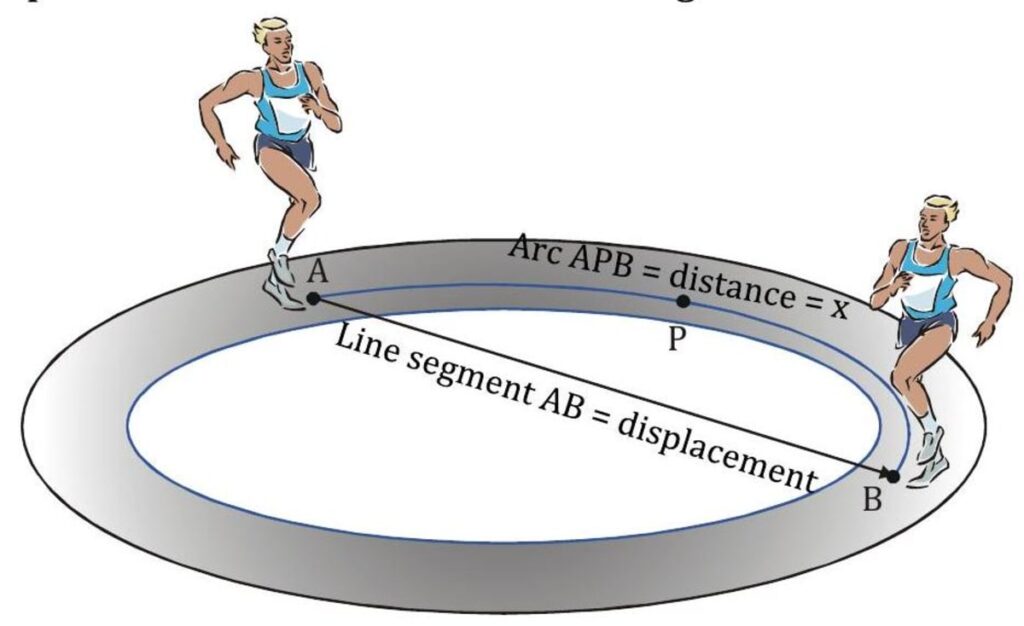
Many beginners confuse distance with displacement, but they are different concepts. Distance measures the entire path travelled, while displacement represents the shortest straight-line change between starting and ending positions.
Consider a runner completing one full lap of a circular track. The distance covered equals the full circumference of the track, but the displacement becomes zero because the runner ends at the starting point.
Understanding this difference helps students interpret graphs, solve numerical problems, and understand directional changes more effectively.
Formula Related to Distance
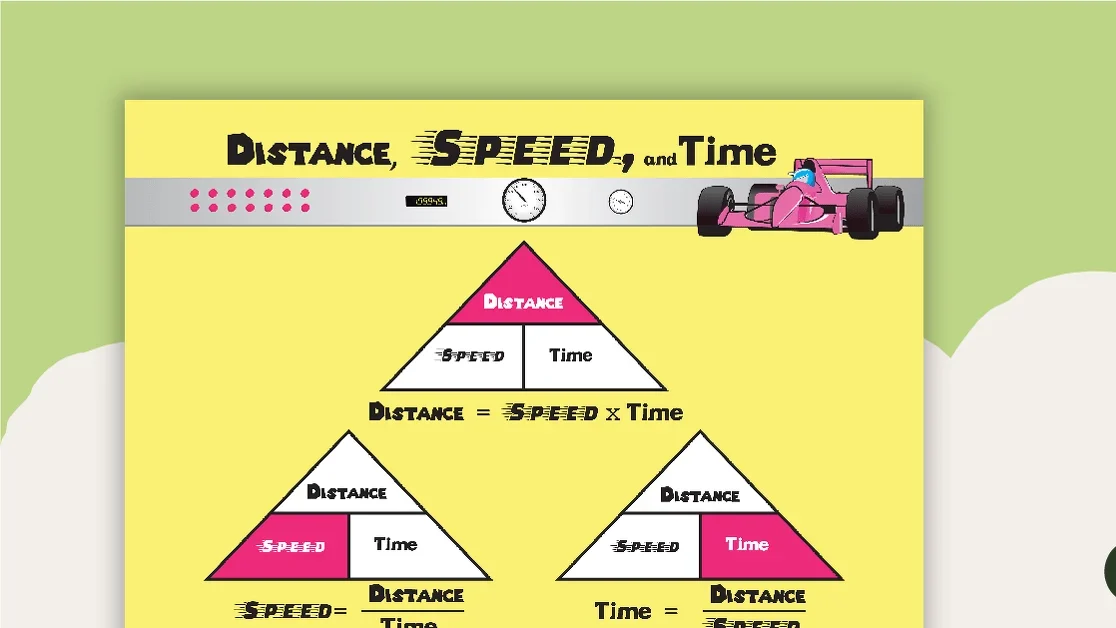
Distance is often calculated using a simple relationship between speed and time:
Distance = Speed × Time
This formula allows students to determine how far an object travels when its speed and time are known. It also helps compare different scenarios, such as two vehicles travelling at different speeds over the same duration.
Practicing basic calculations builds confidence and prepares learners for advanced topics like velocity and acceleration. The concept of distance in physics becomes easier when students apply simple formulas like distance equals speed multiplied by time.
Real-Life Examples of Distance
Distance is visible in many everyday situations:
- A car travelling 60 km during a road trip
- A football player running across a field
- A train moving between two cities
By observing real-life examples, students can relate theoretical ideas to practical experiences. This makes learning more engaging and easier to understand.
Graphical Representation of Distance
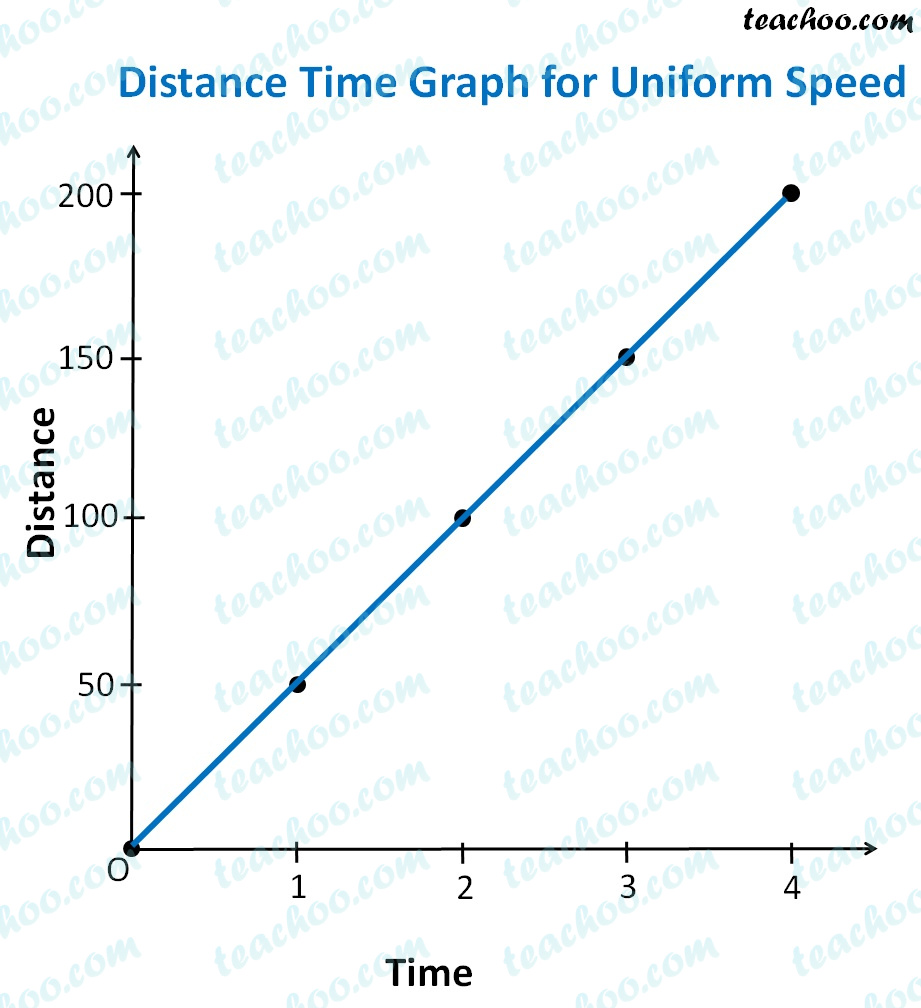
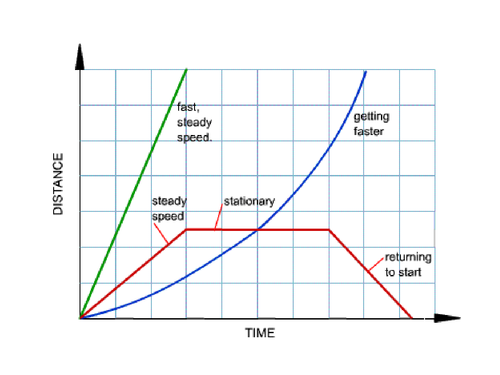
Distance can be represented visually using a distance-time graph. In such graphs:
- A straight line indicates steady movement.
- A curved line shows changing speed.
Graphs help students quickly understand how an object behaves without needing long calculations. They also improve visual learning and analytical skills. Graphs are useful tools for visualising distance in physics because they show how position changes over time.
Common Mistakes Students Make
Beginners often make small errors when learning about distance:
- Mixing up distance with displacement
- Ignoring units while solving problems
- Assuming distance can be negative (it cannot)
Avoiding these mistakes improves accuracy and strengthens understanding of basic physics concepts.
Conclusion
Distance is a fundamental concept that helps explain how far an object travels during motion. By learning how to measure distance, understand its units, and apply simple formulas, students build a strong foundation for advanced physics topics. Mastering distance makes it easier to understand speed, velocity, and acceleration in later lessons. Mastering distance in physics builds a strong foundation for learning speed, velocity, and acceleration.
FAQs About Distance in Motion
1. What is distance in physics?
Distance is the total path length travelled by an object during movement.
2. Is distance a scalar or vector quantity?
Distance is a scalar quantity because it has magnitude but no direction.
3. Can distance be negative?
No, distance is always positive because it represents total path length.
4. Why is distance important in motion?
It helps calculate speed and understand how far an object travels over time.
➡️ To understand this concept better, students should first read the complete guide on motion in physics.
🌐 Connect With Us
👉 Informosio Official – General updates, current affairs, and informative content
👉 Continue your physics journey with our expert guides — visit our official website to explore more motion topics and student-friendly lessons.