Prokaryote
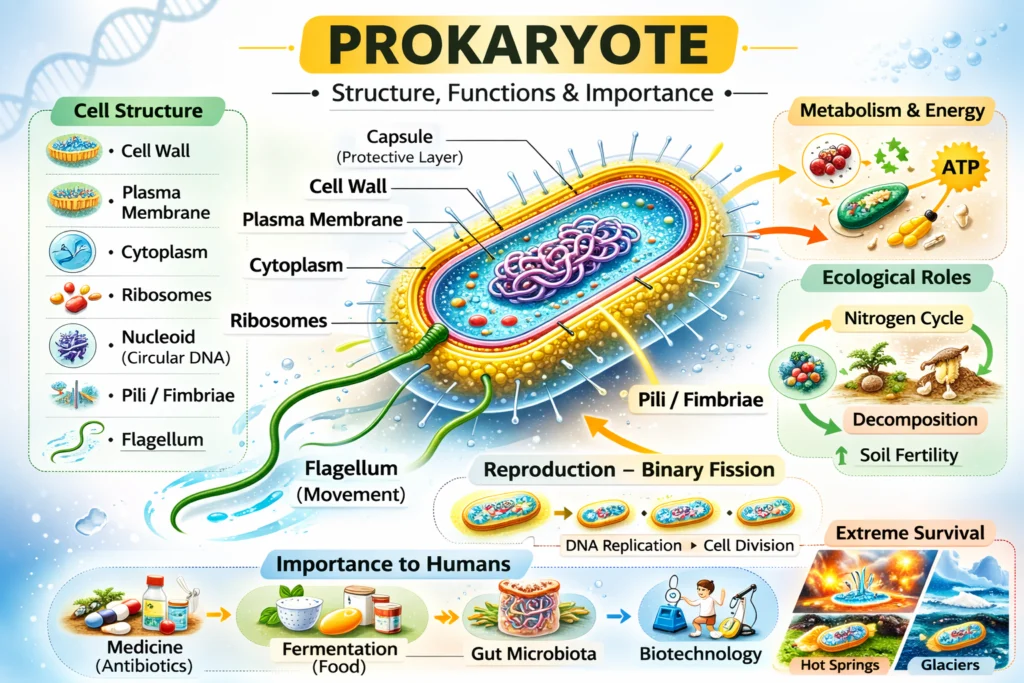
A prokaryote is a living organism whose cells do not contain a true nucleus or membrane-bound organelles. These simple life forms are among the earliest and most widespread organisms on Earth. Despite their basic cellular organization, they play a vital role in ecosystems, human health, and modern biotechnology.
Studying these organisms is fundamental in biology because it helps explain the origin of life, the evolution of cells, and essential biological processes that sustain living systems. This article presents the topic in a clear, well-structured, and in-depth format suitable for students, educators, and competitive exam aspirants.
What Is a Prokaryote?
A prokaryotic organism refers to a simple unicellular life form whose genetic material is not enclosed within a membrane-bound nucleus but instead remains in a region called the nucleoid. Such organisms are characterized by the absence of a true nucleus and membrane-bound organelles, possessing a single circular DNA molecule and a basic cellular organization that supports essential life processes.
All prokaryotic organisms belong to two major domains of life:
- Bacteria
- Archaea
Historical Discovery and Origin
Prokaryotic organisms were among the first organisms to appear on Earth, evolving approximately 3.5 billion years ago. Early scientists observed bacteria under primitive microscopes, but their cellular simplicity was understood much later with advances in microscopy and molecular biology.
The term prokaryotic cell comes from Greek words meaning “before nucleus”, reflecting their evolutionary position before eukaryotic cells.
Classification of Prokaryote
prokaryotic cells are classified into two major groups based on genetic, biochemical, and structural differences.
Bacteria
Bacteria are widely distributed across nearly all environments, including soil, water, air, and the bodies of living organisms. Their cell walls contain peptidoglycan, which provides structural strength and protection. This group includes both helpful species that support life processes and harmful forms capable of causing disease.
Archaea
Archaea are commonly found in extreme habitats such as hot springs, salt-rich environments, and deep-sea regions. Unlike bacteria, their cell walls do not contain peptidoglycan, and their genetic makeup shows closer similarities to eukaryotic organisms, particularly in processes like transcription and translation.
Structure of a Prokaryote Cell
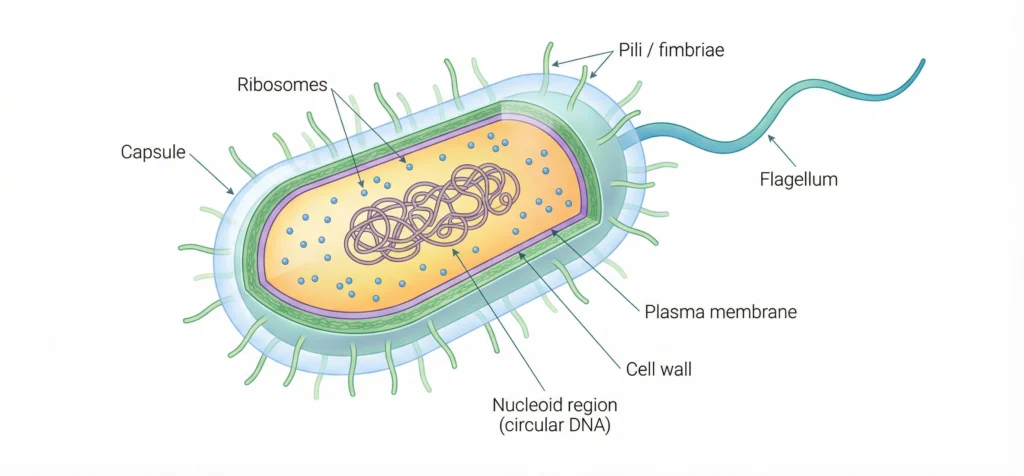
Although simple, a prokaryotic cell has a well-organized cellular structure that supports survival and reproduction.
Cell Envelope
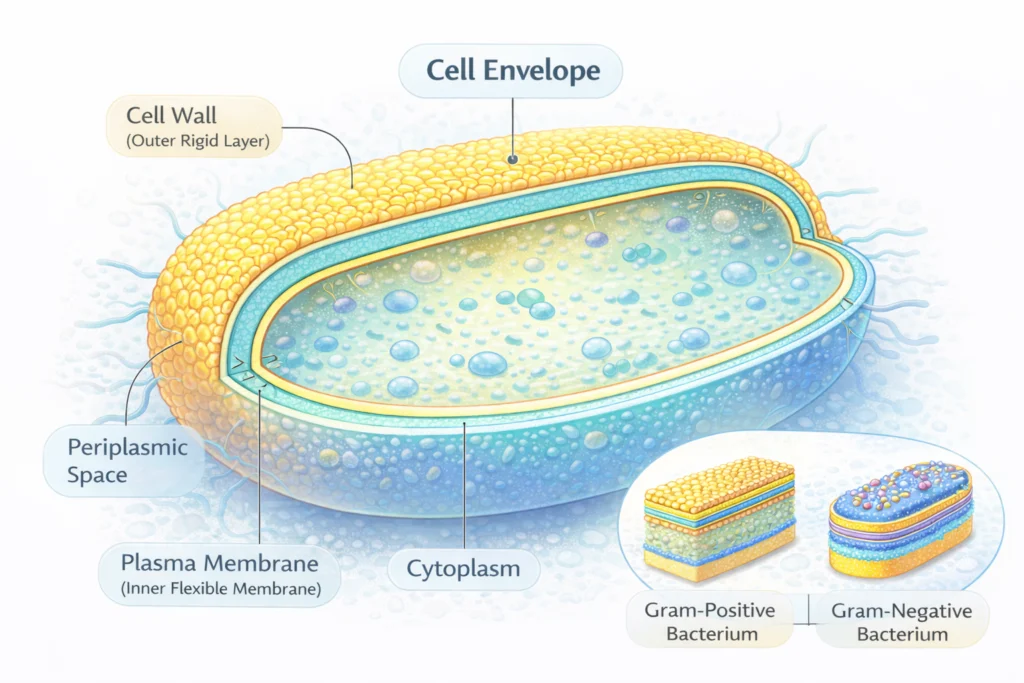
The cell envelope is the outer protective layer surrounding the cell that provides shape, support, and protection. It also helps regulate the movement of substances between the cell and its external environment.
- Capsule (in some): Prevents dehydration and immune attack
- Cell wall: Provides shape and protection
- Plasma membrane: Regulates transport of substance
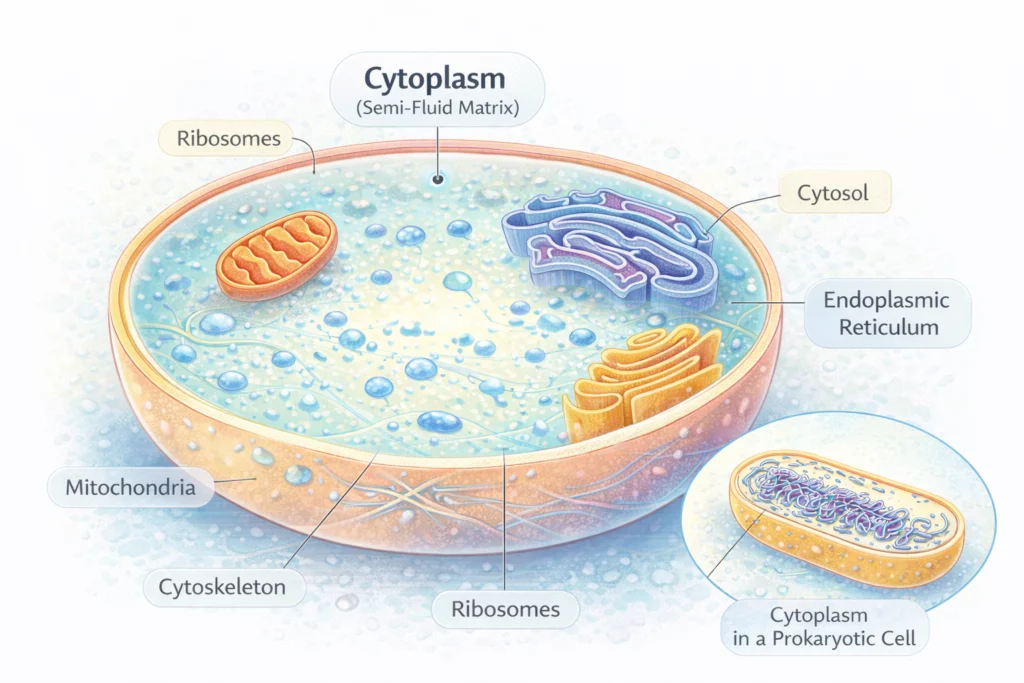
Cytoplasm
The cytoplasm is the semi-fluid substance present inside the cell membrane. It contains enzymes, nutrients, and cellular components and is the site where most metabolic and biochemical reactions take place.
- Site of metabolic reactions
- Contains enzymes and nutrients
Genetic Material
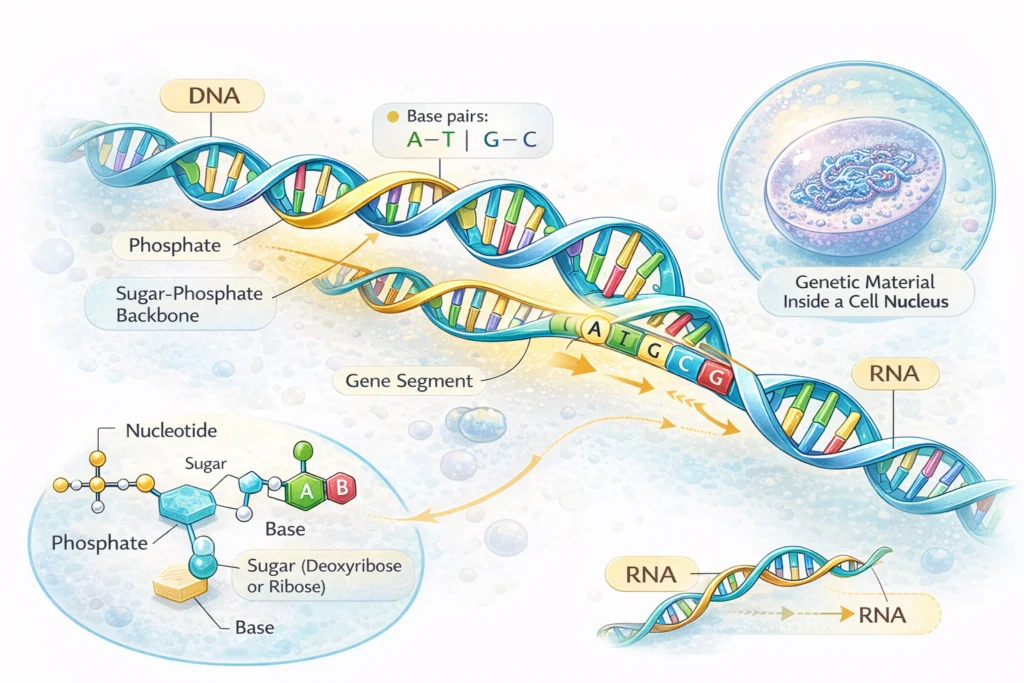
The genetic material is the substance that carries hereditary information and controls all cellular activities. It stores instructions required for growth, metabolism, reproduction, and the transmission of traits from one generation to the next.
- No nuclear membrane
- Single circular DNA
- Located in the nucleoid region
Ribosomes
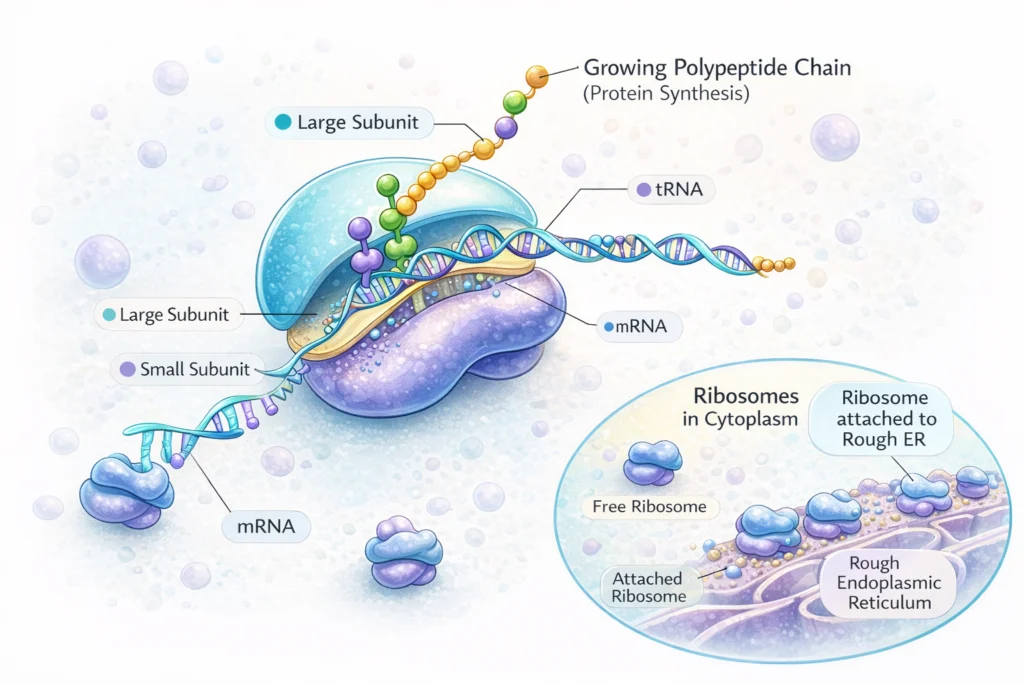
Ribosomes are small, non-membrane-bound cellular structures responsible for protein synthesis. They read genetic instructions and assemble amino acids into proteins required for growth, repair, and metabolic activities.
- Responsible for protein synthesis
- Smaller than eukaryotic ribosomes
External Structures
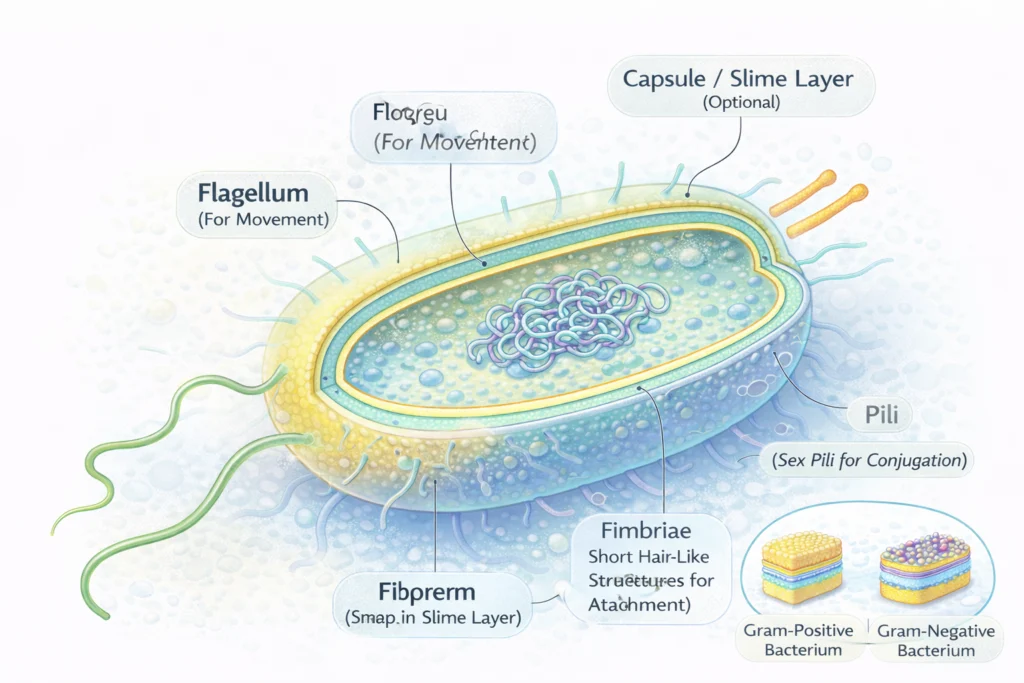
External structures are specialized appendages present on the surface of the cell that help in movement, attachment, and interaction with the surrounding environment. These structures enhance survival by aiding mobility, adherence to surfaces, and genetic exchange.
- Pili: Attachment and genetic exchange
- Flagella: Movement
Prokaryote Cell Structure vs Eukaryotic Cell
| Feature | Prokaryote | Eukaryote |
|---|---|---|
| Nucleus | Absent | Present |
| DNA | Circular | Linear |
| Organelles | Absent | Present |
| Cell size | Small | Larger |
| Ribosomes | 70S | 80S |
This comparison highlights the simplicity and efficiency of the prokaryotic cell.
Metabolism in Prokaryote
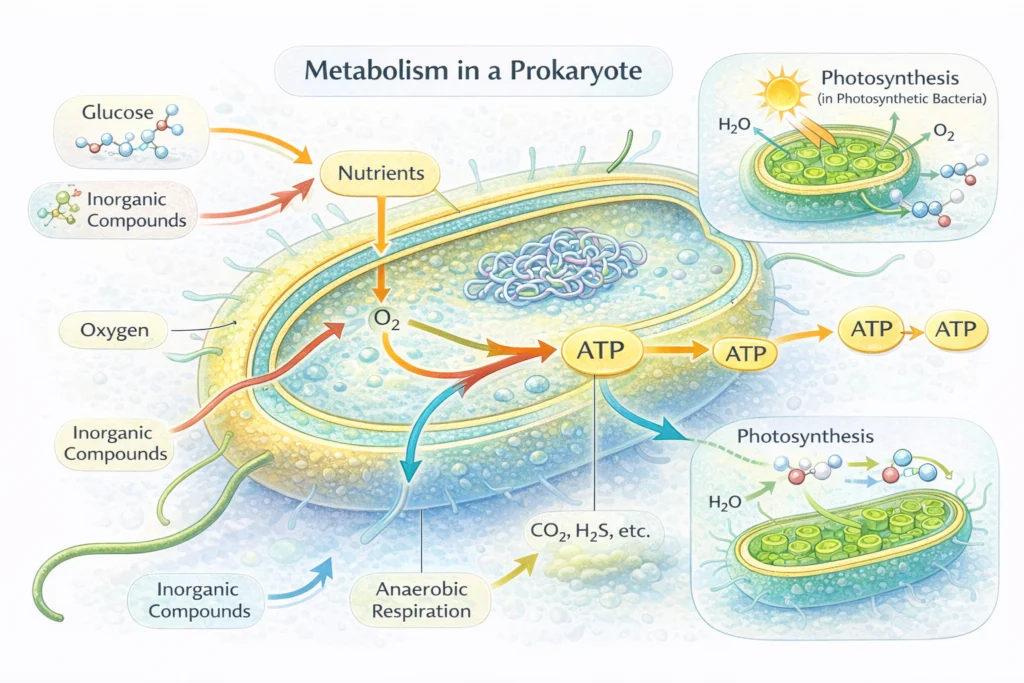
A prokaryotic cell shows extraordinary metabolic diversity. Metabolism in prokaryotic organisms includes all biochemical reactions necessary for energy production and survival. They exhibit diverse metabolic pathways, enabling them to live in different environmental conditions.
Types of metabolism include:
- Autotrophic: Photosynthetic or chemosynthetic
- Heterotrophic: Saprophytic or parasitic
- Aerobic and anaerobic respiration
Some prokaryotic cells can survive without oxygen, while others depend on it completely.
Reproduction in Prokaryote
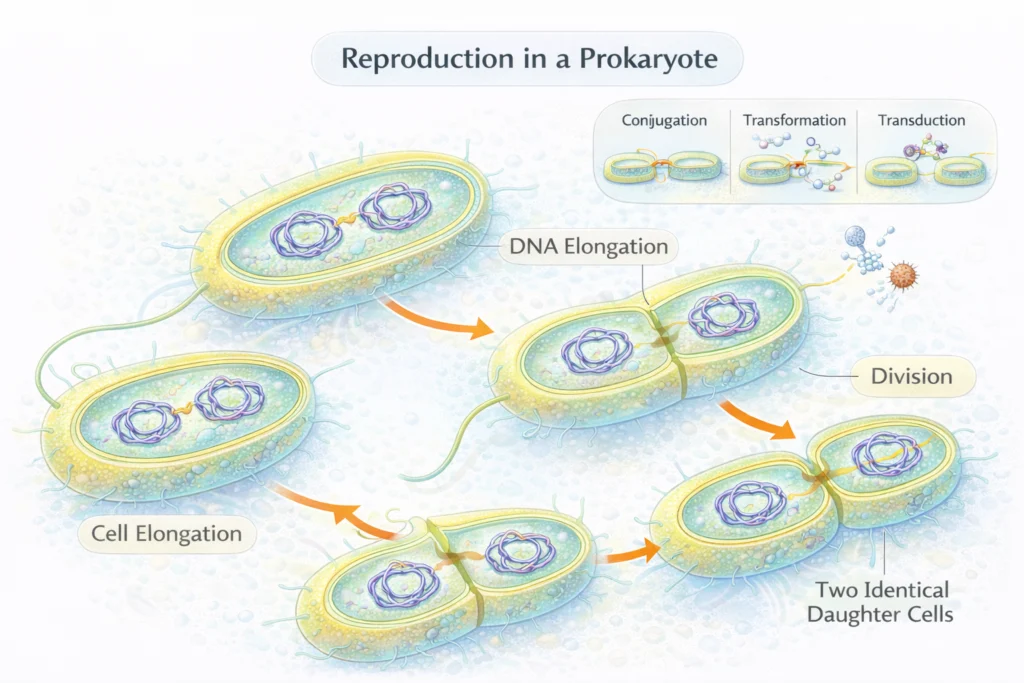
Reproduction occurs asexually by binary fission, a rapid and efficient process. In this method, the cell divides into two genetically identical daughter cells after DNA replication.
Steps involved:
- DNA replication
- Cell elongation
- Septum formation
- Division into two identical cells
Genetic variation occurs through:
- Transduction
- Conjugation
- Transformation
Role of Prokaryote in Ecosystem
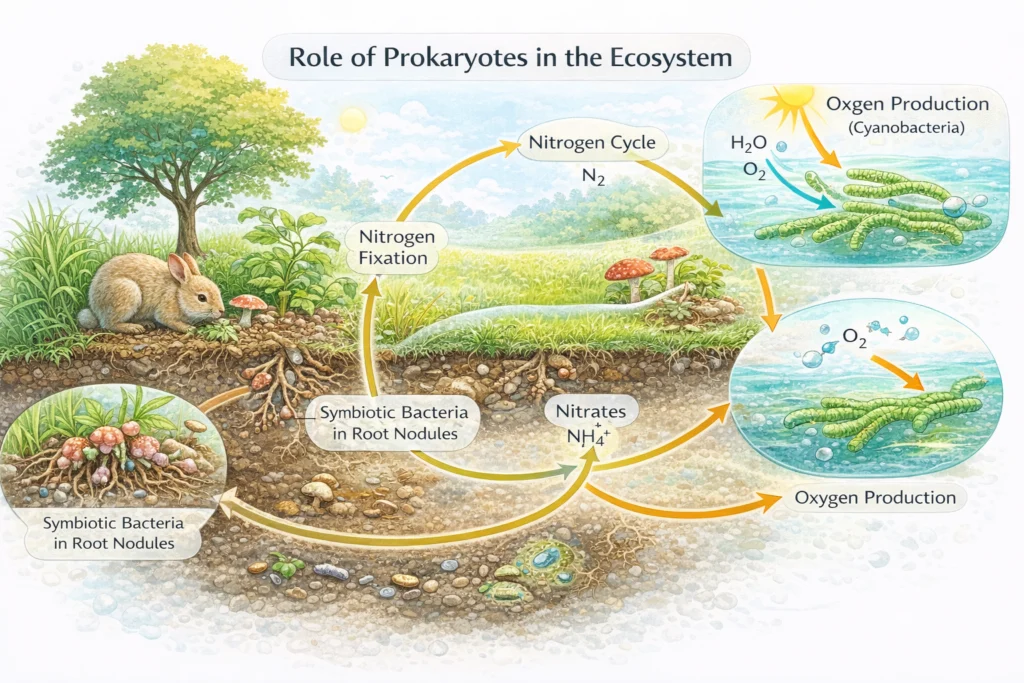
These microscopic organisms play an essential role in maintaining environmental stability and nutrient cycling. Every prokaryotic organism contributes significantly to ecological balance by participating in processes such as decomposition, nitrogen fixation, and the recycling of essential elements, which support food chains and sustain life on Earth.
Key roles include:
- Nitrogen fixation
- Decomposition of organic matter
- Carbon cycling
- Oxygen production (cyanobacteria)
Without prokaryotic organisms, life on Earth would collapse.
Importance of Prokaryote to Humans
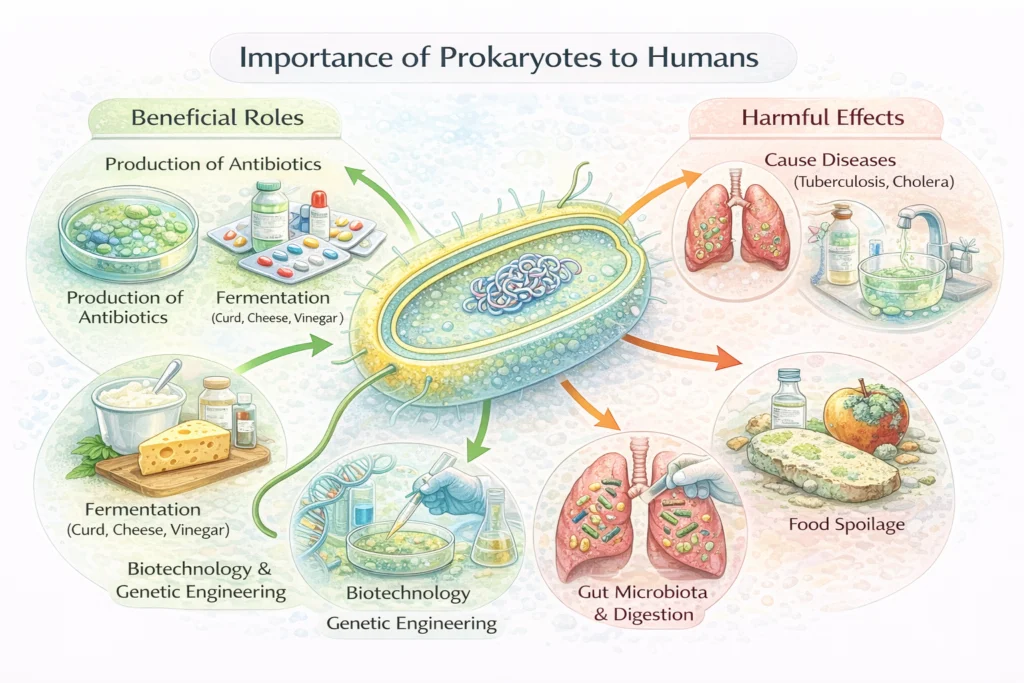
These organisms are useful in medicine, food production, and biotechnology, but some also cause diseases. Hence, they have both beneficial and harmful effects on humans.
Beneficial Roles
- Production of antibiotics
- Fermentation (curd, cheese, vinegar)
- Gut microbiota and digestion
- Biotechnology and genetic engineering
Harmful Effects
- Cause diseases such as tuberculosis and cholera
- Food spoilage
Understanding prokaryotic organisms helps control harmful species and utilize beneficial ones.
Adaptations of Prokaryote
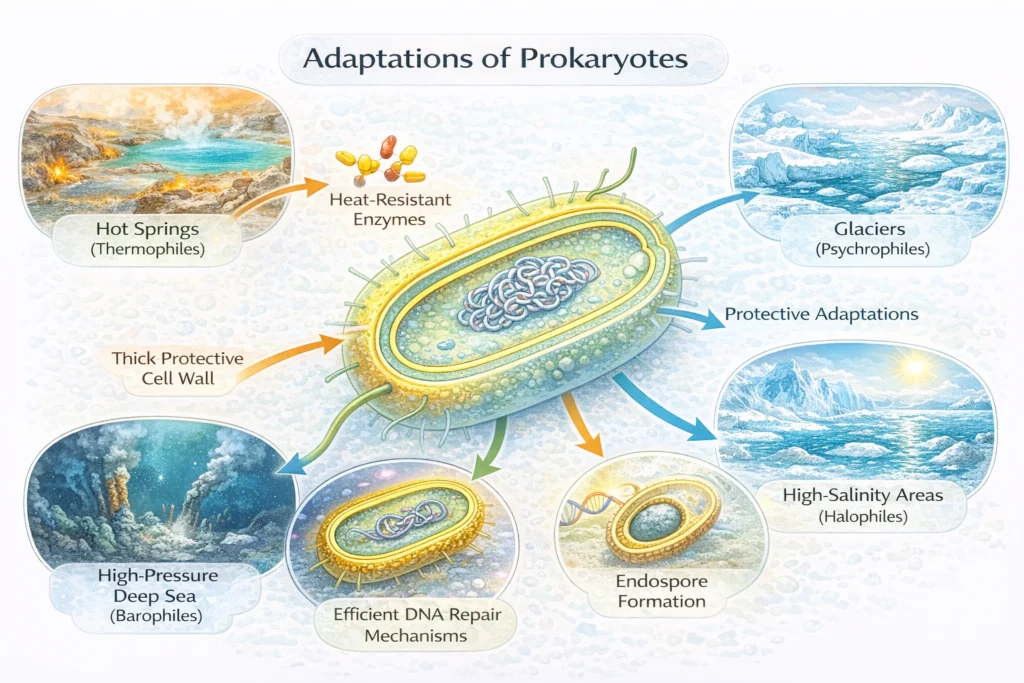
These simple organisms are capable of surviving extreme environmental conditions due to several specialized adaptations. A prokaryotic organism can survive extreme conditions due to special adaptations, including the presence of heat-resistant enzymes, thick protective cell walls, the ability to form endospores, and highly efficient DNA repair mechanisms. Such features explain their presence in harsh habitats like hot springs, glaciers, and deep-sea environments.
Evolutionary Significance of Prokaryote
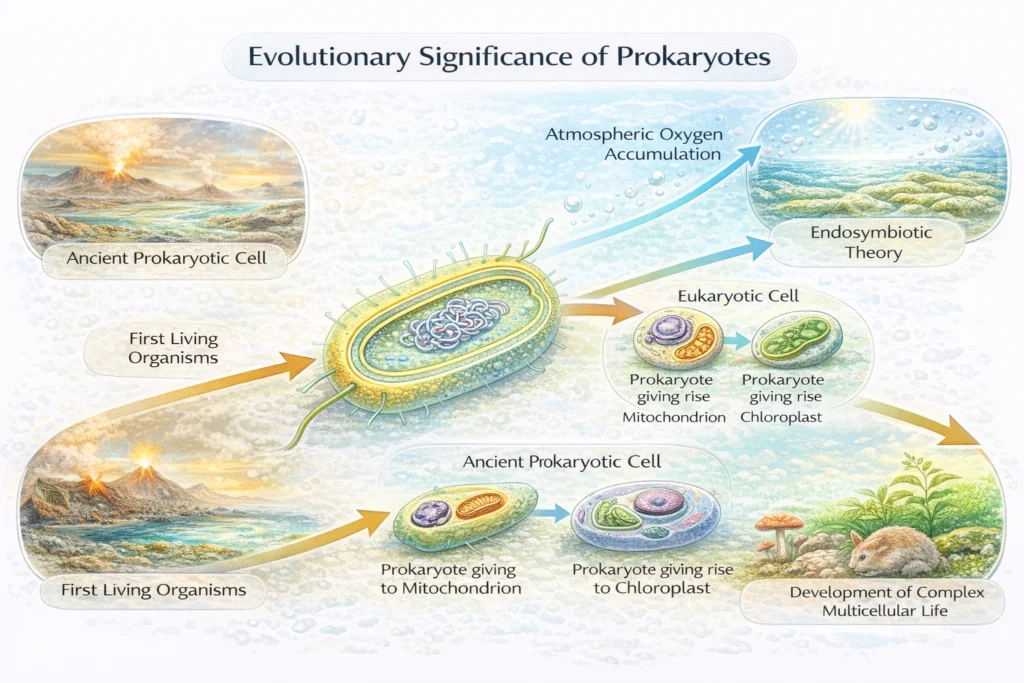
These organisms are evolutionarily significant as they were the earliest forms of life and laid the foundation for the development of complex cells. They played a key role in the evolution of cellular life.
Evolutionary importance:
- First living organisms
- Origin of photosynthesis
- Source of mitochondria and chloroplasts (endosymbiotic theory)
Modern life evolved from ancient prokaryotic ancestors.
Common Examples of Prokaryote
Some well-known examples include:
- Escherichia coli
- Streptococcus
- Anabaena
- Methanogens
Each example demonstrates different survival strategies and functions.
Conclusion
The prokaryote is the simplest yet most powerful form of life on Earth. From maintaining ecological balance to advancing biotechnology, the role of the prokaryote is indispensable. Understanding its structure, function, and significance builds a strong foundation in biology and explains how life began and evolved.
Despite lacking complexity, every prokaryote demonstrates remarkable efficiency, adaptability, and evolutionary importance. Studying prokaryotes is not just about microorganisms—it is about understanding life itself.
You might like to visit Biology.
FAQs About Prokaryote
What is a prokaryote in simple words?
A prokaryote is a simple organism whose cells lack a true nucleus.
Are all bacteria prokaryotes?
Yes, all bacteria are prokaryotes, but not all prokaryotes are bacteria.
Do prokaryotes have DNA?
Yes, a prokaryote has circular DNA located in the nucleoid region.
Can a prokaryote be multicellular?
No, every prokaryote is unicellular.
Why are prokaryotes important?
They maintain ecosystems, recycle nutrients, and support life processes.
What is the main difference between prokaryote and eukaryote?
The presence of a nucleus and membrane-bound organelles.
🌐 Connect With Us
👉 Informosio Tech – Science & Technology news, AI trends, gadgets, and innovations