
Ecommerce is no longer optional for modern businesses. Whether you are a small entrepreneur in Assam or planning to build a global brand, launching an online store has become one of the most powerful wealth-building strategies. Among all ecommerce platforms available today, Shopify stands out as one of the most trusted and beginner-friendly solutions.
This complete guide will help you understand how Shopify works, why it is popular, and how you can use it to build a profitable online business in 2026.
What is Shopify?
Shopify is a cloud-based ecommerce platform that allows individuals and businesses to create online stores without needing advanced technical skills. It provides everything required to run an online business, including:
- Website hosting
- Store design templates
- Secure payment processing
- Inventory management
- Marketing tools
- Analytics and reporting
Unlike traditional website development that requires coding knowledge, Shopify offers a user-friendly interface where you can set up a store in just a few hours.
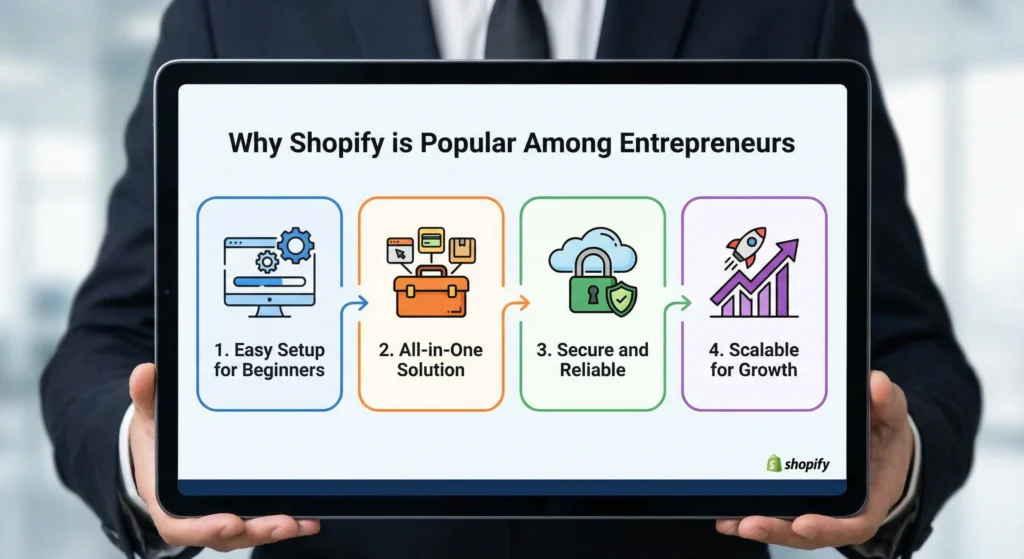
Why Shopify is Popular Among Entrepreneurs?
There are many ecommerce platforms in the market, but Shopify continues to dominate due to several important advantages.
1. Easy Setup for Beginners
You do not need to be a developer. The platform offers drag-and-drop customization, allowing you to design your store visually. Even first-time entrepreneurs can launch a professional website quickly.
2. All-in-One Solution
With Shopify, you do not need separate hosting providers, payment gateways, and security tools. Everything is integrated into one dashboard.
3. Secure and Reliable
Security is critical in ecommerce. Shopify provides SSL certificates, fraud analysis, and secure checkout systems, ensuring customer data remains protected.
4. Scalable for Growth
Whether you are selling 10 products or 10,000, the platform scales with your business. Many global brands use Shopify to manage millions in revenue.
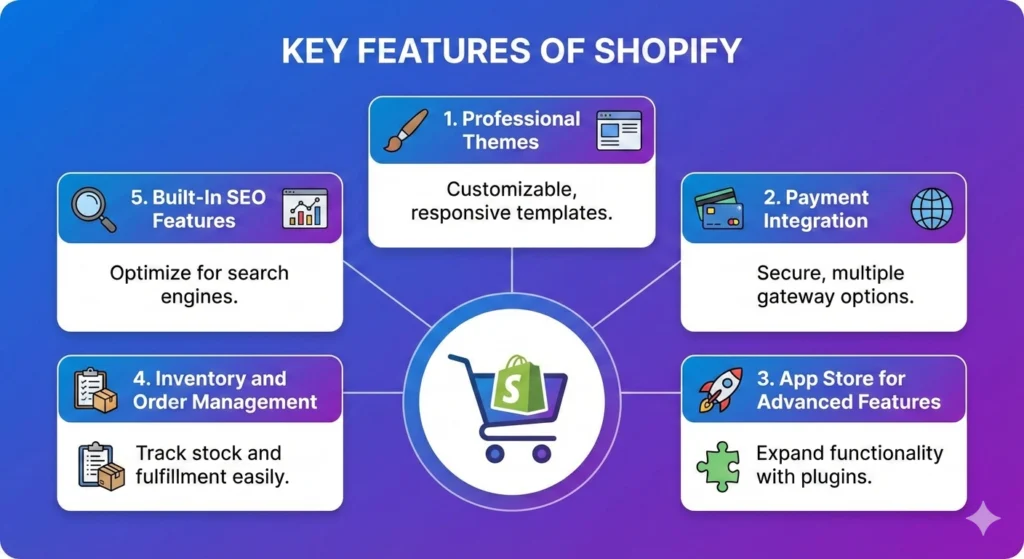
Key Features of Shopify
Understanding the core features will help you maximize the platform’s potential.
1. Professional Themes
Shopify offers free and premium themes designed for different industries. These themes are mobile-responsive, meaning your store will look great on smartphones and tablets.
You can customize:
- Colors
- Fonts
- Layout
- Product pages
- Homepage sections
A visually appealing store increases trust and improves conversion rates.
2. Payment Integration
The platform supports multiple payment gateways, including credit cards, UPI, PayPal, and international payment providers. You can also use Shopify Payments to simplify transactions.
3. App Store for Advanced Features
The Shopify App Store allows you to install additional tools such as:
- Email marketing software
- Dropshipping integrations
- SEO tools
- Customer review systems
- Inventory automation
This flexibility makes it suitable for almost any business model.
4. Inventory and Order Management
You can track stock levels, manage orders, and automate fulfillment processes directly from the dashboard. This is especially useful for entrepreneurs managing multiple products.
5. Built-In SEO Features
Search engine visibility is important for long-term growth. Shopify allows you to:
- Edit meta titles and descriptions
- Optimize product URLs
- Add alt text to images
- Generate XML sitemaps automatically
This helps your store rank better in search engines.
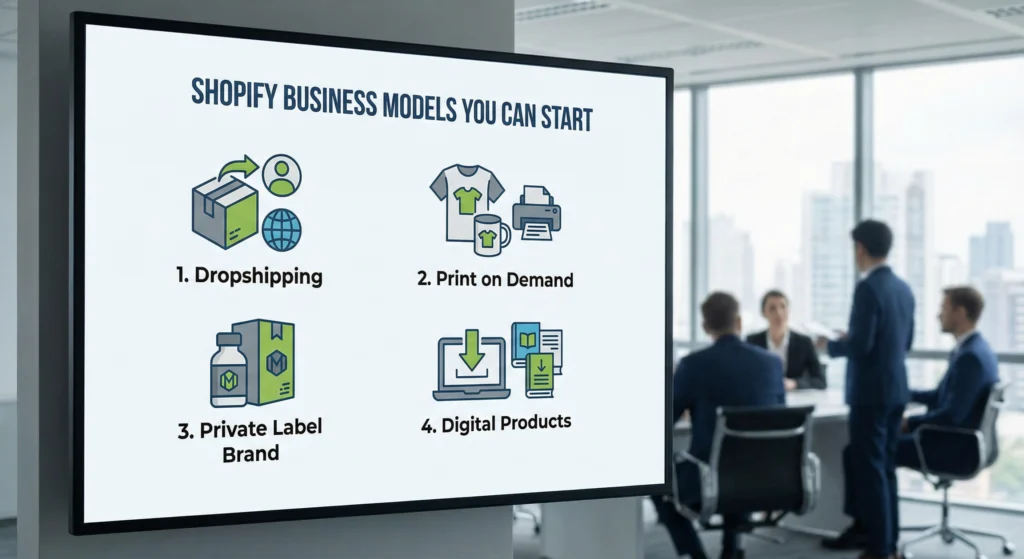
Shopify Business Models You Can Start
One of the strongest advantages of Shopify is its flexibility. You can use it for various ecommerce models.
1. Dropshipping
In this model, you sell products without holding inventory. When a customer places an order, the supplier ships the product directly to them. This reduces upfront investment and risk.
2. Print on Demand
You can sell custom t-shirts, mugs, phone cases, and more. Products are printed only after an order is placed.
3. Private Label Brand
Create your own branded products and build a long-term asset. This model offers higher profit margins.
4. Digital Products
You can sell ebooks, courses, templates, or software directly through your store.
Step-by-Step Guide to Launching Your Store
Here is a simplified process to get started:
Step 1: Create an Account
Sign up and choose a pricing plan based on your business size.
Step 2: Choose a Store Name and Domain
Pick a unique brand name. Purchase a custom domain for professionalism.
Step 3: Select a Theme
Choose a clean, fast-loading theme that matches your niche.
Step 4: Add Products
Upload product images, descriptions, pricing, and inventory details.
Step 5: Set Up Payment and Shipping
Configure payment gateways and define shipping rates.
Step 6: Optimize for SEO
Add meta descriptions, optimize titles, and write keyword-rich product descriptions.
Step 7: Launch and Promote
Once everything is tested, publish your store and start marketing.
Marketing Strategies for Shopify Stores
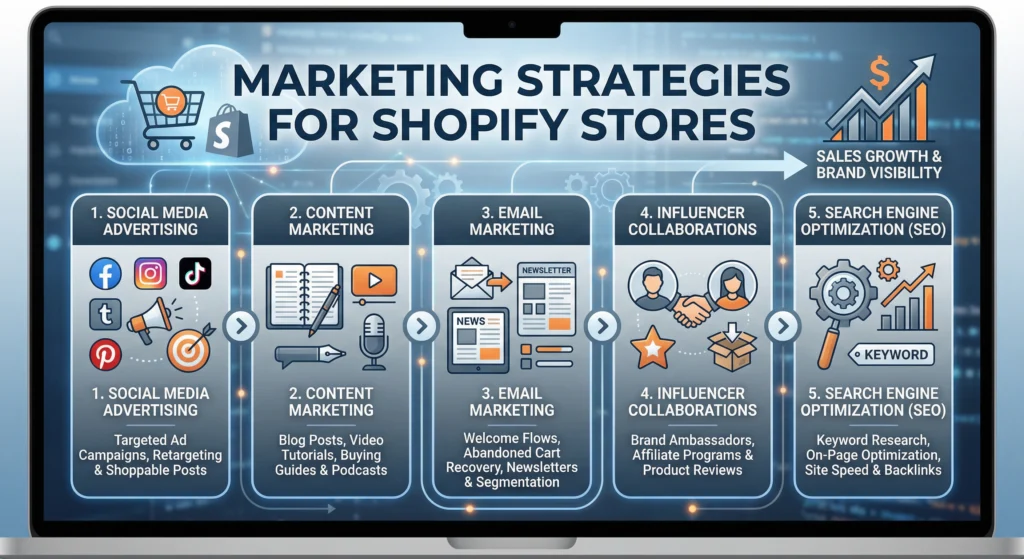
Launching your store is only the beginning. Growth depends on marketing.
1. Social Media Advertising
Platforms like Facebook and Instagram allow targeted advertising. You can reach customers based on interests, behavior, and demographics.
2. Content Marketing
Write blog posts related to your niche. This helps generate organic traffic from search engines.
3. Email Marketing
Build an email list and send offers, discounts, and product updates. Repeat customers increase profitability.
4. Influencer Collaborations
Partner with influencers to promote your products to a wider audience.
5. Search Engine Optimization
Optimize product pages with relevant keywords. Fast loading speed and mobile responsiveness also improve rankings.
Advantages and Disadvantages
Advantages
- Beginner-friendly
- Secure hosting
- Multiple payment options
- Strong app ecosystem
- Scalable for large businesses
Disadvantages
- Monthly subscription cost
- Transaction fees if not using Shopify Payments
- App costs can increase expenses
Despite some limitations, Shopify remains one of the best platforms for ecommerce beginners and professionals.
Shopify Pricing Overview
The platform offers multiple pricing plans based on business needs. Basic plans are suitable for small stores, while advanced plans offer detailed reporting and lower transaction fees.
Before choosing a plan, evaluate:
- Expected monthly sales
- Required features
- Marketing budget
- Growth plans
Starting small and upgrading later is often the safest approach.
Tips to Succeed with Shopify in 2026
To build a profitable online store, focus on:
- Choosing a profitable niche
- Testing products before scaling
- Writing compelling product descriptions
- Investing in high-quality product images
- Providing excellent customer support
- Tracking analytics and improving conversion rates
Consistency and patience are critical. Ecommerce success rarely happens overnight.
Is Shopify Worth It?
For entrepreneurs who want a reliable, scalable, and user-friendly ecommerce platform, Shopify is absolutely worth considering. It removes technical barriers and allows you to focus on marketing, branding, and customer experience.
If you are planning to build a long-term ecommerce brand or start a low-investment dropshipping business, Shopify provides the infrastructure required to grow from zero to a sustainable online income.
Find more business ideas and updates in the Startups & Entrepreneurship section.
The Closing Perspective
Ecommerce continues to expand globally, and digital entrepreneurship is becoming one of the most powerful income opportunities in 2026. Shopify simplifies the process of launching and managing an online store, making it accessible to beginners while remaining powerful enough for large enterprises.
Whether you want to build a side income or a full-time business, the key is action. Choose your niche, build your store, test your products, and refine your strategy consistently.
Success in ecommerce does not depend only on the platform. It depends on your commitment, marketing strategy, and willingness to learn. With the right approach, Shopify can become the foundation of a highly profitable online business.
🌐Reach Out to Us
Informosio Official – Finance news, business insights, startups, and market trends