
In today’s digital world, more people are choosing flexible careers over traditional 9-to-5 jobs. One of the most popular career paths is freelancing. But what is freelancing, and why has it become such a powerful way to earn income online?
Freelancing is a work arrangement where individuals offer their skills and services to clients on a project or contract basis instead of working as permanent employees for one company. Freelancers are self-employed professionals who work independently, set their own schedules, and often choose the projects they want to take on.
This guide will explain what freelancing is, how it works, its advantages and challenges, and how beginners can start their journey successfully.
What Is Freelancing?
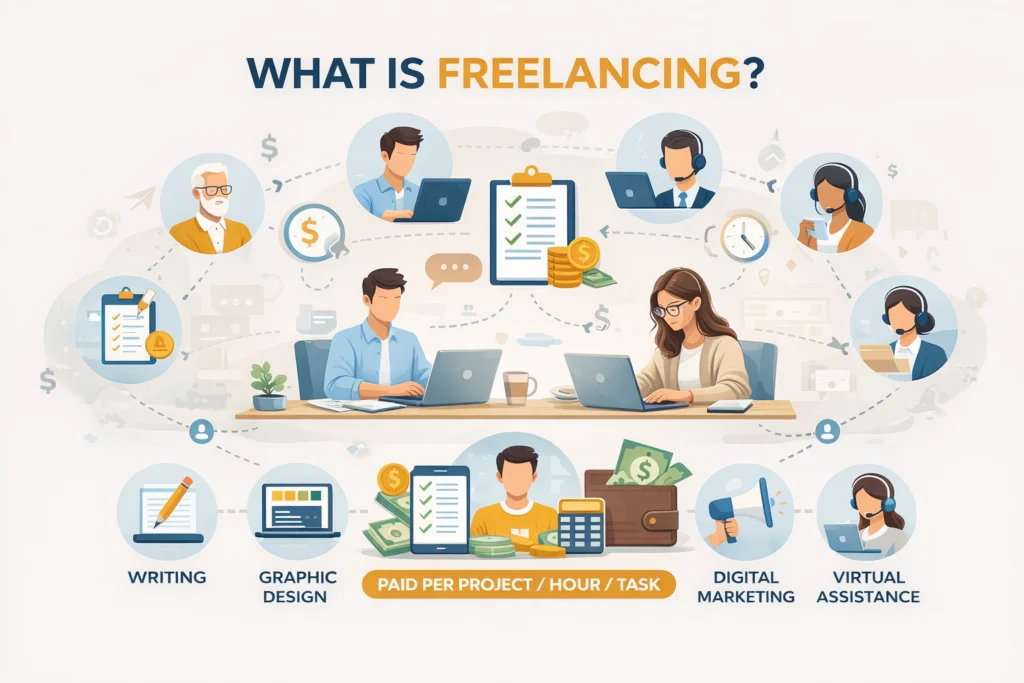
At its core, freelancing means working independently and providing services to multiple clients without being tied to a long-term employer. Instead of receiving a fixed monthly salary, freelancers are paid per project, per hour, or per task.
People often search for what is freelancing because they want financial freedom, flexibility, or additional income. Freelancers can work in various industries such as writing, graphic design, web development, digital marketing, video editing, consulting, virtual assistance, and many more.
Unlike traditional employment, freelancers manage their own business operations. They find clients, negotiate rates, deliver work, and handle payments on their own.
How Freelancing Works
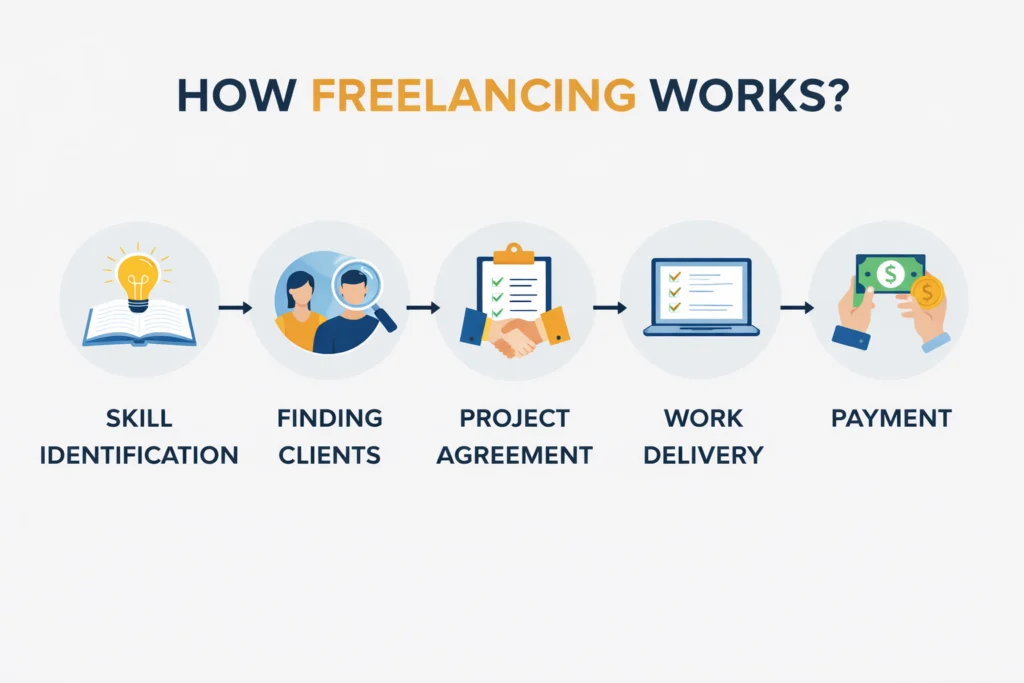
To understand what is freelancing in a practical sense, you need to know how the process works step by step.
1. Skill Identification
A freelancer must have a skill that solves a problem. This could be content writing, coding, logo design, social media management, SEO optimization, or translation.
2. Finding Clients
Freelancers find clients through online platforms, social media, personal websites, or referrals. Popular freelancing platforms include:
- Upwork
- Fiverr
- Freelancer
These platforms connect freelancers with clients worldwide.
3. Project Agreement
Once a client is interested, both parties agree on:
- Scope of work
- Deadline
- Payment terms
4. Work Delivery
The freelancer completes the task within the deadline and submits it to the client.
5. Payment
After approval, the client releases payment according to the agreed terms.
This cycle repeats with different clients, making freelancing a continuous business activity.
Types of Freelancing Jobs
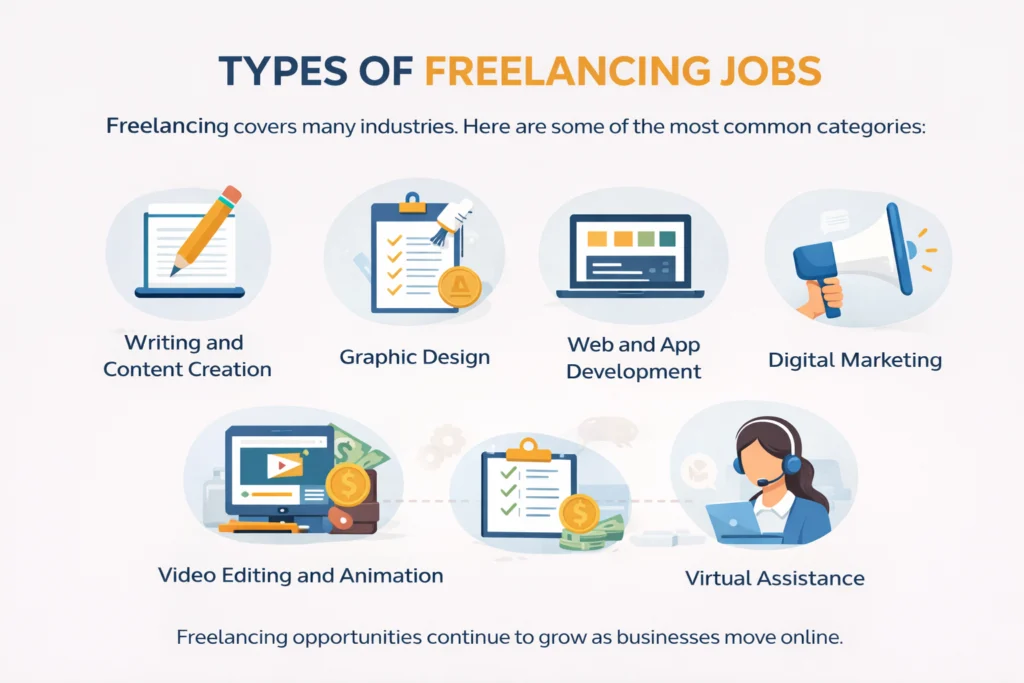
Freelancing covers many industries. Here are some of the most common categories:
Writing and Content Creation
- Blog writing
- Copywriting
- Technical writing
- Script writing
Graphic Design
- Logo design
- Social media graphics
- Branding
Web and App Development
- Website design
- Front-end development
- Mobile app development
Digital Marketing
- SEO
- Social media marketing
- Email marketing
Video Editing and Animation
- YouTube editing
- Promotional videos
- Motion graphics
Virtual Assistance
- Data entry
- Email management
- Customer support
Freelancing opportunities continue to grow as businesses move online.
Benefits of Freelancing
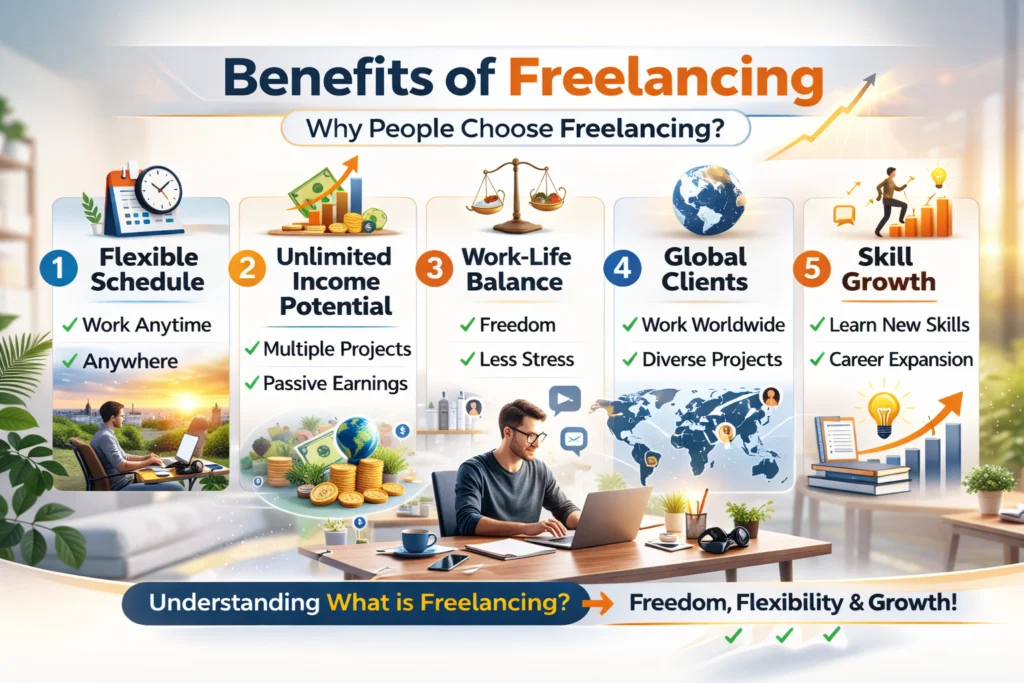
Understanding what is freelancing also requires knowing why so many people prefer it.
1. Flexible Schedule
Freelancers choose when and where they work. You can work from home, a café, or while traveling.
2. Unlimited Income Potential
Unlike fixed salaries, freelancing income depends on your skill level and number of clients. The more value you provide, the more you can earn.
3. Work-Life Balance
Freelancers can structure their day according to personal priorities.
4. Global Clients
You are not limited to your local area. You can work with clients worldwide.
5. Skill Growth
Freelancing forces you to constantly improve your skills and learn new tools.
Challenges of Freelancing
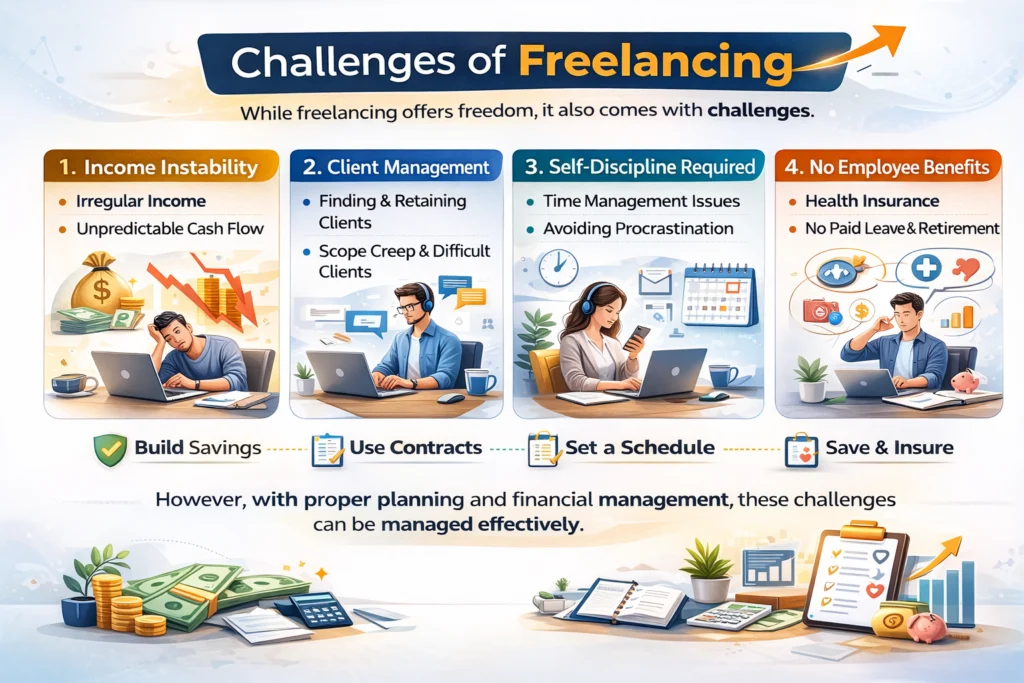
While freelancing offers freedom, it also comes with challenges.
1. Income Instability
There is no guaranteed monthly salary. Some months may be highly profitable, while others may be slow.
2. Client Management
Handling difficult clients, revisions, and communication issues can be stressful.
3. Self-Discipline Required
Freelancers must manage their time effectively without supervision.
4. No Employee Benefits
There are no company benefits like paid leave, insurance, or retirement plans.
However, with proper planning and financial management, these challenges can be managed effectively.
Skills Required to Succeed in Freelancing
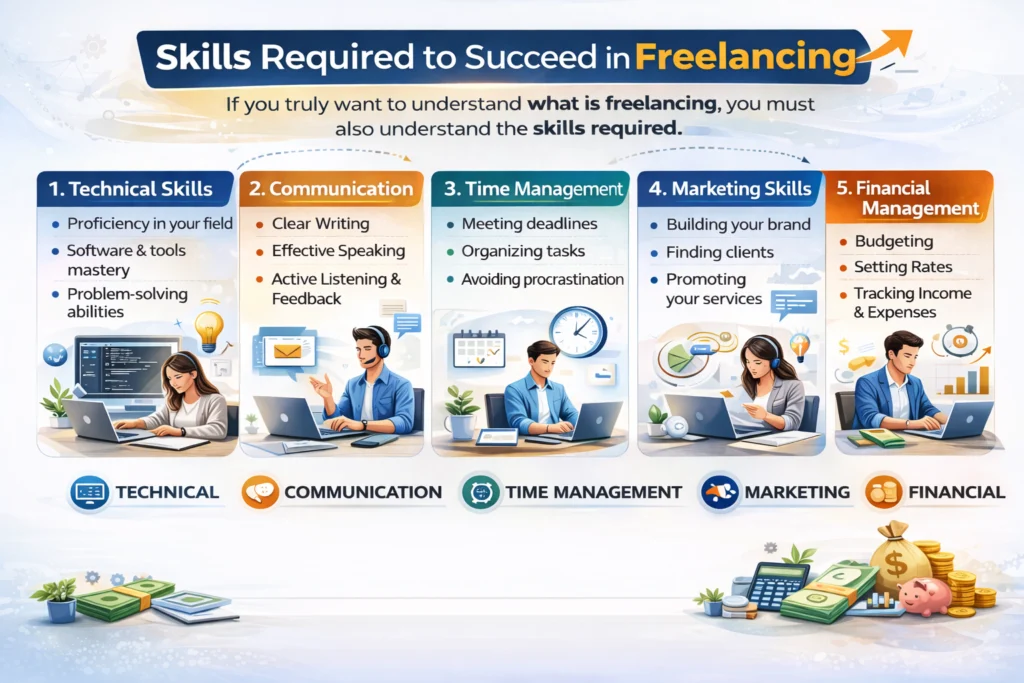
If you truly want to understand what is freelancing, you must also understand the skills required.
Technical Skills
You must be highly skilled in your chosen field.
Communication Skills
Clear communication with clients ensures better results and repeat business.
Time Management
Meeting deadlines is crucial for building trust.
Marketing Skills
Freelancers must promote themselves to attract clients.
Financial Management
Handling taxes, savings, and expenses is part of freelancing life.
How to Start Freelancing as a Beginner
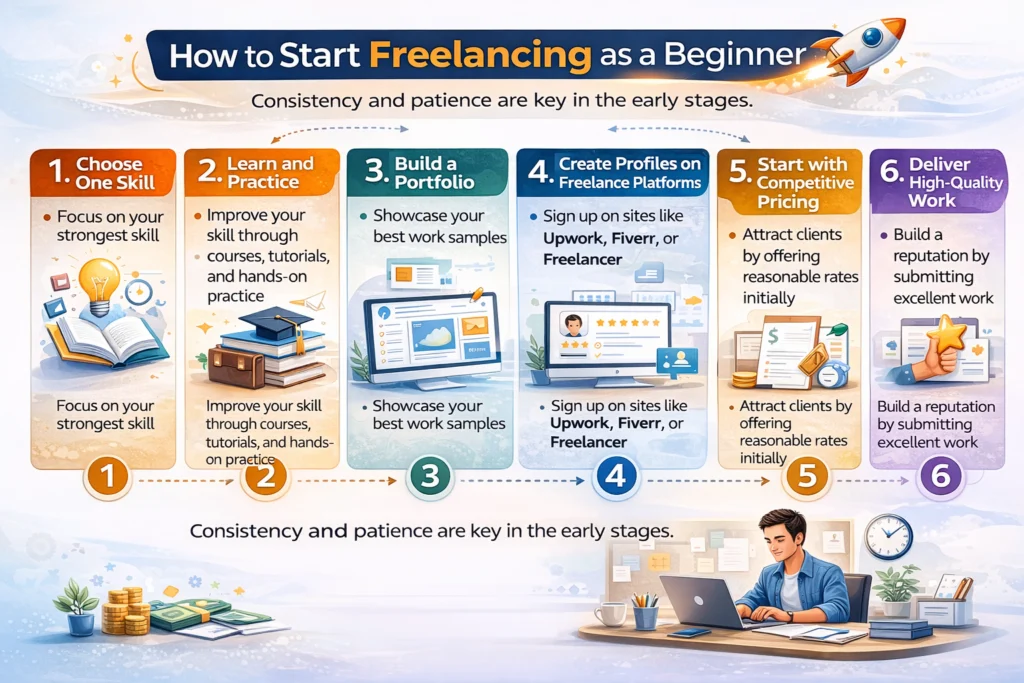
If you are new and wondering what is freelancing and how to begin, follow this simple roadmap.
Step 1: Choose One Skill
Focus on one high-demand skill instead of trying everything.
Step 2: Learn and Practice
Take online courses and practice consistently.
Step 3: Build a Portfolio
Create sample projects to showcase your ability.
Step 4: Create Profiles on Freelance Platforms
Register on platforms like Upwork or Fiverr.
Step 5: Start with Competitive Pricing
As a beginner, charge reasonable rates to build reviews and credibility.
Step 6: Deliver High-Quality Work
Satisfied clients bring repeat projects and referrals.
Consistency and patience are key in the early stages.
Freelancing vs Traditional Job
| Freelancing | Traditional Job |
|---|---|
| Flexible schedule | Fixed schedule |
| Income varies | Fixed salary |
| Work from anywhere | Office-based |
| Self-employed | Company employee |
| Multiple clients | Single employer |
Both options have advantages. The right choice depends on personal goals and risk tolerance.
Is Freelancing a Good Career?
Freelancing is not just a side income option anymore. Many professionals build full-time careers earning substantial income. It is especially attractive for those who value freedom and independence.
However, freelancing requires dedication, continuous learning, and strong discipline. It is not a shortcut to instant wealth. Success depends on your commitment, skill level, and client relationships.
The Future of Freelancing
The demand for remote services continues to rise rapidly as businesses across the world shift toward digital operations. Companies are increasingly moving their marketing, customer support, design, development, and administrative functions online, which naturally creates more opportunities for independent professionals. Instead of maintaining large full-time teams for every specialized task, many organizations now prefer hiring freelancers who can deliver expert-level work on a flexible basis. This approach allows businesses to reduce operational costs, scale faster, and access global talent without geographical limitations.
Advancements in technology have also played a major role in accelerating the growth of freelancing. High-speed internet, cloud-based tools, video conferencing platforms, project management software, and secure online payment systems have made remote collaboration seamless and efficient. Today, a freelancer in one country can easily work with clients across different time zones without any barriers. As digital transformation continues and more companies adopt remote-first or hybrid work models, freelancing is expected to expand even further in the coming years. It is not just a trend but a long-term shift in how modern work is structured and delivered worldwide.
Stay informed with our latest posts in the Career Growth & Jobs category.
Final Thoughts
So, what is freelancing? It is a flexible, independent way of working where individuals offer their skills to clients on a project basis. It provides freedom, income potential, and global opportunities but requires discipline and consistent effort.
Freelancing is ideal for individuals who want control over their careers and are willing to take responsibility for their professional growth. Whether you want a side income or a full-time career, freelancing can be a powerful path if approached strategically.
If you are ready to build skills, market yourself, and deliver value, freelancing can open doors to financial independence and professional freedom.
🌐Reach out and stay informed
Informosio Official – General updates, current affairs, and informative content