🌐 A New Era of Personal Technology
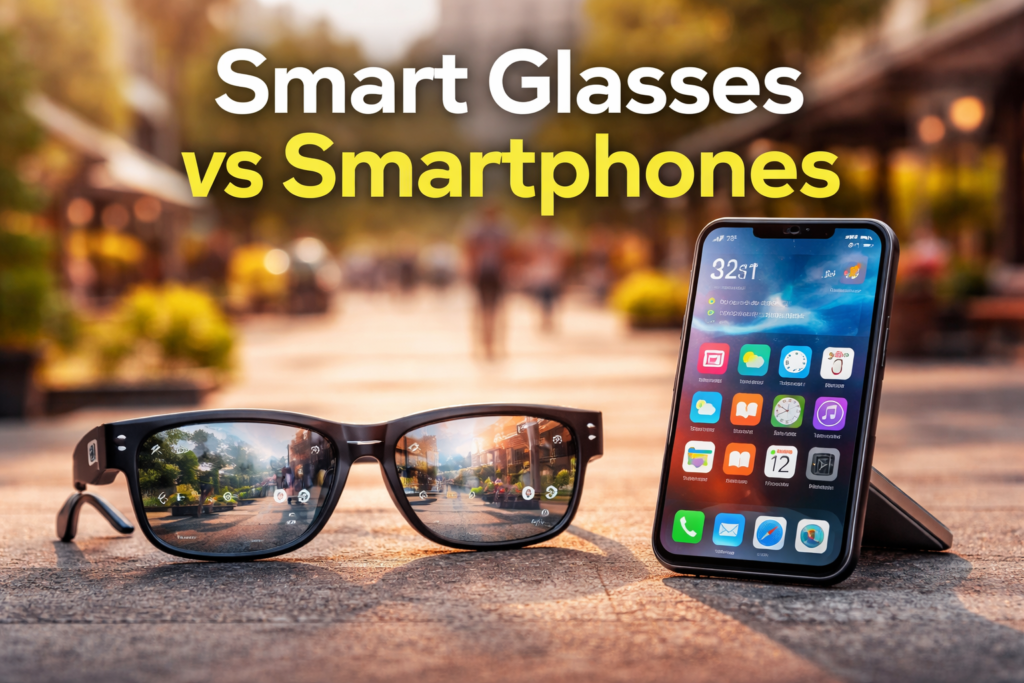
The battle between smart glasses vs smartphones is quickly becoming one of the most discussed debates in modern technology. For more than a decade, smartphones have dominated how we communicate, work, and consume content. But with the rise of AI wearables and augmented reality (AR), many experts believe the next evolution of mobile tech may sit on your face instead of in your pocket.
In 2026, the conversation is no longer theoretical. Tech companies are investing heavily in lightweight AR glasses, AI assistants, and hands-free interfaces that could reshape how we interact with the digital world.
👓 The Rise of Smart Glasses and AI Wearables

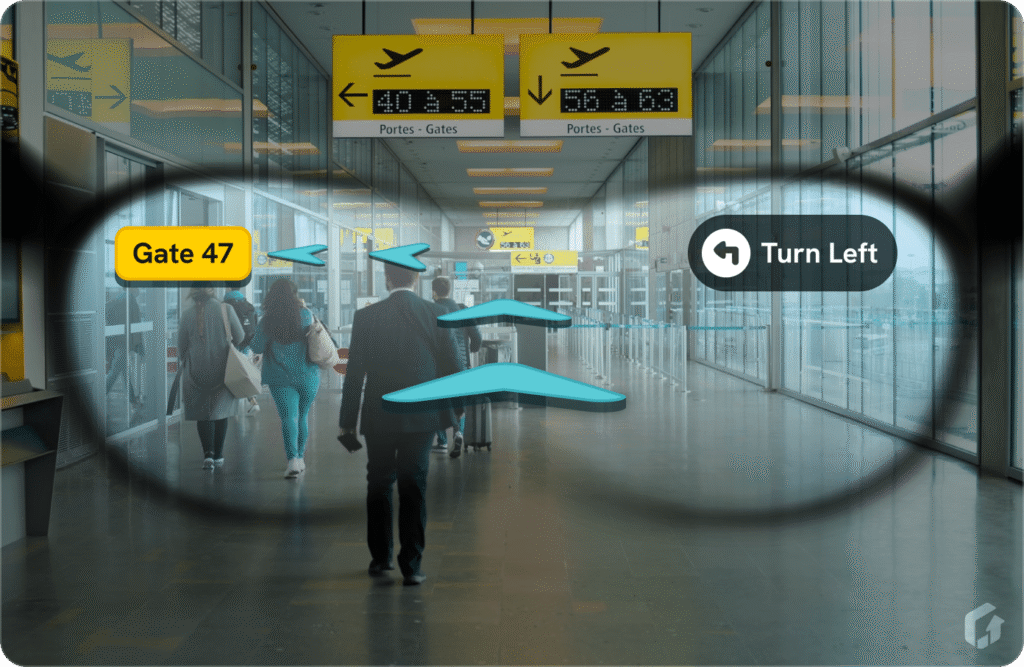

Smart glasses are designed to blend digital information with the physical world. Unlike smartphones, which require constant hand interaction, these wearables aim to deliver a seamless, glance-based experience.
Key Features Driving Adoption
- Augmented reality overlays: Directions, messages, and reminders appear directly in your view.
- AI voice assistants: Natural conversations replace traditional app navigation.
- Real-time translation: Ideal for travel and international communication.
- Hands-free photography: Capture moments without holding a device.
The biggest shift here is contextual computing — technology that understands your environment and delivers information exactly when you need it.
For example, imagine walking through a new city and seeing restaurant reviews floating subtly beside storefronts. Instead of opening multiple apps, information comes to you automatically.
📱 Why Smartphones Still Dominate the Market
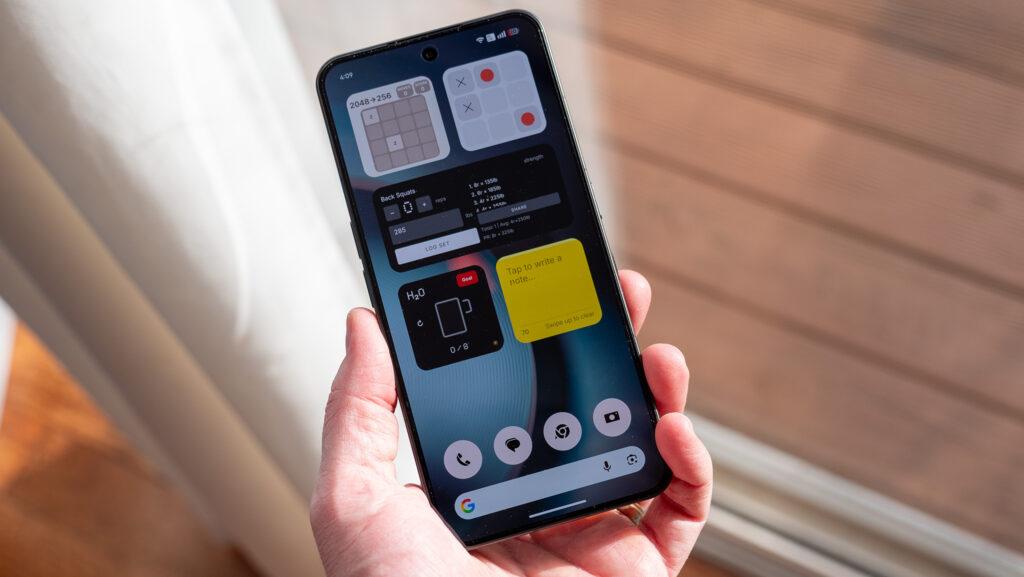
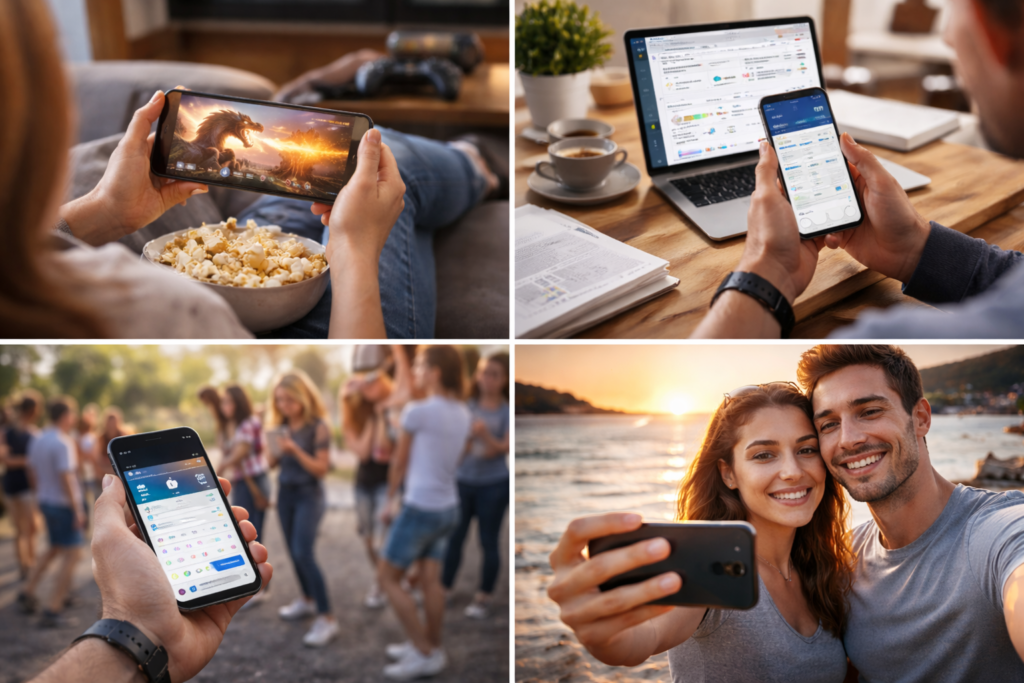
Despite the excitement around wearables, smartphones remain incredibly powerful and deeply integrated into daily life. They combine communication, entertainment, productivity, and creativity in a single device.
Advantages Smartphones Still Hold
1. Mature Ecosystem
Millions of apps, services, and developers are built around mobile platforms. Smart glasses are still catching up in software variety.
2. Better Content Consumption
Large displays make smartphones ideal for watching videos, gaming, editing photos, and multitasking.
3. Strong Privacy Control
Many users feel more comfortable with visible devices rather than hidden wearable cameras.
4. Battery & Performance
Current smart glasses struggle with battery life, while modern smartphones easily last a full day.
In reality, smartphones are evolving too — with on-device AI processing, foldable screens, and advanced camera technology keeping them competitive.
⚖️ Smart Glasses vs Smartphones — A Direct Comparison
🔹 Interaction Style
- Smart Glasses: Voice commands, gestures, and eye tracking create a hands-free experience.
- Smartphones: Touch-based interaction remains faster for detailed tasks.
🔹 Daily Use Cases
- Smart Glasses: Navigation, fitness tracking, live translation, instant AI assistance.
- Smartphones: Content creation, social media, professional work, gaming.
🔹 Social Acceptance
Smartphones are universally accepted, while smart glasses still face skepticism around privacy and social etiquette.
🔹 Portability and Comfort
Glasses reduce screen time and physical strain but must become lighter and more stylish before mainstream adoption.
🤖 The Role of Artificial Intelligence in Both Devices
AI is the real driver behind this technological shift. Without AI, smart glasses would simply be small screens. With AI, they become personal digital companions.
AI in Smart Glasses
- Real-time object recognition
- Instant reminders based on location
- Smart suggestions based on behavior patterns
AI in Smartphones
- Voice-driven workflows
- AI photo editing and content generation
- Predictive typing and productivity automation
Rather than replacing smartphones entirely, AI may merge both devices into a connected ecosystem where your glasses handle quick tasks and your phone handles deeper interactions.
🌍 Why This Tech Battle Matters Globally
The outcome of the smart glasses vs smartphones debate goes beyond gadgets — it affects industries, workplaces, and even social behavior.
Travel & Tourism:
Hands-free translation and navigation could transform how people explore new destinations.
Remote Work:
AR overlays may allow workers to see instructions or virtual screens anywhere.
Healthcare & Education:
Real-time data visualization could improve training and decision-making.
Countries investing heavily in AI infrastructure may see faster adoption of wearable tech, especially among younger digital-native users.
🔮 The Future: Replacement or Partnership?
Most experts agree that smart glasses won’t immediately replace smartphones. Instead, the next decade may introduce a hybrid digital lifestyle:
- Short-term (1–3 years): Smart glasses act as AI companions linked to smartphones.
- Mid-term (3–6 years): Improved AR displays reduce reliance on phone screens.
- Long-term: Smartphones may become smaller “power hubs” while wearables handle everyday interactions.
This evolution mirrors how smartwatches didn’t eliminate phones — they enhanced them.
📊 Challenges Holding Smart Glasses Back
While the technology is promising, several obstacles remain:
Battery Life:
Lightweight designs limit energy capacity.
Privacy Concerns:
Built-in cameras raise social and legal questions.
High Costs:
Premium pricing makes early adoption slower.
Design & Comfort:
For mass adoption, glasses must look and feel like regular eyewear.
Until these challenges are solved, smartphones will likely remain the primary device for most users.
🚀 The Next Big Tech Shift Is Already Beginning
The conversation around smart glasses vs smartphones isn’t about one replacing the other overnight. Instead, it reflects a broader shift toward more natural, AI-driven interactions with technology.
Smartphones will continue to dominate for productivity and entertainment, while smart glasses may redefine convenience, mobility, and real-time information access.
The real future of mobile tech may not be a single device — but a connected ecosystem where screens disappear, AI becomes invisible, and technology adapts to humans rather than the other way around.
❓ FAQs — Smart Glasses vs Smartphones
1️⃣ Will smart glasses replace smartphones in the future?
The debate around Smart Glasses vs Smartphones suggests replacement is unlikely soon. Experts believe smart glasses will work alongside smartphones rather than completely replacing them.
2️⃣ What are the main differences in Smart Glasses vs Smartphones?
When comparing Smart Glasses vs Smartphones, the biggest difference is interaction style. Smart glasses focus on hands-free AI and AR, while smartphones provide full touchscreen control and powerful apps.
3️⃣ Are smart glasses better for daily use than smartphones?
In the Smart Glasses vs Smartphones discussion, smart glasses are great for navigation and quick information, but smartphones remain better for gaming, editing, and long-form content consumption.
4️⃣ Why is Smart Glasses vs Smartphones trending in 2026?
The topic Smart Glasses vs Smartphones is trending because AI wearables and augmented reality are becoming more practical, making people question the future of traditional mobile devices.
5️⃣ Should you buy smart glasses or stick with a smartphone?
Choosing between Smart Glasses vs Smartphones depends on your needs. Most users still rely on smartphones, while smart glasses are ideal for early adopters interested in wearable AI technology.
🌐 Connect With Us
Informosio Tech – Science & Technology news, AI trends, gadgets, and innovations
For more expert insights on emerging technology, explore our latest coverage Gadgets & Reviews as we continue tracking the evolution of smart devices shaping the future.