Definition
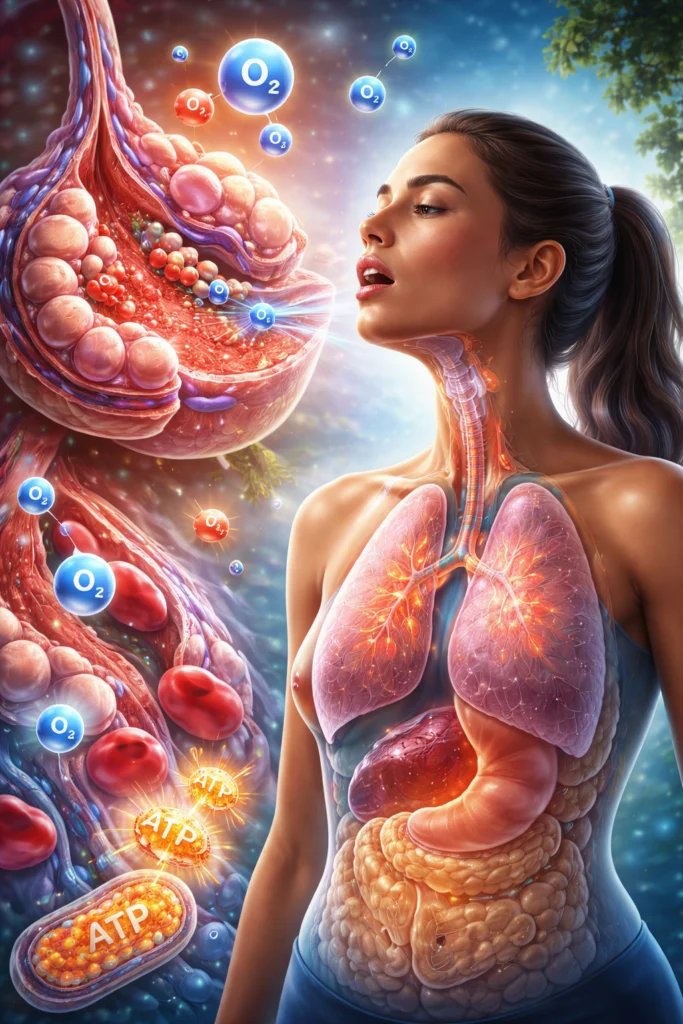
Respiration is a complex and continuous biological process through which living organisms obtain usable energy from food substances. It involves a coordinated series of physical and chemical events that allow cells to convert the chemical energy stored in nutrients into a form that can power life activities. This process includes the intake of oxygen from the external environment, its transport through body fluids or blood, its use in cellular reactions, and the elimination of carbon dioxide produced during energy release.
In multicellular organisms such as humans, this mechanism operates at two interconnected levels. At the organism level, air containing oxygen enters the body through specialized organs such as lungs. Oxygen then diffuses into the bloodstream and is transported to various tissues. At the cellular level, oxygen participates in metabolic pathways that break down glucose and other organic molecules. These reactions occur primarily in the mitochondria and lead to the production of adenosine triphosphate (ATP), which is the main source of energy for cellular work.
The energy generated supports essential activities including muscle contraction, nerve impulse transmission, synthesis of biomolecules, cell division, growth, and maintenance of body temperature. Without this constant energy supply, cells would quickly lose their ability to function, leading to failure of tissues and organs.
This biological process may occur in the presence of oxygen (aerobic pathway), producing a high yield of ATP, or in its absence (anaerobic pathway), generating smaller amounts of energy along with different by-products such as lactic acid or ethanol, depending on the organism. Both pathways demonstrate the adaptability of living systems in obtaining energy under varying environmental conditions.
Importantly, this life-sustaining mechanism is not limited to animals. Plants, fungi, and microorganisms also carry out similar energy-releasing reactions within their cells. In plants, for example, it complements photosynthesis by using stored sugars to meet energy demands, especially during the night when light is unavailable.
Overall, respiration represents a vital link between the external environment and internal cellular metabolism. It ensures that oxygen reaches cells, nutrients are oxidized efficiently, energy is made available in a controlled manner, and metabolic waste is removed. Through this integrated system, organisms maintain internal balance, sustain physiological activities, and support survival across diverse environments.
Overview
Respiration is one of the most essential life processes. Every living cell requires energy to perform activities such as growth, repair, movement, and reproduction. This energy is obtained through respiration.
This biological mechanism ensures that oxygen reaches body tissues and that carbon dioxide, a waste product, is removed efficiently. It connects breathing with cellular energy production, allowing the body to maintain metabolism, balance internal conditions, and support survival. Without this continuous energy-releasing system, normal functioning of organs and cells would not be possible.
In humans and animals, respiration involves two major aspects:
External respiration – External respiration refers to the process of gas exchange between the body and the external environment. It occurs in the lungs, specifically in the alveoli, where oxygen from inhaled air diffuses into the blood and carbon dioxide diffuses from the blood into the air to be exhaled. This process depends on breathing movements controlled by the diaphragm and intercostal muscles. It ensures that oxygen is supplied to the bloodstream for cellular use and that waste carbon dioxide is efficiently removed from the body.
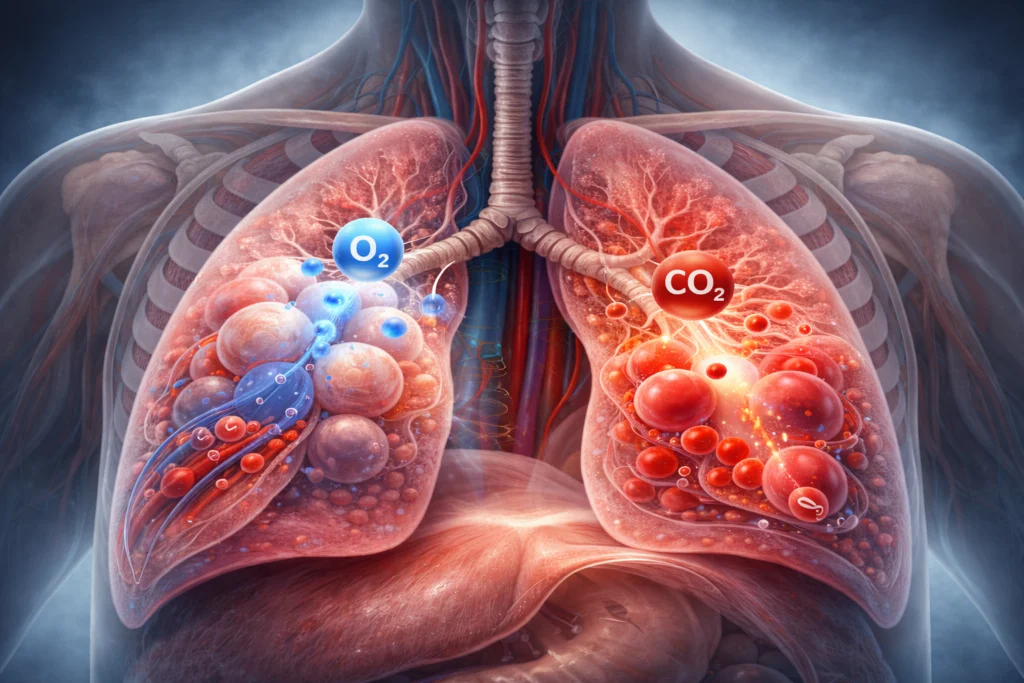
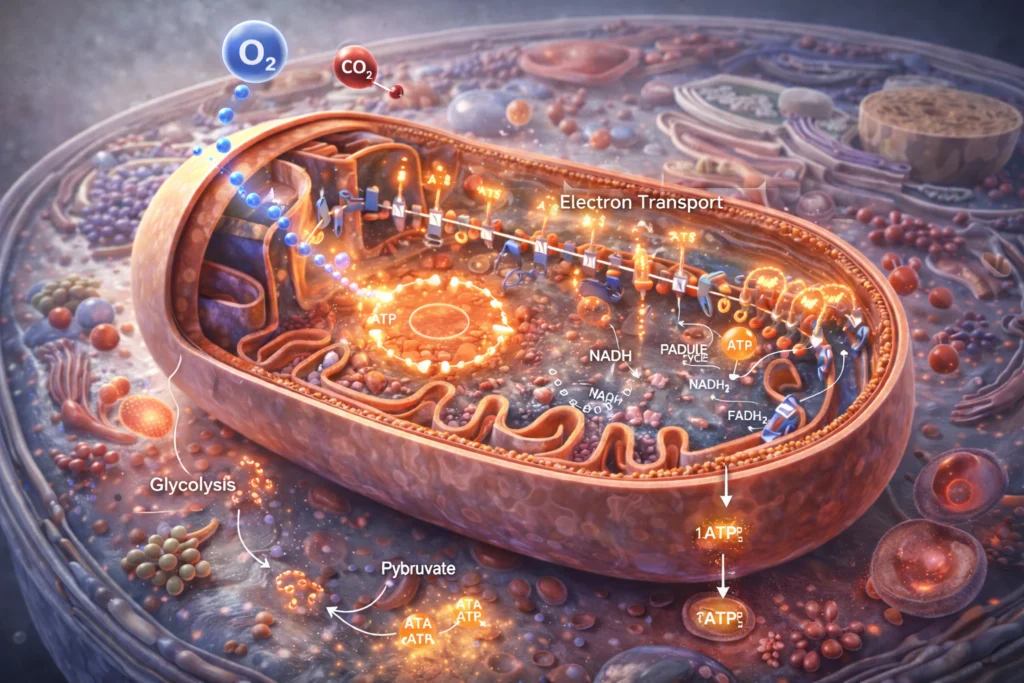
Cellular respiration – Cellular respiration is the series of chemical reactions that occur inside cells to release energy from food molecules, especially glucose. It mainly takes place in the mitochondria and produces adenosine triphosphate (ATP), the energy currency of the cell. During this process, oxygen is used to break down nutrients, and carbon dioxide and water are formed as by-products. The energy generated supports essential activities such as muscle contraction, nerve function, growth, and repair.
Balanced equation (cellular respiration):
C₆H₁₂O₆ + 6O₂ ➝ 6CO₂ + 6H₂O + ATP
These two phases work continuously in living organisms to maintain energy supply and gas balance. Without respiration, oxygen would not reach the cells and energy production would stop. Therefore, this process is directly connected to survival, metabolism, and body balance.
Location and Occurrence
Respiration occurs at two levels:
- Organ level: In humans, gas exchange takes place in the lungs.
- Cellular level: Cellular respiration occurs inside mitochondria of almost all body cells.
- In plants: Respiration occurs in all living cells, including roots, stems, and leaves.
- In microorganisms: Respiration may occur in the cytoplasm or across the cell membrane.
Thus, respiration is a universal process present in almost all living organisms.
Structure of Respiration
The overall structure of respiration can be divided into two systems:
- Respiratory System (for breathing and gas exchange)
- Cellular System (for energy production)
The respiratory system includes:
- Nasal cavity
- Pharynx
- Larynx
- Trachea
- Bronchi
- Lungs
- Alveoli
The cellular system mainly involves:
- Cytoplasm (glycolysis stage)
- Mitochondria (Krebs cycle and electron transport chain)
These systems work together to complete the process of respiration.
Diagrammatic Representation
Imagine a labeled diagram of respiration in humans. The diagram would show:
- Nasal cavity: Entry point of air.
- Trachea: A tube that carries air to the lungs.
- Bronchi: Two branches that enter each lung.
- Alveoli: Tiny air sacs inside lungs surrounded by capillaries.
- Capillaries: Blood vessels carrying oxygen and carbon dioxide.
- Mitochondria: Located inside body cells where energy is produced.
The diagram shows oxygen entering through the nose, traveling through the airways, reaching the alveoli, moving into the blood, and finally entering cells where cellular respiration occurs.
Carbon dioxide follows the reverse path and is expelled during exhalation.
Parts of Respiration
Respiratory Tract
Definition:
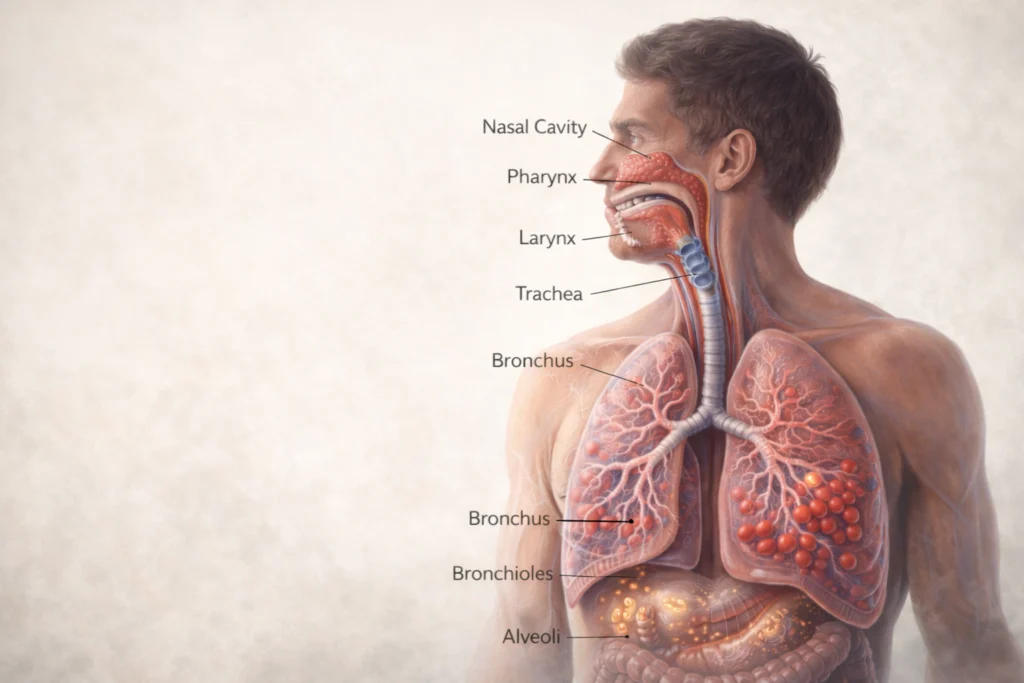
The respiratory tract is the pathway through which air moves in and out of the lungs. It is a continuous system of tubes and passages that allows the body to take in oxygen from the environment and remove carbon dioxide. This pathway ensures that air reaches the lungs efficiently and safely.
It begins at the nasal cavity, where air is filtered by tiny hairs and mucus. From there, air passes through the pharynx and larynx, then moves down the trachea into the bronchi, which branch into smaller bronchioles inside the lungs. These passages gradually become narrower as they distribute air evenly to the alveoli, where gas exchange occurs.
In addition to conducting air, this system also warms, moistens, and cleans incoming air, protecting delicate lung tissues from dust, microbes, and harmful particles. Proper functioning of the respiratory tract is essential for maintaining oxygen supply and supporting overall body function.
Location
Extends from the nose to the lungs.
Structure
Includes nasal cavity, pharynx, larynx, trachea, bronchi, and bronchioles.
Function
- Conducts air
- Filters dust and microbes
- Warms and moistens air
Importance
Ensures clean and suitable air reaches the lungs for efficient respiration.
Alveoli
Definition:
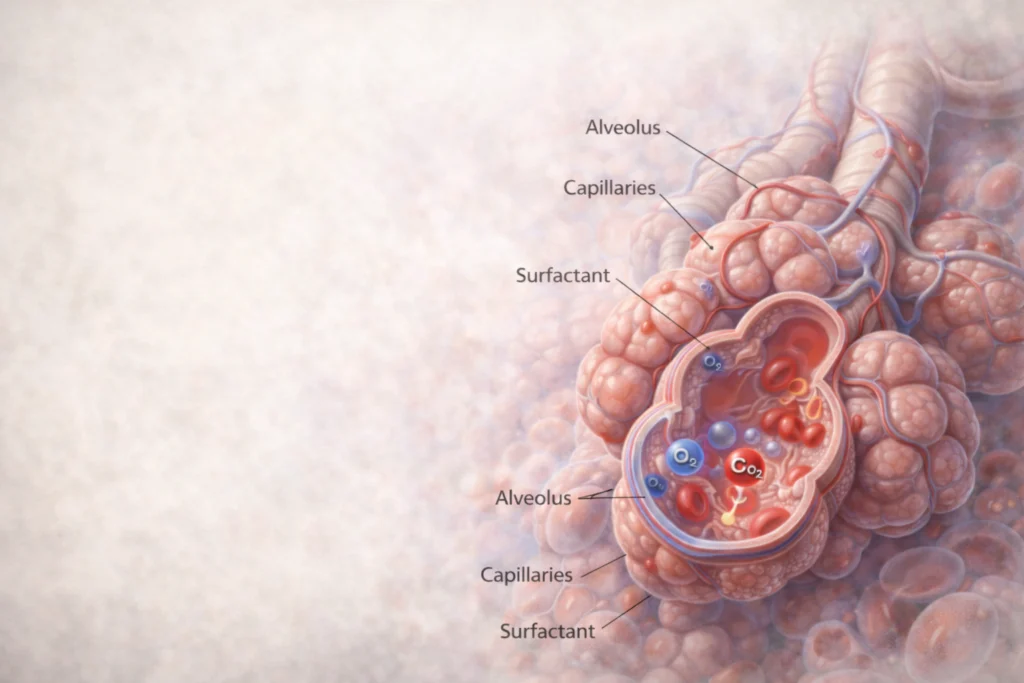
Alveoli are microscopic air sacs where gas exchange occurs. They are small, thin-walled structures located at the ends of the bronchioles deep inside the lungs. These air sacs are present in large numbers—millions in each lung—providing a vast surface area for efficient exchange of gases.
Each alveolus is surrounded by a dense network of tiny blood vessels called capillaries. The walls of both the alveoli and the capillaries are extremely thin, usually only one cell thick. This thin barrier allows oxygen from inhaled air to diffuse easily into the bloodstream, while carbon dioxide moves from the blood into the alveoli to be exhaled.
The inner surface of these air sacs is moist and coated with a substance called surfactant, which prevents them from collapsing and helps maintain proper air pressure. Their elastic nature allows them to expand during inhalation and contract during exhalation.
Because of their structure, large surface area, and rich blood supply, alveoli play a crucial role in maintaining an adequate supply of oxygen to body tissues and in removing carbon dioxide effectively.
Location
Present at the ends of bronchioles in the lungs.
Structure
- Thin walls (one cell thick)
- Surrounded by capillaries
- Large surface area
Function
- Oxygen diffuses into blood
- Carbon dioxide diffuses out of blood
Importance
Provide maximum efficiency in gas exchange, making respiration effective.
Diaphragm
Definition:
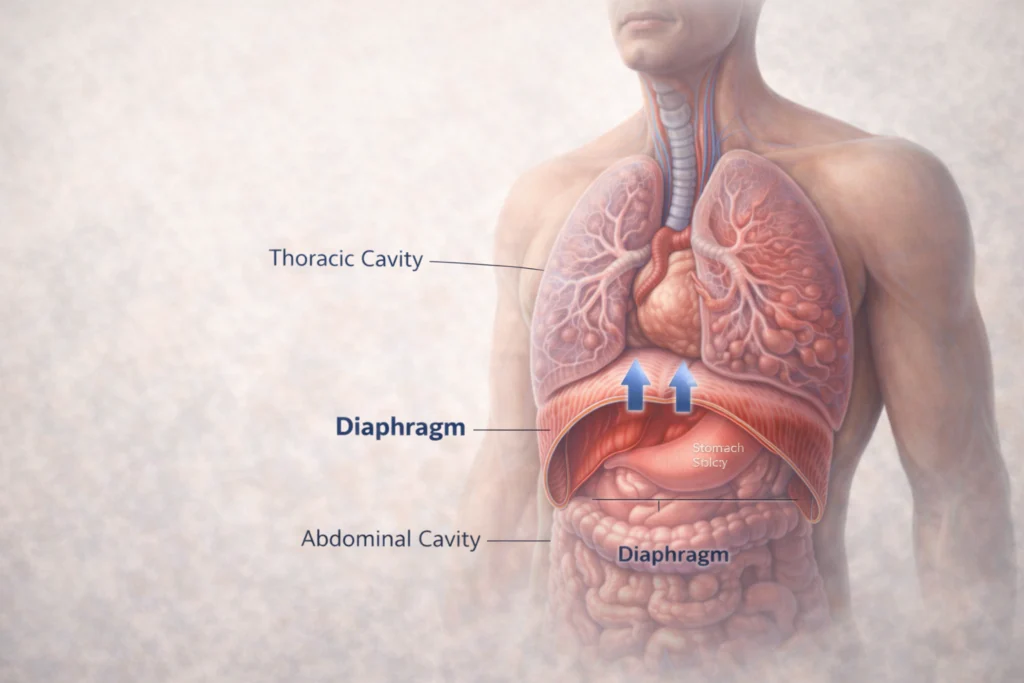
The diaphragm is a dome-shaped muscle responsible for breathing movements. It is a large, thin, and curved sheet of skeletal muscle located at the base of the lungs. This muscle forms a partition between the thoracic cavity (which contains the heart and lungs) and the abdominal cavity (which contains digestive organs).
When a person inhales, the diaphragm contracts and moves downward, becoming flatter. This increases the volume of the chest cavity and reduces internal pressure, allowing air to flow into the lungs. During exhalation, it relaxes and returns to its original dome shape, decreasing chest volume and pushing air out of the lungs.
In addition to its role in breathing, the diaphragm also helps in activities such as coughing, sneezing, laughing, speaking, and even maintaining posture. Proper functioning of this muscle is essential for maintaining a steady supply of oxygen to the body and for supporting normal lung expansion.
Location
Separates chest cavity from abdominal cavity.
Structure
Thin muscular sheet attached to ribs and spine.
Function
- Contracts during inhalation
- Relaxes during exhalation
Importance
Controls airflow in and out of lungs during respiration.
Mitochondria: Site of Cellular Respiratio
Definition:
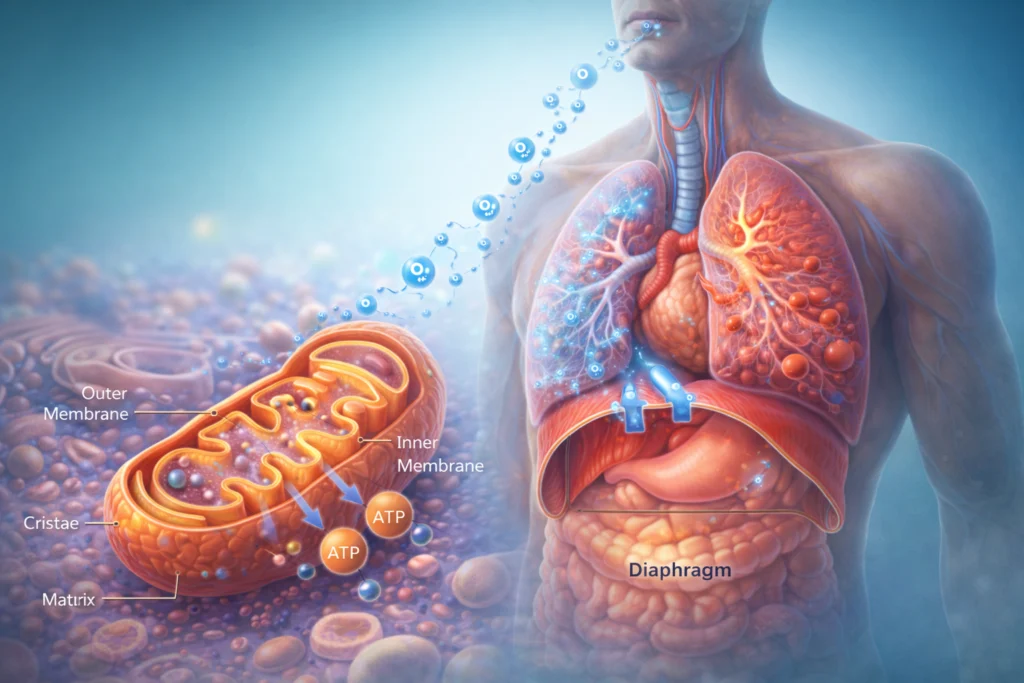
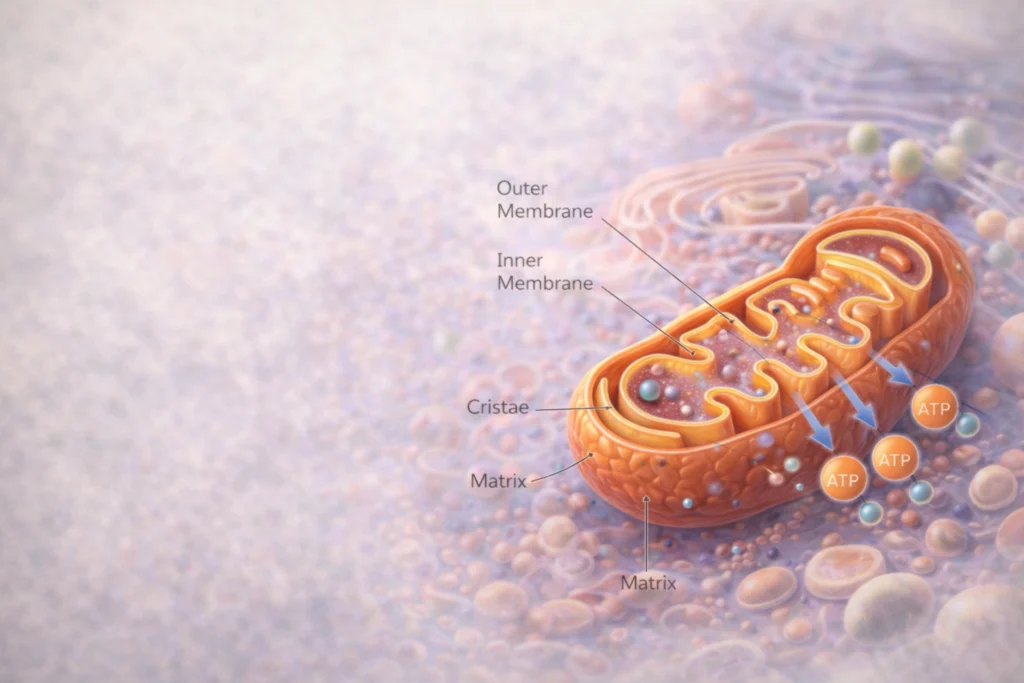
Mitochondria are organelles where cellular respiration occurs. They are small, membrane-bound structures found in the cytoplasm of most eukaryotic cells. These organelles are often called the “powerhouses of the cell” because they generate most of the cell’s usable energy in the form of ATP.
Each mitochondrion has a double membrane structure: a smooth outer membrane and a highly folded inner membrane known as cristae. The space inside, called the matrix, contains enzymes that help break down nutrients. Through a series of biochemical reactions, energy stored in food molecules is released and converted into ATP, which supports essential cellular functions such as growth, repair, and active transport.
Because of their central role in energy production, mitochondria are vital for maintaining normal cell activity and overall body function.
Location
Inside the cytoplasm of cells.
Structure
- Double membrane
- Inner membrane folded into cristae
- Matrix containing enzymes
Function
- Produces ATP
- Completes Krebs cycle and electron transport chain
Importance
Without mitochondria, energy production through respiration would not occur.
Functions of Respiration
Respiration performs several essential functions:
- Supplies oxygen to body cells
- Removes carbon dioxide waste
- Produces ATP (energy currency of the cell)
- Maintains blood pH balance
- Supports metabolism
- Enables muscle activity
- Helps regulate body temperature
Cellular respiration follows this chemical equation:
C₆H₁₂O₆ + 6O₂ → 6CO₂ + 6H₂O + Energy (ATP)
Importance and Applications
Respiration has biological and practical significance:
- Essential for survival
- Supports physical activity and exercise
- Important in medical science (ventilation, oxygen therapy)
- Helps in understanding metabolic disorders
- Influences environmental balance (carbon cycle)
- Important in biotechnology and fermentation industries
In plants, respiration provides energy for growth and development.
Common Mistakes or Misconceptions
Students often make these errors:
- Confusing respiration with breathing (breathing is only part of respiration).
- Thinking respiration occurs only in lungs (it also occurs in cells).
- Mixing up respiration with photosynthesis.
- Assuming carbon dioxide is always harmful (small amounts are normal).
- Forgetting that respiration occurs in plants as well.
Understanding these differences is important for exams.
Exam-Oriented Key Points
- Respiration includes external and cellular processes.
- Gas exchange occurs in alveoli.
- Cellular respiration occurs in mitochondria.
- ATP is the final energy product.
- The diaphragm controls breathing movements.
- The process maintains oxygen-carbon dioxide balance.
Memorize the balanced chemical equation for high exam accuracy.
Conclusion and Summary
Respiration is a fundamental life process that allows organisms to obtain oxygen, remove carbon dioxide, and produce energy. It involves both breathing through the respiratory system and cellular respiration inside mitochondria. The coordinated function of alveoli, diaphragm, respiratory tract, and mitochondria ensures continuous ATP production and survival.
Understanding respiration clearly helps students grasp metabolism, energy flow, and body regulation. Mastering its structure, functions, and key steps is essential for academic success.
You can also visit Core Sciences
FAQs
1. What is respiration in simple words?
Respiration is the process of taking in oxygen and releasing carbon dioxide while producing energy in cells.
2. Is breathing the same as respiration?
No. Breathing is part of respiration. Cellular energy production is also included.
3. Where does respiration occur in humans?
In the lungs (gas exchange) and in mitochondria of cells (energy production).
4. Why is respiration important?
It provides energy (ATP) required for all life activities.
5. Do plants perform respiration?
Yes. Plants perform respiration continuously to produce energy.