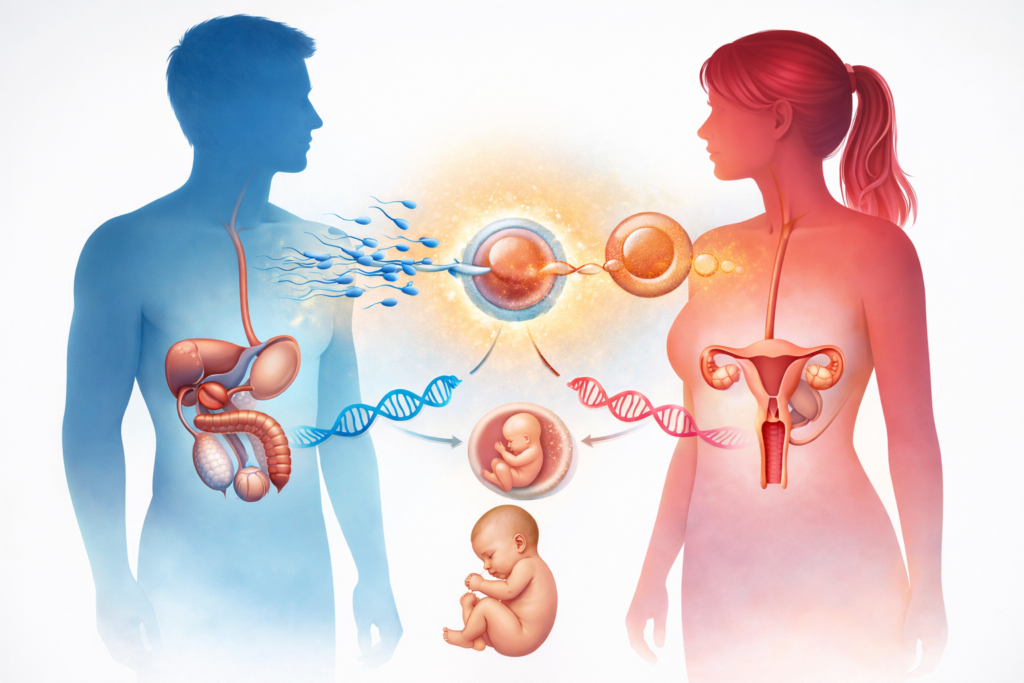
Human reproduction is a vital biological process responsible for the continuation of the human species. It involves the formation of male and female reproductive cells, their fusion, development of a new individual, and birth. This topic forms a core part of secondary and higher secondary biology syllabi and is essential for understanding human development, health, and heredity.
The study of human reproduction helps students understand how life begins, how reproductive organs function, how hormones regulate reproductive events, and how pregnancy and childbirth occur. This article explains human reproduction in a clear, step-by-step manner suitable for Class 10, Class 12, and NEET-level students.
Definition of Human Reproduction
Human reproduction is the biological process by which humans give rise to new individuals of the same species. It includes a series of well-organized events such as the formation of male and female gametes, their fusion during fertilization, and the subsequent growth and development of the embryo and fetus until birth.
Human reproduction is the biological process by which male and female humans produce offspring through sexual reproduction. It involves the formation of gametes, fertilization, embryonic development, and birth of a new individual.
Nature of Reproduction in Humans
The nature of reproduction in humans is sexual reproduction, in which both male and female individuals participate. In this process, male gametes (sperms) and female gametes (ova) are produced in specialized reproductive organs and unite during fertilization to form a zygote. The zygote develops through various stages into an embryo and later into a fetus inside the uterus.
Humans reproduce only through sexual reproduction. This type of reproduction requires two parents of opposite sexes and results in genetic variation among offspring.
Key Characteristics
- Involves male and female gametes
- Fusion of gametes produces a diploid zygote
- Offspring inherit traits from both parents
Male Reproductive System
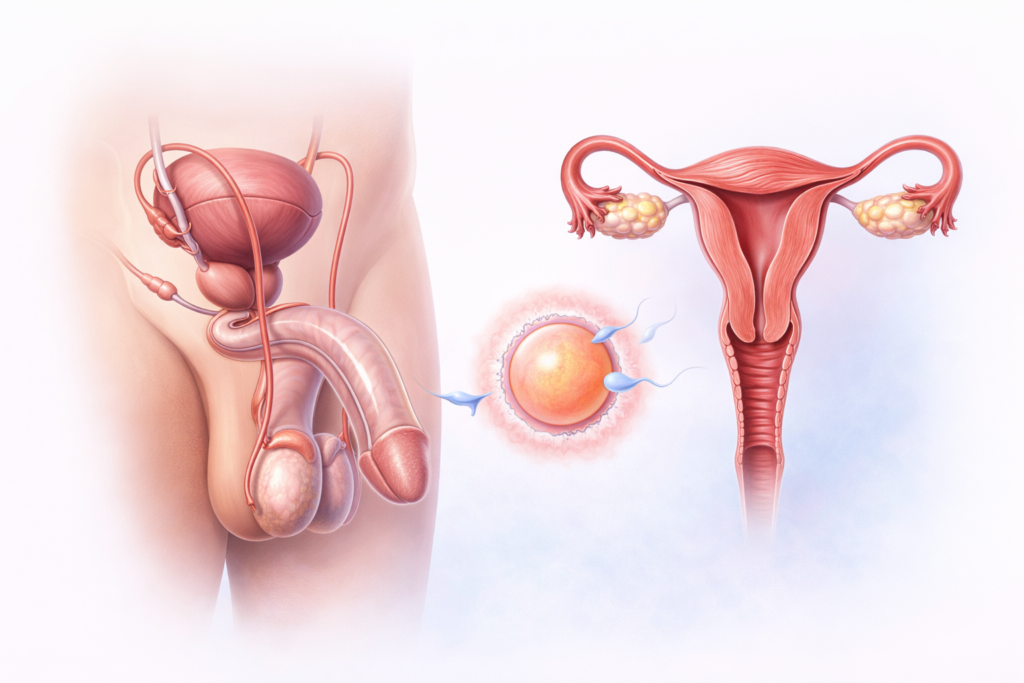
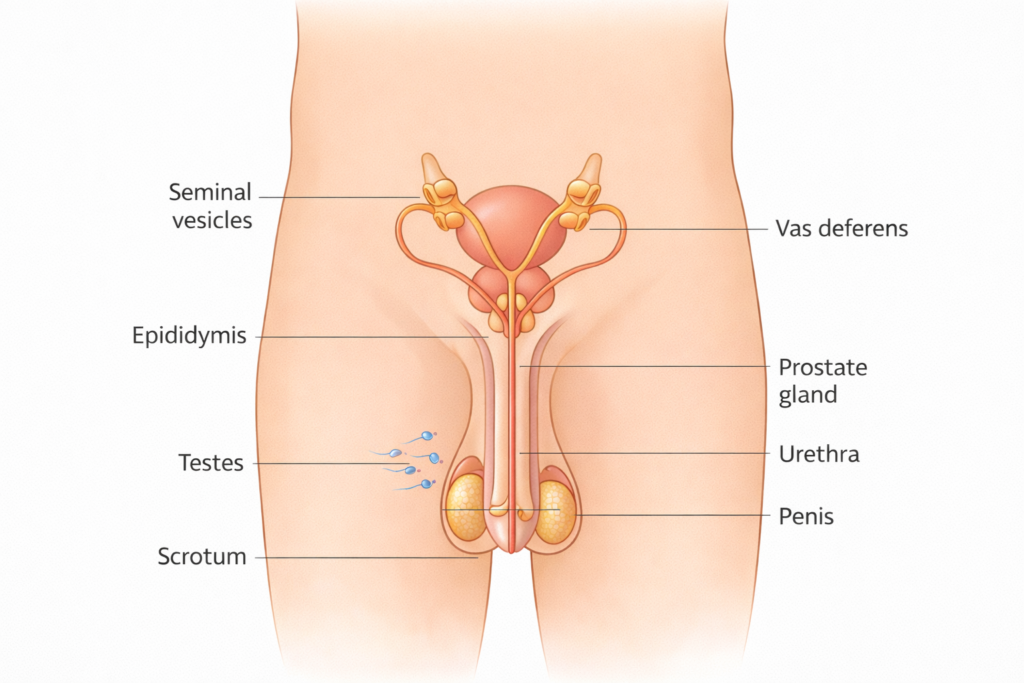
The male reproductive system is a group of organs specialized for reproduction and the continuation of the human species. The male reproductive system produces male gametes called sperms and secretes male sex hormones. Its primary functions include the production, maturation, storage, and transport of sperms, as well as the secretion of the hormone testosterone, which regulates male reproductive functions and secondary sexual characteristics. The system consists of the testes, ducts such as the epididymis and vas deferens, accessory glands, and the penis, all of which work together to ensure successful fertilization.
Structure of the Male Reproductive System
Testes
- A pair of oval organs located in the scrotum
- Produce sperms by the process of spermatogenesis
- Secrete testosterone
Scrotum
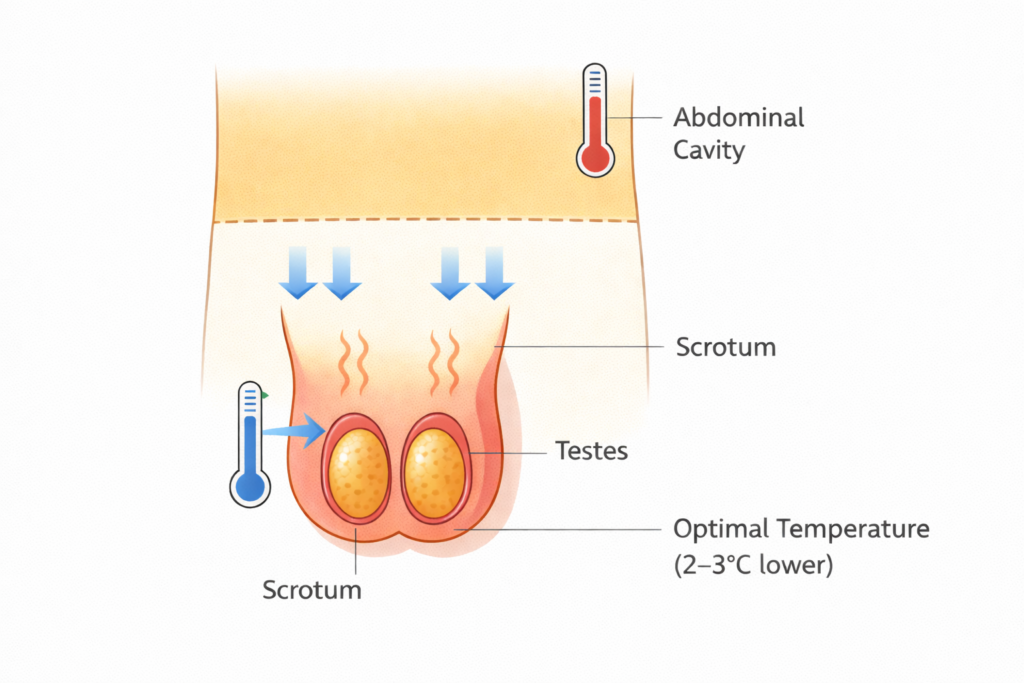
- A pouch of skin outside the abdominal cavity
- Maintains optimal temperature for sperm production
Epididymis
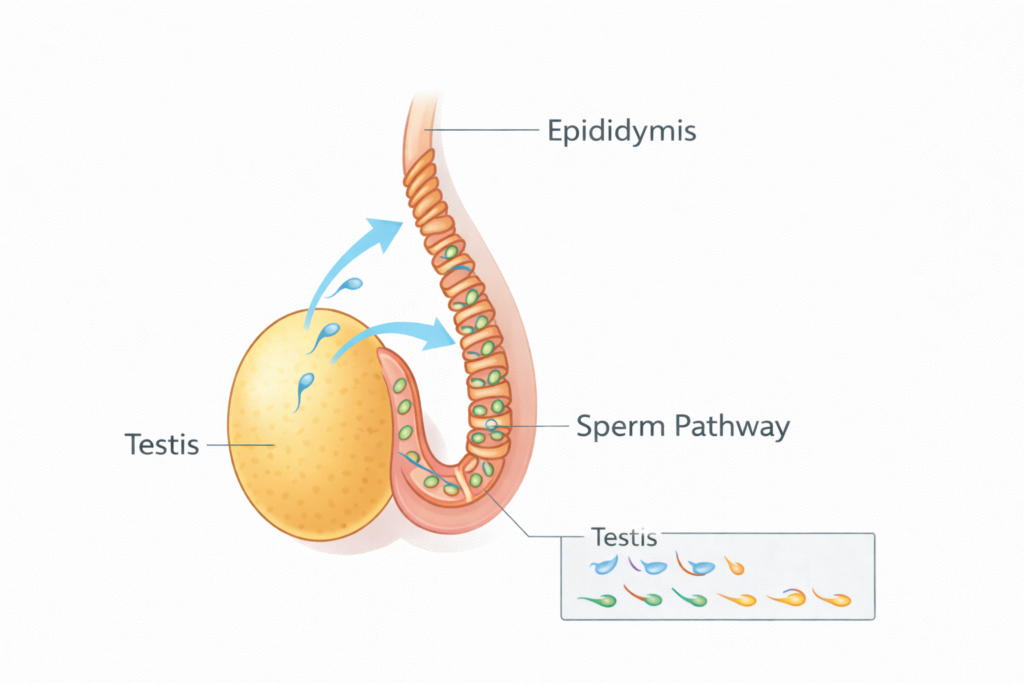
- Stores sperms temporarily
- Allows sperms to mature
Vas Deferens
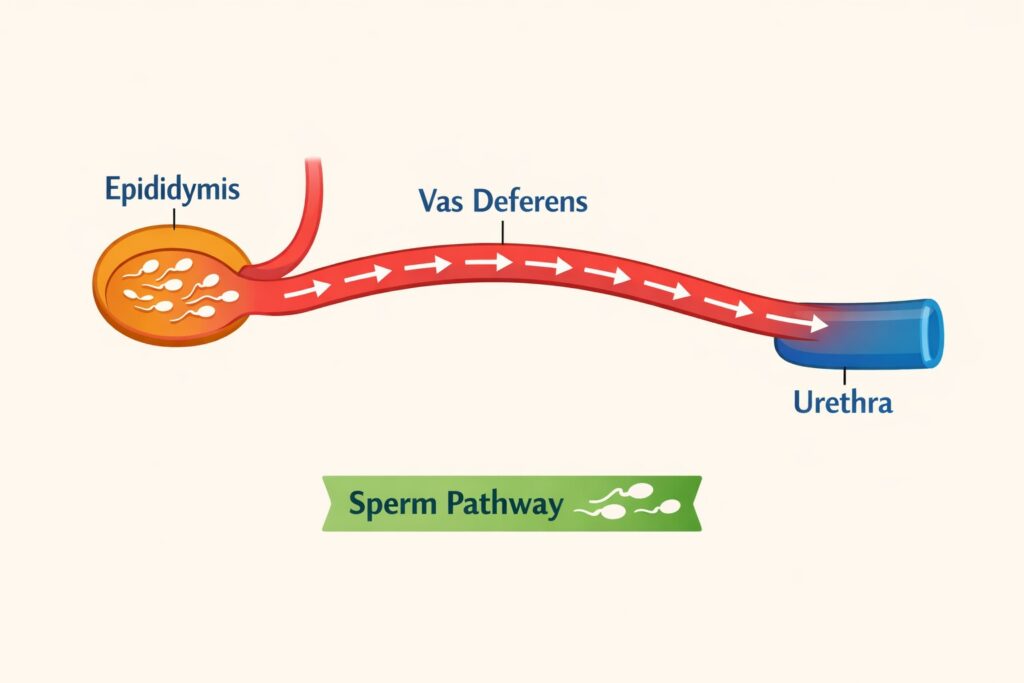
- Transports sperms from epididymis to urethra
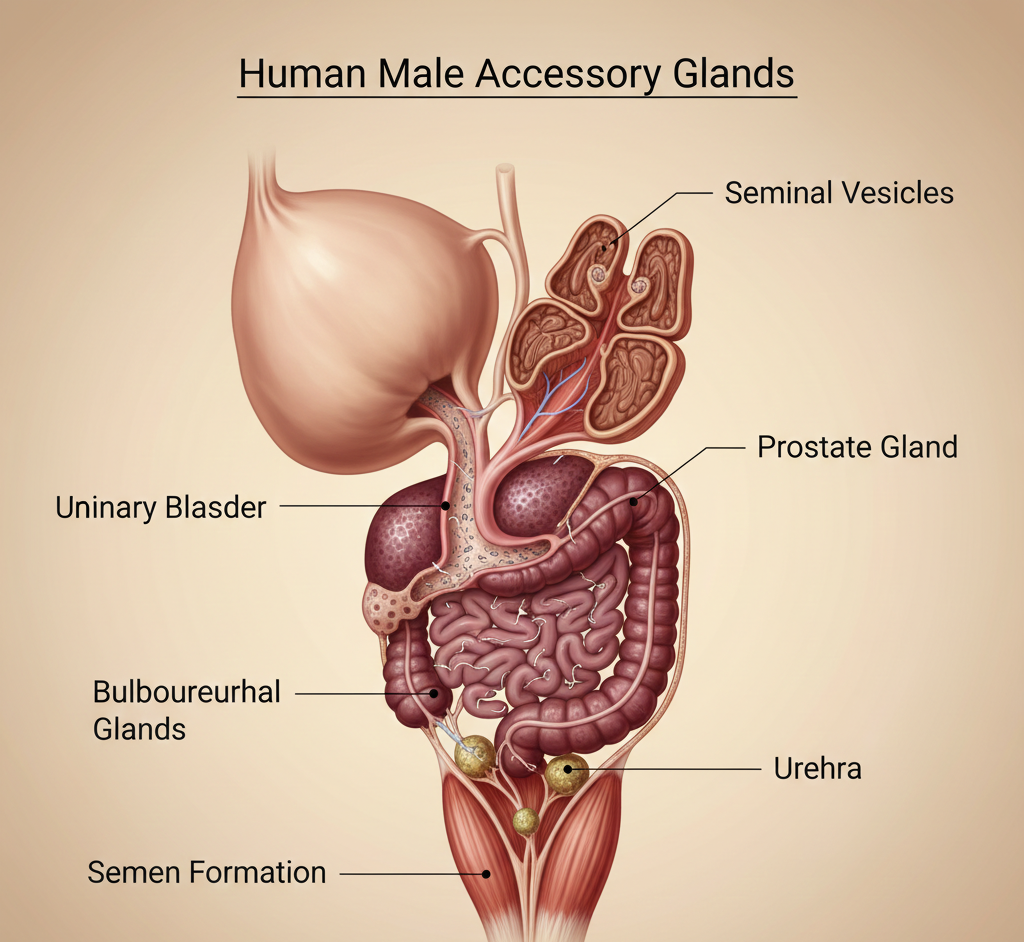
Accessory Glands
- Seminal vesicles
- Prostate gland
- Bulbourethral glands
These glands secrete fluids that nourish and activate sperms, forming semen.
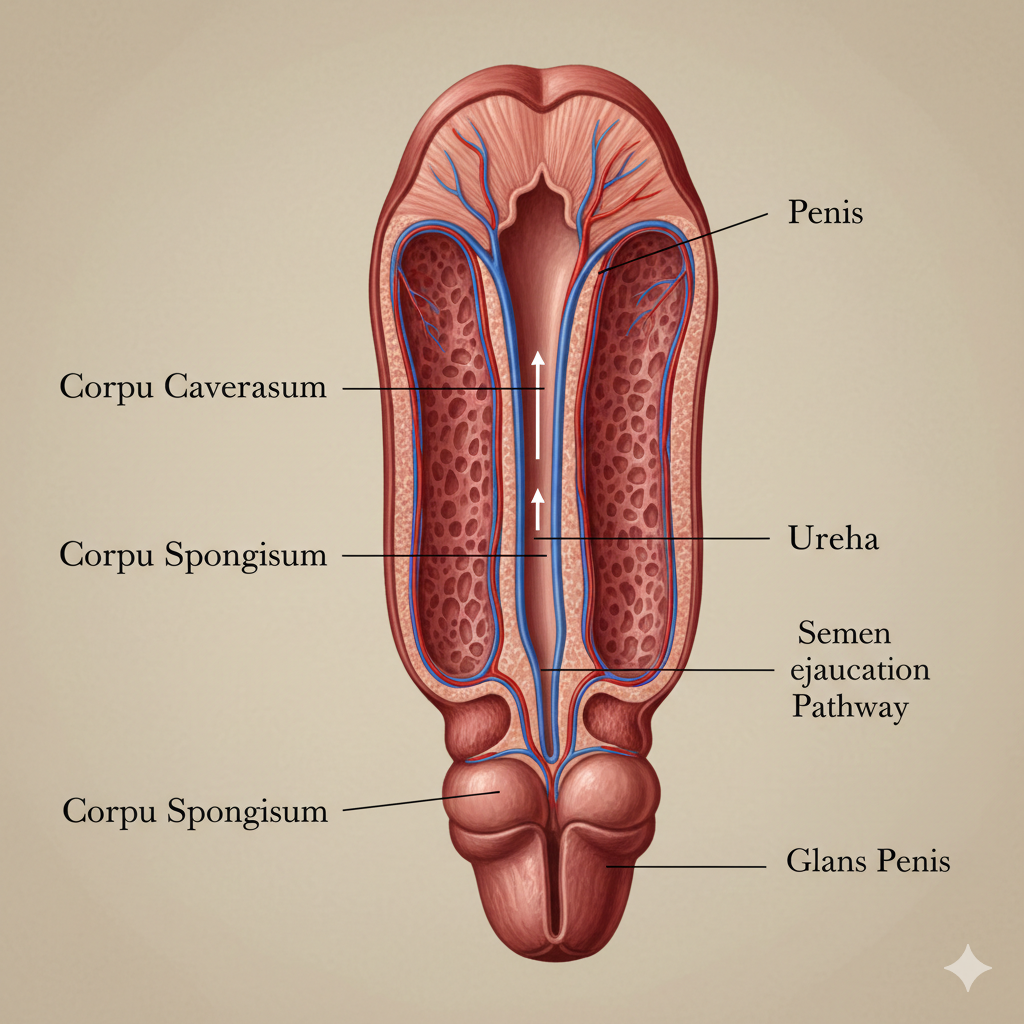
Penis
- External copulatory organ
- Helps in ejaculation of semen into the female reproductive tract
Spermatogenesis
Spermatogenesis is the process of formation of male gametes from spermatogonia in the testes.
Steps of Spermatogenesis
- Multiplication phase: Mitotic division of spermatogonia
- Growth phase: Increase in size to form primary spermatocytes
- Maturation phase: Meiosis produces haploid spermatids
- Spermiogenesis: Spermatids transform into sperms
Each primary spermatocyte forms four functional sperms.
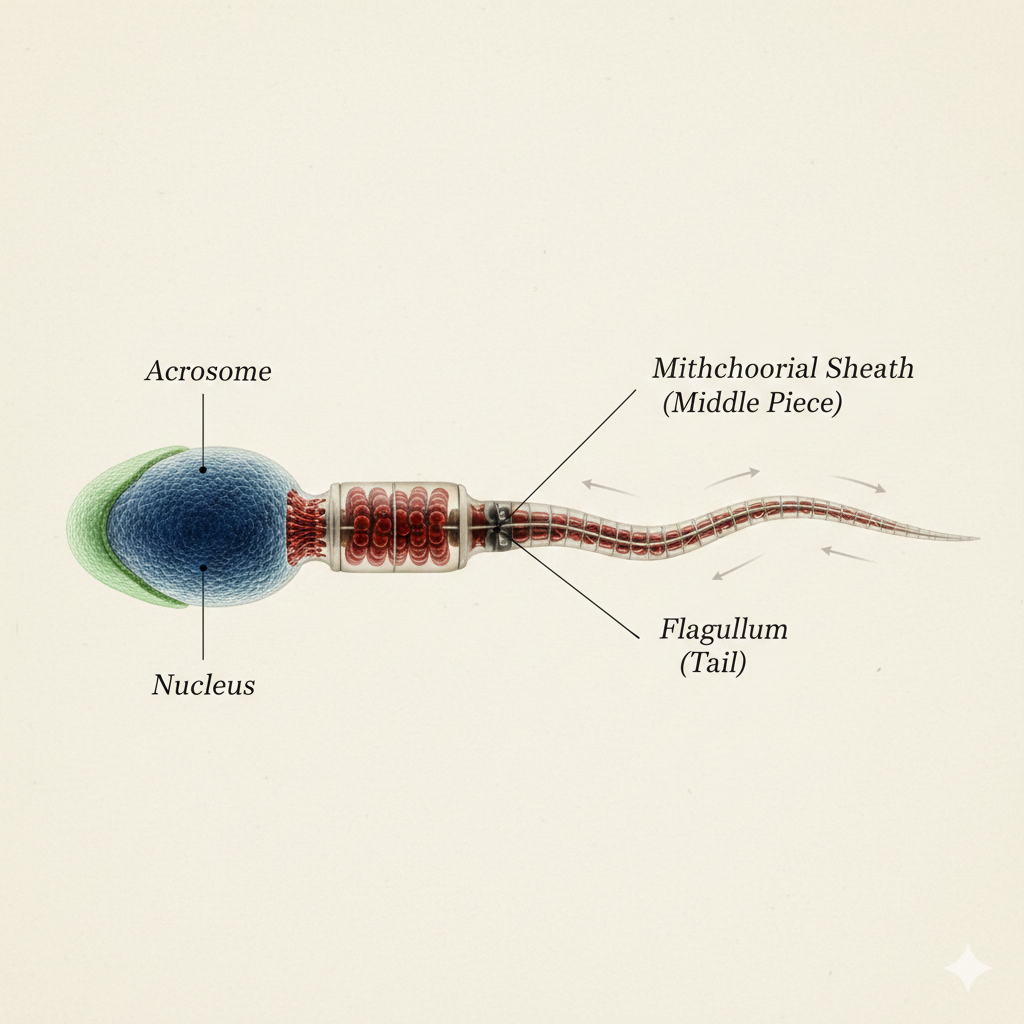
Structure of Human Sperm
A human sperm is a microscopic, motile cell with three main parts:
- Head: Contains nucleus and acrosome
- Middle piece: Rich in mitochondria for energy
- Tail: Helps in movement
Female Reproductive System
The female reproductive system is a group of organs responsible for the production of female gametes (ova), secretion of female sex hormones, and supporting fertilization, pregnancy, and childbirth. It includes internal organs such as the ovaries, fallopian tubes, uterus, cervix, and vagina, as well as external structures collectively called the vulva. The ovaries produce ova and hormones like estrogen and progesterone, which regulate the menstrual cycle. The fallopian tubes transport the ovum and are the usual site of fertilization. The uterus provides a suitable environment for the development of the embryo and fetus, while the cervix and vagina form the passage for menstruation and childbirth.
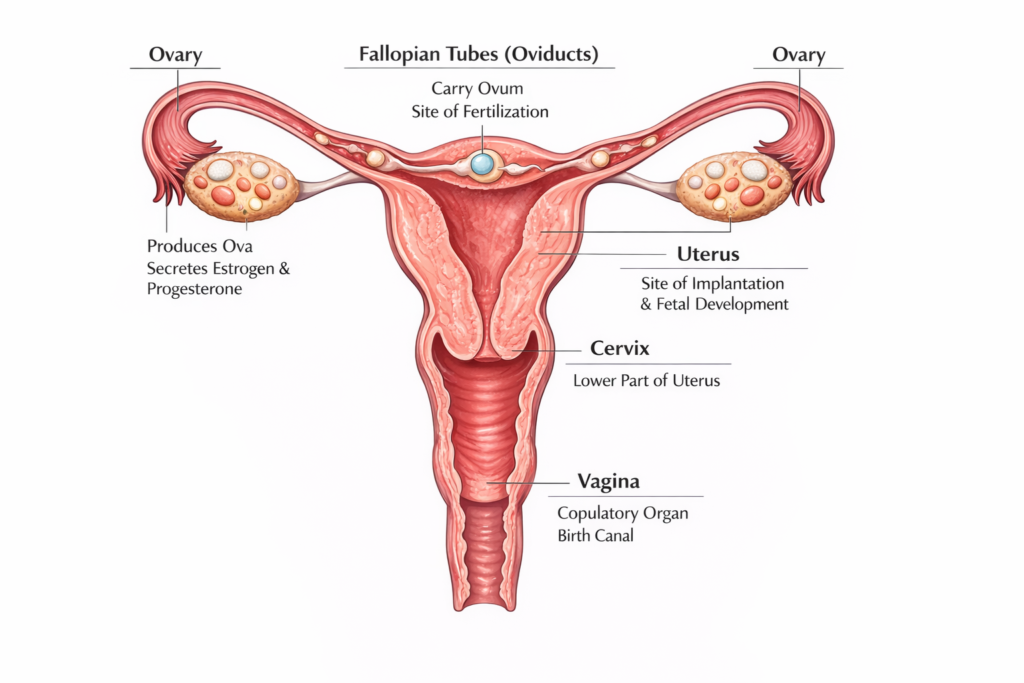
Structure of the Female Reproductive System
Ovaries
- A pair of almond-shaped organs
- Produce ova by oogenesis
- Secrete estrogen and progesterone
Fallopian Tubes
- Carry ovum from ovary to uterus
- Site of fertilization
Uterus
- Thick muscular organ
- Site of implantation and fetal development
Cervix
- Lower part of uterus
- Connects uterus to vagina
Vagina
- Copulatory organ
- Serves as birth canal
Oogenesis
Oogenesis is the process of formation of female gametes in the ovaries. It is a specialized type of cell division through which diploid germ cells develop into mature haploid ova. The process begins before birth with the formation of primary oocytes and continues after puberty in a cyclic manner. Oogenesis involves stages of growth, maturation, and meiosis, ultimately producing one functional ovum and smaller polar bodies. This process ensures the formation of a genetically balanced female gamete capable of participating in fertilization.
Key Features
- Begins before birth
- Produces one ovum and polar bodies
- Completed only after fertilization
Menstrual Cycle
The menstrual cycle is a monthly reproductive cycle in females that prepares the uterus for pregnancy. It involves a series of regular hormonal changes in the ovaries and uterus, typically lasting about 28 days. The cycle includes the menstrual phase, follicular phase, ovulation, and luteal phase. These phases regulate the release of an ovum, thickening of the uterine lining for possible implantation, and shedding of the lining as menstruation if fertilization does not occur. The menstrual cycle plays a vital role in female reproductive health and fertility.
Phases of Menstrual Cycle
Menstrual Phase (Day 1–5)
Shedding of uterine lining occurs, resulting in menstrual bleeding.
Follicular Phase (Day 6–14)
Follicles develop in ovaries and estrogen levels rise.
Ovulation (Day 14)
Release of mature ovum from ovary.
Luteal Phase (Day 15–28)
Corpus luteum secretes progesterone to maintain uterine lining.
Fertilization
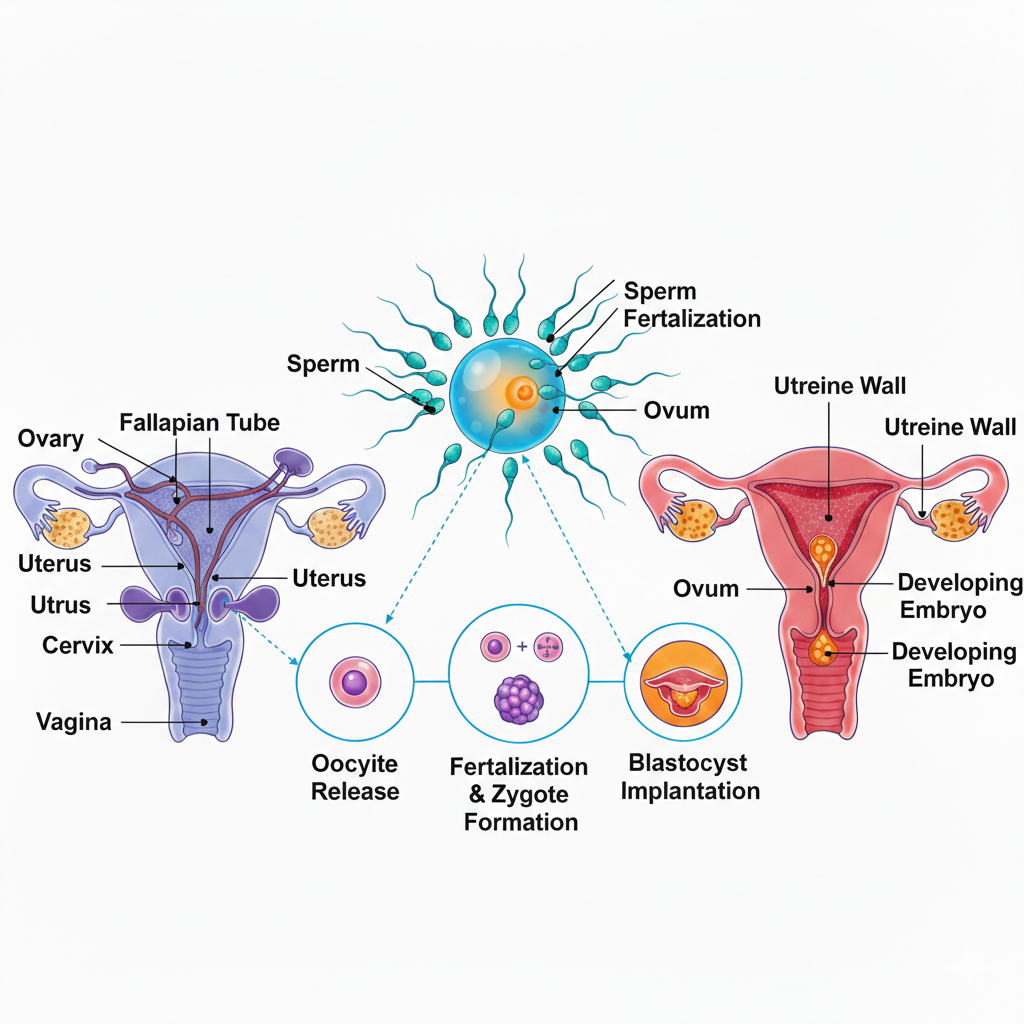
Fertilization is the fusion of male and female gametes to form a zygote. It is a crucial biological process that marks the beginning of a new individual. In humans, fertilization usually occurs in the fallopian tube when a sperm penetrates the ovum. This process restores the diploid chromosome number and combines genetic material from both parents, leading to the formation of a genetically unique zygote that will undergo further development.
Site of Fertilization
- Ampullary region of fallopian tube
Steps
- Sperm reaches ovum
- Acrosomal reaction occurs
- Fusion of nuclei
- Zygote formation
Implantation
Implantation is the attachment of the blastocyst to the uterine wall. It occurs about 6–7 days after fertilization. This process takes place in the endometrium of the uterus and is essential for the establishment of pregnancy. During implantation, the blastocyst embeds itself into the thickened uterine lining, allowing the developing embryo to receive nutrients and oxygen from the mother. Successful implantation marks the beginning of embryonic development.
Pregnancy and Embryonic Development
Pregnancy lasts about 280 days. The zygote develops into embryo and later fetus. It begins after successful implantation of the blastocyst in the uterus. During pregnancy, the embryo undergoes rapid cell division, differentiation, and organ formation. As development progresses, the embryo is called a fetus, which continues to grow and mature until birth. The placenta plays a vital role during this period by supplying nutrients, oxygen, and removing waste products, ensuring proper growth and development of the developing baby.
Stages
- Zygote
- Embryo (up to 8 weeks)
- Fetus (after 8 weeks)
Placenta
Placenta is a temporary organ connecting mother and fetus. It develops in the uterus during pregnancy and plays a crucial role in supporting fetal growth. The placenta facilitates the exchange of nutrients, oxygen, and waste products between the mother’s blood and the fetus. It also produces important hormones such as progesterone and human chorionic gonadotropin (hCG), which help maintain pregnancy and support fetal development.
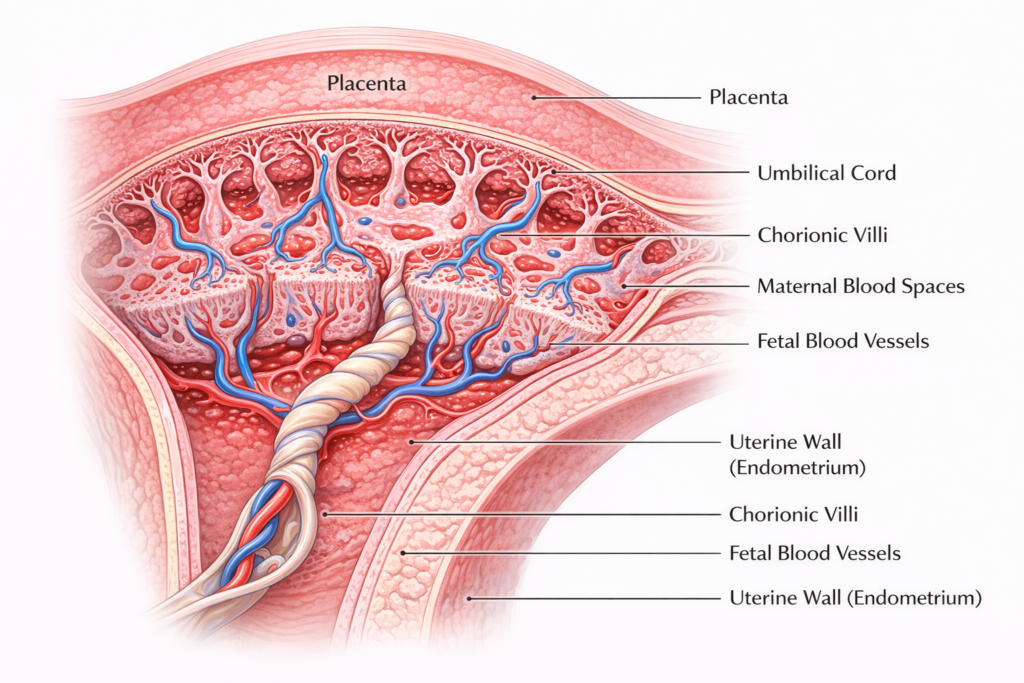
Functions
- Nutrient exchange
- Gas exchange
- Waste removal
- Hormone secretion
Parturition
Parturition is the process of childbirth.
Stages
- Cervical dilation
- Expulsion of baby
- Expulsion of placenta
Lactation
Lactation is the production of milk by mammary glands after childbirth. Colostrum provides immunity to the newborn.
Diagrams Explained in Text
Male Reproductive System Diagram
Labels include testes, epididymis, vas deferens, prostate gland, and penis.
Female Reproductive System Diagram
Labels include ovary, fallopian tube, uterus, cervix, and vagina.
Menstrual Cycle Diagram
Shows four phases with hormonal variations.
Importance of Human Reproduction
- Ensures survival of species
- Helps understand reproductive health
- Important for family planning
- Aids in disease prevention
Common Mistakes and Misconceptions
- Fertilization occurs in uterus
- Menstrual cycle is always 28 days
- Pregnancy begins immediately after fertilization
Exam-Oriented Notes
- Site of fertilization: Fallopian tube
- Pregnancy hormone: Progesterone
- Male sex hormone: Testosterone
You can also visit Science & Technology category.
Practice Questions
Question 1
What is human reproduction?
Answer: The biological process by which humans produce offspring.
Question 2
Where does fertilization occur?
Answer: Fallopian tube.
Summary for Revision
Human reproduction involves gamete formation, fertilization, pregnancy, and childbirth. Male and female reproductive systems work together under hormonal control to produce offspring.
Frequently Asked Questions
What type of reproduction occurs in humans?
Sexual reproduction.
What is gestation period?
Duration of pregnancy, about 9 months.
What is placenta?
A temporary organ connecting mother and fetus.
Which hormone triggers ovulation?
Luteinizing hormone.
What is lactation?
Production of milk after childbirth.